2026 Silk Road Textile Finds: Conservation & Storage Guide
Unearthing the Threads of Antiquity: 2026 Silk Road Discoveries
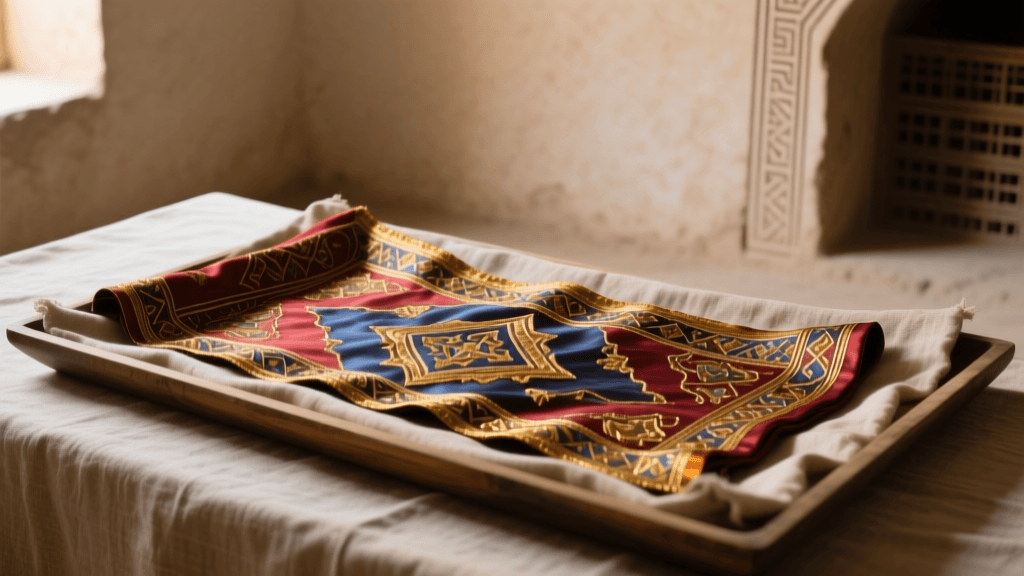
The Silk Road was never merely a conduit for commerce; it was the ancient world's most vibrant artery of cultural and technological exchange. As we move through 2026, a new wave of archaeological excavations across the Tarim Basin and the Turpan Depression has yielded an astonishing array of textile artifacts. These finds are fundamentally rewriting our understanding of early trans-Eurasian fashion, revealing a complex synthesis of Han Chinese warp-faced silks and Sogdian weft-faced samites. For textile historians, conservators, and serious collectors, these 2026 discoveries offer more than just historical intrigue—they provide a masterclass in the extreme conditions required to preserve protein-based fibers over millennia.
Recent multispectral imaging and AI-driven dye analysis applied to newly excavated fragments from the Astana cemeteries have identified intricate patterns blending Sasanian pearl roundels with traditional Chinese cloud motifs. According to the UNESCO Silk Roads Programme, these hybrid textiles underscore a sophisticated level of cross-cultural weaving workshops that operated along the oasis towns of the Taklamakan Desert. However, the true marvel of these 2026 archaeological finds lies in their state of preservation, offering modern conservationists critical data on how to store and maintain fragile silk garments today.
The Science of Preservation: What Archaeological Environments Teach Us
The survival of these 2,000-year-old silk fragments is largely due to the hyper-arid, alkaline, and consistently cool subterranean microclimates of the Taklamakan Desert tombs. When these textiles are excavated and exposed to modern atmospheric conditions, they face immediate threats from fluctuating humidity, airborne pollutants, and ultraviolet radiation. The transition from an archaeological dig site to a modern archival facility requires meticulous environmental buffering.
In 2026, conservation science has moved beyond basic climate control. Institutions are now utilizing predictive microclimate modeling to replicate the stabilizing effects of desert burial chambers without the destructive alkalinity. For private collectors, museum archivists, and heritage managers, translating these archaeological lessons into practical storage maintenance is paramount to preventing the catastrophic shattering of ancient silk fibroin.
2026 Standards for Storing and Maintaining Delicate Silks
Drawing from the latest protocols established by leading global heritage institutions, the following actionable guidelines represent the gold standard for silk textile conservation in 2026. Whether you are managing a private collection of antique Asian garments or curating a regional exhibition, these parameters are non-negotiable.
1. Precision Climate Control
Silk is a protein fiber that is highly hygroscopic. Fluctuations in Relative Humidity (RH) cause the fibers to swell and contract, leading to mechanical fatigue and eventual snapping.
- Target RH: Maintain a strict RH between 50% and 55%. In 2026, archival facilities utilize solid-state desiccant dehumidifiers integrated with IoT sensors to prevent micro-fluctuations greater than ±2% within a 24-hour period.
- Temperature: Keep storage environments at a stable 18°C to 20°C (64°F to 68°F). Lower temperatures slow chemical degradation, but temperatures below 15°C risk condensation if the space is accessed frequently.
2. Advanced Archival Housing Materials
The physical support of a fragile textile is just as critical as the air surrounding it. The 2026 consensus strictly prohibits the use of standard cardboard, unbuffered tissue, or synthetic plastics that off-gas volatile organic compounds (VOCs).
- Buffered vs. Unbuffered Tissue: While cotton and linen require buffered (alkaline) tissue to neutralize acids, silk must only be stored with unbuffered, acid-free, pH-neutral tissue paper. Alkaline reserves will degrade protein fibers over time.
- Rolling vs. Folding: Folding creates permanent stress points. Garments should be rolled around acid-free honeycomb polyethylene tubes, padded with unbuffered tissue, and wrapped in washed, unbleached cotton muslin.
- Enclosures: Use anodized aluminum or powder-coated steel cabinetry. Wooden cabinets must be sealed with specialized 2026-formulation VOC-blocking barrier films, as wood naturally emits acetic acid.
3. Light Exposure and UV Mitigation
Photochemical degradation is cumulative and irreversible. The vibrant madder reds and indigo blues found in Sogdian samites are highly fugitive.
- Illuminance Limits: Display lighting must not exceed 50 lux. In storage, lux levels must be absolute zero.
- UV Filtration: All light sources must be UV-filtered to emit less than 10 microwatts per lumen. Modern 2026 LED archival fixtures inherently eliminate UV output, but secondary UV-absorbing acrylic sleeves should be used over any display cases.
Comparative Guide: Archaeological vs. Modern Archival Environments
To understand why modern storage protocols are designed the way they are, it is helpful to compare the natural preservation environment of the Tarim Basin with the engineered environments of modern conservation labs. The Victoria and Albert Museum's conservation guidelines emphasize that while we cannot perfectly replicate ancient tombs, we can mitigate the variables that cause decay.
| Environmental Factor | Tarim Basin Tomb (Natural) | 2026 Museum Archival Standard | Private Collector Minimum |
|---|---|---|---|
| Relative Humidity | 10% - 20% (Hyper-arid) | 50% - 55% (±2% variance) | 45% - 60% (±5% variance) |
| Temperature | 12°C - 16°C (Subterranean) | 18°C - 20°C (Stable) | Below 22°C (Stable) |
| Light Exposure | 0 Lux (Total darkness) | 0 Lux (Storage) / 50 Lux (Display) | 0 Lux (Storage) / Avoid direct sun |
| Atmospheric Pollutants | High alkaline dust (Sealed) | HEPA & Activated Carbon Filtration | Dust-free, sealed acid-free boxes |
| Pest Threat | None (Desiccated environment) | Anoxic treatments & Pheromone traps | Freeze-treatment before storage |
Handling and Display Protocols for Ancient Textiles
The physical manipulation of Silk Road textiles requires rigorous discipline. Human skin secretes salts, urea, and lactic acid, which will immediately stain and weaken ancient silk. In 2026, the use of powder-free nitrile gloves is mandatory; cotton gloves are no longer recommended for handling fragile silks as they can snag on loose metallic threads or brittle embroidery.
Support and Movement
Never lift a historic garment by its shoulders or edges. Utilize rigid, padded support boards lined with silicone-coated polyester film to reduce friction. When moving textiles within a facility, they should be placed on flat, padded carts with pneumatic wheels to eliminate vibrational stress.
Pest Management and Quarantine
The protein structure of silk makes it a primary target for webbing clothes moths and carpet beetles. Any new acquisition or textile returning from an exhibition must undergo a strict quarantine protocol. The current 2026 standard involves anoxic (oxygen-deprived) treatment using nitrogen gas in specialized bubble chambers for 21 days, or deep-freezing at -30°C for 72 hours, ensuring all life stages of pests are eradicated without the use of toxic chemical fumigants that could react with ancient dyes.
Conclusion: Bridging the Ancient and the Modern
The 2026 Silk Road archaeological finds are a testament to the enduring legacy of Asian textile traditions and the remarkable exchanges that shaped global fashion history. The intricate Sogdian samites and Han dynasty silks pulled from the desert sands are more than museum pieces; they are fragile survivors that demand our utmost respect and scientific rigor. By adopting these advanced storage and maintenance protocols, we ensure that the vibrant threads of the ancient Silk Road remain intact, allowing future generations to study, admire, and understand the profound cultural tapestry of Asia.