2026 Silk Road Finds: Sogdian Samite Textile Conservation
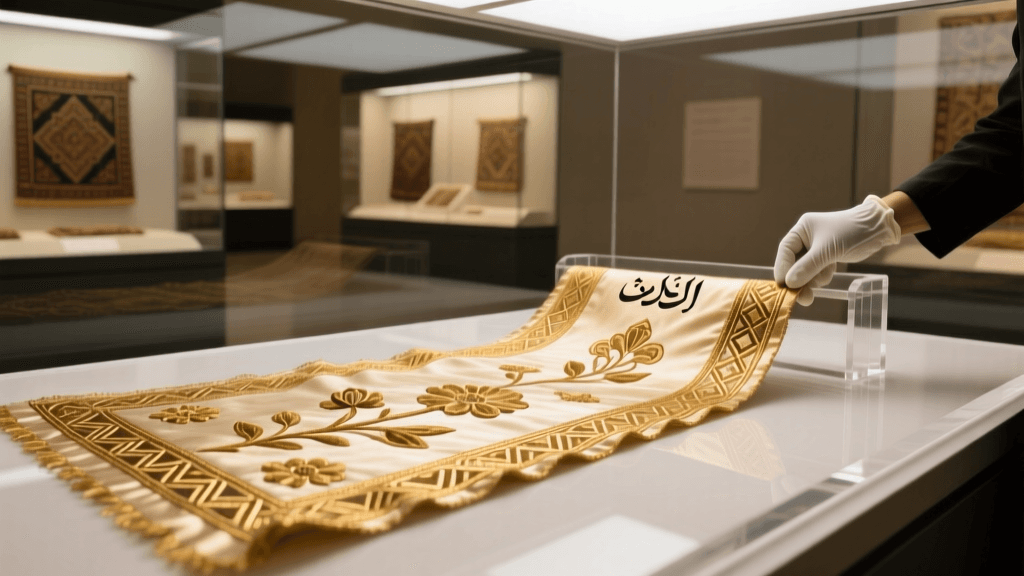
The Enduring Legacy of Sogdian Samite Silk
The Silk Road was not merely a conduit for spices and precious metals; it was the vital artery of ancient global fashion and textile innovation. Among the most prized commodities traded across this vast network was Sogdian samite, a luxurious warp-faced compound twill silk that captivated empires from Chang'an to Constantinople. As we navigate the archaeological landscape in 2026, groundbreaking conservation efforts and non-invasive scanning technologies are shedding unprecedented light on these ancient textiles. This article explores the latest 2026 archaeological breakthroughs regarding Sogdian silk exchanges, the intricate mechanics of samite weaving, and how modern institutions are preserving these fragile threads for future generations.
Understanding Warp-Faced Compound Twill
Unlike the simpler weft-faced silks that dominated early Chinese production, Sogdian samite relied on a complex warp-faced compound twill structure. This technique required multiple sets of warp threads to create dense, heavy fabrics with vivid, contrasting patterns. The structural integrity of samite made it ideal for heavy garments, ceremonial banners, and diplomatic gifts. In 2026, textile engineers utilizing AI-driven structural modeling have finally mapped the exact tension and loom requirements used by 8th-century Sogdian weavers, revealing a level of mechanical sophistication that rivals modern jacquard automation.
2026 Breakthroughs in the Astana Tombs
The Astana Tombs in Turpan, Xinjiang, have long been celebrated as an underground museum of the Silk Road, thanks to the region's hyper-arid climate that naturally mummified both bodies and their exquisite textile garments. In early 2026, a joint archaeological task force announced the successful extraction and stabilization of a previously inaccessible burial chamber containing over forty intact Sogdian silk fragments. These fragments feature the iconic pearl roundel motifs, enclosing stylized boars, simurghs, and confronting ducks—hallmarks of Sasanian and Sogdian artistic exchange.
According to the International Dunhuang Project (IDP), the 2026 excavation season prioritized in-situ conservation. Rather than immediately extracting the textiles to a laboratory, conservators deployed portable, climate-controlled micro-chambers directly within the tomb corridors. This prevented the catastrophic humidity shocks that historically caused ancient silk fibers to shatter upon exposure to modern surface air.
Pre-2020 vs. 2026 Textile Conservation Protocols
The preservation of 1,400-year-old protein fibers requires meticulous environmental control. The shift from traditional physical stabilization to 2026's nanotechnology and digital archiving represents a paradigm shift in Silk Road archaeology.
| Conservation Aspect | Traditional Methods (Pre-2020) | 2026 Advanced Protocols |
|---|---|---|
| Fiber Analysis | Destructive microscopic sampling | Non-invasive AI multispectral imaging |
| Consolidation | Synthetic polymer adhesives | Bio-compatible nanocellulose gels |
| Climate Control | Post-excavation lab humidifiers | In-situ portable micro-climate tents |
| Pattern Reconstruction | Manual graph-paper mapping | 3D photogrammetry and AI loom simulation |
2026 Dye Analysis: Tracing the Botanical Trade Routes
Beyond the structural mechanics of the weave, the coloration of Sogdian samite provides a chemical map of the Silk Road's botanical exchanges. In 2026, high-performance liquid chromatography (HPLC) combined with non-destructive surface scanning has allowed researchers to identify the exact geographic origins of the dyes used in the Astana fragments. The vibrant crimsons were derived from safflower (Carthamus tinctorius) and madder root (Rubia tinctorum), while the deep blues were achieved through carefully fermented indigo. Interestingly, the 2026 spectral analysis revealed trace amounts of weld (Reseda luteola) in the yellow motifs—a dye native to the Mediterranean and Western Asia, proving that not only finished textiles but also raw dye materials and botanical knowledge were actively traded eastward into the Tang Dynasty heartland. This chemical evidence underscores the Silk Road as a bidirectional highway of agricultural and chemical innovation, fundamentally shaping the palette of ancient Asian fashion.
The 2026 Revival of Ancient Loom Technology
Archaeological preservation is only half the battle; the other is the living continuation of the craft. In 2026, the China National Silk Museum in Hangzhou, in collaboration with the UNESCO Silk Roads Programme, launched an initiative to physically reconstruct the massive multi-tiered draw looms required for authentic samite production. Master weavers, utilizing the 2026 AI-generated tension maps, have successfully recreated the famous "Boar's Head Roundel" silk using historically accurate degummed mulberry silk threads and natural madder and indigo dyes. These 2026 revival pieces are not merely museum replicas; they are being integrated into high-end contemporary fashion, bridging the gap between ancient Sogdian merchants and modern global runways.
Experiencing the Silk Road Textile Heritage in 2026
For textile enthusiasts, historians, and cultural travelers, 2026 offers unparalleled access to Silk Road textile collections. If you are planning a research trip or a cultural tour to view these Sogdian masterpieces, here is your actionable guide to the premier institutions this year.
1. Xinjiang Regional Museum (Urumqi)
Home to the majority of the Astana Tombs' textile treasures, the newly expanded Textile Conservation Wing opened to the public in mid-2026. Actionable Tip: Book the "Behind-the-Loom" VIP conservation tour at least three weeks in advance via their official WeChat mini-program. The 2026 admission fee remains free for the main halls, but the specialized conservation lab tour costs 120 RMB and includes a hands-on silk degumming workshop.
2. Turpan Museum & Astana Site
While the Urumqi museum holds the pristine pieces, the Turpan Museum offers vital geographic context. In 2026, the Astana archaeological site has implemented augmented reality (AR) viewing stations. Actionable Tip: Download the official "Silk Road AR 2026" application before arriving, as on-site cellular bandwidth is reserved for archaeological telemetry. The AR overlay allows you to see the tombs as they appeared in the 8th century, complete with digital reconstructions of the silk banners draping the burial chambers.
3. China National Silk Museum (Hangzhou)
For those unable to travel to the remote western frontiers, Hangzhou offers the most comprehensive technical analysis of Sogdian weaving. The 2026 "Threads of Sogdia" exhibition features side-by-side comparisons of excavated fragments and the newly woven 2026 revival textiles. Actionable Tip: Visit on a Thursday evening during their extended "Night at the Museum" hours (6:00 PM to 9:00 PM) to avoid the weekend crowds and attend the live draw-loom demonstrations.
Conclusion
The 2026 archaeological and conservation milestones surrounding Sogdian samite silk have fundamentally deepened our understanding of ancient Asian textile exchanges. By combining hyper-arid excavation sites with cutting-edge AI analysis and nanocellulose preservation, researchers are ensuring that the vibrant pearl roundels and intricate warp-faced twills of the Silk Road will endure for centuries to come. Whether you are a weaving practitioner studying ancient tension mechanics or a traveler seeking the tangible remnants of Sogdian commerce, the living legacy of these textiles has never been more accessible or meticulously preserved than it is today.