Hanfu Travel Wardrobe 2026: Packing & Destination Styles
The Renaissance of Hanfu Tourism in 2026
As we navigate the 2026 travel season, the global fascination with traditional Chinese clothing has evolved from a niche cultural appreciation into a mainstream travel phenomenon. Hanfu tourism is no longer confined to domestic historical sites; travelers are now curating destination-specific Hanfu wardrobes for international trips, blending ancient aesthetics with modern nomadic practicality. Whether you are strolling through the historic streets of Xi'an, attending a tea ceremony in Kyoto, or navigating the fashion-forward avenues of Paris, packing the right Hanfu requires strategic planning. This comprehensive guide will help you build a versatile, wrinkle-resistant, and culturally resonant travel wardrobe for your 2026 adventures.
Curating Your Destination-Specific Hanfu Wardrobe
The key to a successful Hanfu travel wardrobe is matching the silhouette and historical context of your garments to your destination. Different locales call for different eras, fabrics, and levels of formality.
Historical Hubs: Xi'an, Luoyang, and Beijing
When visiting China's ancient capitals, the goal is often maximalist historical immersion. For the grand architecture of the Forbidden City or the Tang Dynasty remnants of Xi'an, pack a Ming Dynasty Mamianqun (horse-face skirt) paired with a structured Aoqun (jacket and skirt). The Mamianqun's stiff, structured pleats photograph beautifully against monumental backdrops. For warmer months, a Tang Dynasty Qixiong Ruqun (chest-high skirt) offers a vibrant, flowing silhouette that captures the cosmopolitan spirit of the ancient Silk Road, a route extensively documented by the UNESCO Silk Roads programme.
East Asian Neighbors: Kyoto, Nara, and Seoul
When traveling to neighboring countries with their own robust traditional dress cultures, subtlety and respect are paramount. Opt for the Song Dynasty Beizi (a lightweight, open-front coat) paired with a simple pleated skirt and narrow sleeves. The Song aesthetic is characterized by minimalist elegance, muted tones, and slender silhouettes. This style harmonizes beautifully with the tranquil bamboo groves of Arashiyama or the serene temples of Nara, allowing you to honor your Han heritage while respecting the local minimalist visual landscape.
Western Metropolises: Paris, Milan, and New York
For Western fashion capitals, the 2026 trend is 'Hanfu Mix-and-Match' (Hanfu Yuansu). Pack versatile separates like a Song-style pleated midi skirt that can be paired with a modern cashmere turtleneck, or a Ming Dynasty standing-collar shirt worn under a tailored contemporary blazer. This approach integrates traditional elements into a chic, urban travel wardrobe without requiring full historical styling, making it perfect for museum visits, fine dining, and city exploration.
Fabric Technology: What to Pack and What to Leave Behind
The biggest enemy of the traveling Hanfu enthusiast is the wrinkle. While pure mulberry silk and traditional Xiangyunsha (gambiered Canton gauze) are stunning, they are notoriously difficult to maintain on the road. In 2026, textile advancements have provided incredible alternatives for travelers.
- Pack: Tencel-Silk Blends. These 2026 fabric innovations offer the drape and luster of pure silk but possess the wrinkle-resistance and machine-washability of botanical cellulose fibers.
- Pack: High-Density Polyester Organza. Modern weaving techniques have created synthetic organzas that mimic the crispness of silk but can be crushed into a suitcase and will naturally bounce back to their original volume.
- Pack: Crushed Textured Crepe. Garments with intentional crinkle textures are perfect for travel, as they hide transit wrinkles entirely.
- Leave Behind: Pure Raw Silk and Heavy Brocades. Unless you are traveling with a professional steamer and have access to specialized dry cleaning, leave your most delicate, water-staining, and heavy metallic-thread brocades at home.
For deeper insights into preserving delicate textiles during transit and storage, the Victoria and Albert Museum's textile conservation guide offers invaluable advice on handling historical and delicate fabrics.
The Ultimate 2026 Hanfu Travel Packing Matrix
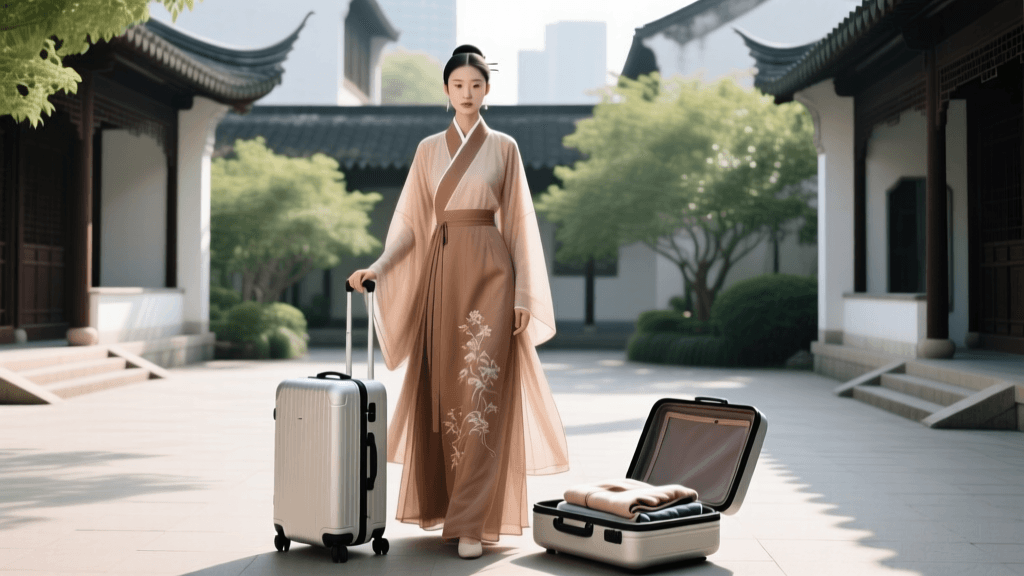
To maximize luggage space while ensuring your garments arrive in pristine condition, utilize the 'bundle wrapping' and 'pleat-rolling' techniques. Below is a structured packing matrix for a standard two-week cultural trip.
| Garment / Item | Destination Match | Packing Method | Weight (approx.) |
|---|---|---|---|
| Ming Mamianqun (Horse-Face Skirt) | Xi'an, Beijing, Historical Sites | Roll strictly along the pleat lines, secure with silk ribbons | 450g |
| Song Beizi (Lightweight Coat) | Kyoto, Nara, Spring/Autumn Travel | Fold using the KonMari file method to prevent shoulder creases | 220g |
| Tang Qixiong Ruqun (Chest Skirt) | Summer Festivals, Tropical Climates | Bundle wrap around a central core of soft undergarments | 380g |
| Modernized Song Pleated Skirt | Paris, Milan, Urban Exploration | Hang in a compressed garment bag, or roll loosely | 300g |
| Embroidered Yunxie (Cloud Shoes) | All Destinations (Flat terrain) | Stuff with tissue to maintain shape, place in shoe bags | 250g |
Essential Travel Accessories and On-the-Go Care
A beautiful Hanfu is only as good as the styling and care it receives on the road. The 2026 travel gear market has introduced several must-have accessories for the traditional wardrobe.
Portable Ultrasonic Steamers
Forget bulky traditional irons. The latest ultrasonic travel steamers weigh less than 300 grams and use high-frequency vibrations to relax silk and Tencel fibers without the risk of scorching or water-spotting. They are TSA-approved and heat up in under 15 seconds, making them perfect for a quick refresh in your hotel room before a photoshoot.
Anti-Tarnish Hairpin Organizers
Hanfu styling requires an array of Zanzi (hairpins), buyao (step-shake ornaments), and hair crowns. Moisture and friction in a standard toiletry bag will quickly tarnish brass and copper alloys. Invest in a velvet-lined, anti-tarnish jewelry roll with individual slots for long hair sticks to prevent them from scratching one another or bending during transit.
The 'Zhongyi' (Inner Layer) Strategy
Traditional outer layers are rarely washed. To protect your investment, always pack moisture-wicking, skin-toned 'Zhongyi' (inner garments). Modern 2026 iterations of the Zhongyi are made from ultra-fine merino wool or bamboo viscose, which regulate body temperature, absorb sweat, and remain completely invisible beneath sheer Song dynasty tops or wide Tang dynasty sleeves.
Traveler's Tip: Always carry a small, decorative silk pouch in your sleeve or waist belt. It serves as a historically accurate accessory while functioning as a practical modern pocket for your smartphone, hotel key card, and transit pass.
Footwear: Balancing Tradition and Ergonomics
Historically, Hanfu was paired with flat, cloth-soled shoes or elevated wooden clogs. For modern travel, where you might easily exceed 15,000 steps a day on cobblestones or uneven temple paths, traditional footwear can lead to severe fatigue.
In 2026, specialized Hanfu footwear brands have bridged this gap by introducing Ergonomic Yunxie (Cloud Shoes). These shoes maintain the traditional upturned toe and intricate embroidered uppers but feature hidden memory-foam insoles, arch support, and shock-absorbing rubber outsoles. For destinations requiring extensive hiking or walking, it is entirely acceptable within the modern Hanfu community to pair your skirt with clean, minimalist leather ankle boots or high-quality embroidered loafers that complement the color palette of your outfit.
Conclusion: Embracing the Journey
Packing a Hanfu travel wardrobe in 2026 is an exercise in balancing historical reverence with modern convenience. By selecting destination-appropriate silhouettes, leveraging advanced wrinkle-resistant fabrics, and utilizing smart packing techniques, you can ensure that your traditional garments remain as vibrant and structured on the other side of the world as they were in your closet. Whether you are tracing the ancient Silk Road or redefining street style in a Western metropolis, your Hanfu wardrobe is your passport to a deeper, more immersive cultural journey.