Chinese Haute Couture: Traditional Motifs On Global Runways
The intersection of ancient Chinese craftsmanship and modern international haute couture represents one of the most dynamic cross-cultural dialogues in fashion history. From the bias-cut Qipaos of 1930s Shanghai to the structural marvels of the Mamianqun (horse-face skirt) gracing Parisian runways, Chinese traditional garments have continually challenged and inspired Western tailoring. When The Metropolitan Museum of Art hosted its record-breaking 'China: Through the Looking Glass' exhibition, it drew over 815,000 visitors, cementing the undeniable global appetite for Chinese sartorial heritage. As Smithsonian Magazine noted, the exhibition highlighted how Chinese aesthetics have served as a profound wellspring of creativity for Western designers for centuries.
The Evolution of Chinese Silhouettes in Western Couture
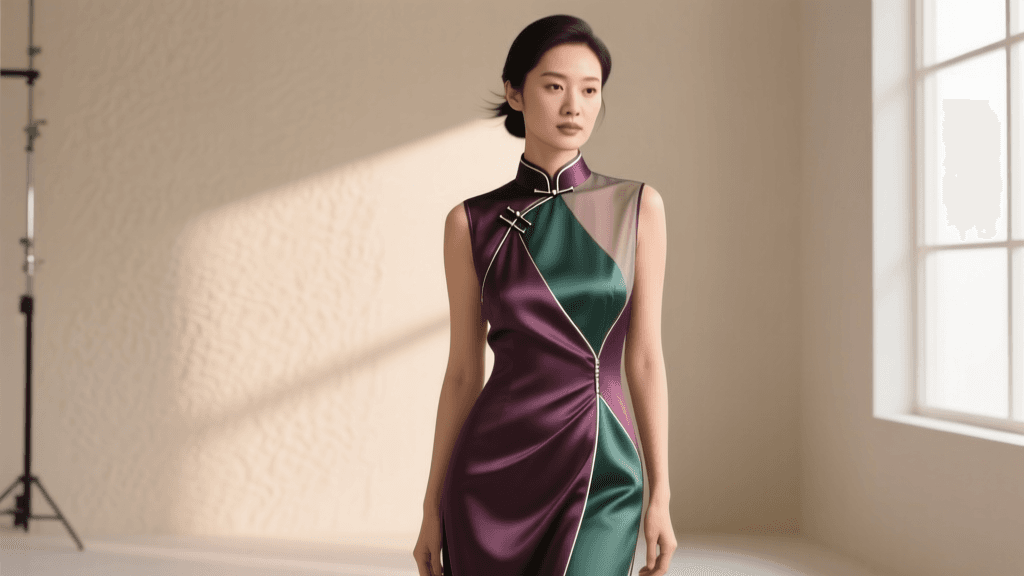
Western fascination with Chinese fashion is not a modern phenomenon. Yves Saint Laurent’s seminal 1977 'Les Chinoises' collection introduced the Mandarin collar and frog button closures to a global audience, while John Galliano’s 1997 Dior collection reimagined the Qipao with Hollywood glamour. However, contemporary international couture has shifted from mere appropriation to a deeper appreciation of structural authenticity and heritage textiles.
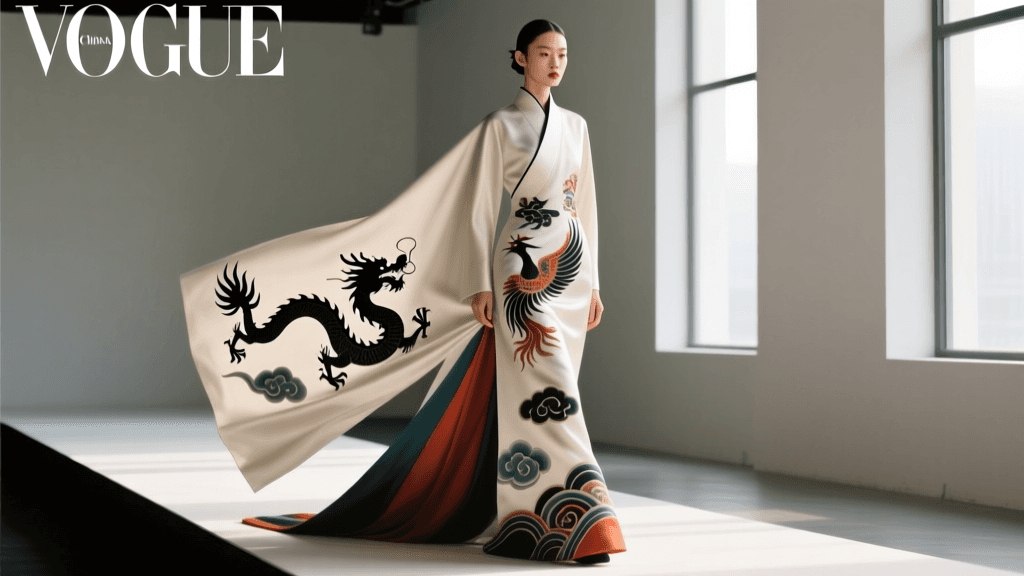
Today, global fashion houses and elite Chinese couturiers like Guo Pei are focusing on the architectural integrity of traditional garments. The modern runway frequently features the structured, pleated silhouettes of the Ming Dynasty Mamianqun and the sweeping, voluminous sleeves of the Tang Dynasty Hanfu, adapted with modern corsetry and sustainable textiles.
Flat-Cutting vs. Western Darting: A Structural Analysis
To truly understand Chinese couture, one must understand the traditional flat-cutting method (十字裁剪). Unlike Western tailoring, which relies on darts, seams, and bias-cutting to mold fabric to the body's curves, traditional Chinese garments are cut from a single piece of fabric folded over the shoulder. This zero-waste approach creates a straight, unbroken line from the collar to the hem.
- Traditional Flat-Cut: Features no shoulder seam. The fabric drapes naturally over the body, creating a relaxed, fluid silhouette. Ideal for Xiangyunsha silks and delicate Su embroidery, as it prevents the distortion of intricate patterns.
- Western-Influenced Couture: Incorporates shoulder seams, bust darts, and waist nipping. This creates a form-fitting silhouette, popularized in the 1930s Shanghai Qipao.
- Actionable Advice: When authenticating or commissioning a couture piece, examine the shoulder. A true heritage-cut garment will lack a shoulder seam. If you are commissioning a modern hybrid, request a 'drop-shoulder' flat cut with a subtle elasticated inner waistband to provide shape without breaking the continuous fabric grain.
Luxurious Textiles: Sourcing and Authenticating Runway Fabrics
The true value of Chinese haute couture lies in its textiles. The Victoria and Albert Museum extensively documents the complexity of Chinese silk weaving and dyeing techniques, which remain some of the most labor-intensive in the world.
Xiangyunsha (Gambiered Canton Gauze)
Known as 'soft gold,' Xiangyunsha is a silk fabric dyed using the juice of the Dioscorea cirrhosa tuber and coated with iron-rich river mud from the Pearl River Delta. The chemical reaction between the tannins and the iron creates a dual-toned fabric: a glossy, dark brown-black on one side and a matte, earthy rust on the other.
- Cost: Authentic Xiangyunsha ranges from $150 to $350+ per meter, depending on the base silk weight (measured in momme; 19mm to 30mm is standard for couture).
- Authentication: Genuine Xiangyunsha has a distinct, earthy scent reminiscent of river mud and dried herbs. When held to the light, you should see a subtle, organic 'crackle' effect on the dark side, caused by the mud coating shifting. Fakes are often chemically dyed and lack this texture and scent.
- Care: Must be hand-washed in cool water (under 30°C) with a neutral pH silk detergent. Never wring the fabric; roll it in a towel to absorb moisture and dry strictly in the shade. Sunlight will degrade the mud-dye coating.
Kesi (Silk Tapestry)
Kesi, meaning 'cut silk,' is a weaving technique where the weft threads are woven back and forth only where a specific color is needed, creating tiny slits between color blocks. It is frequently used in haute couture for intricate, painterly motifs like dragons, phoenixes, and peonies.
- Cost & Timing: A single meter of authentic, hand-woven Kesi can cost between $800 and $2,500. Commissioning a bespoke Kesi couture jacket typically takes 6 to 9 months of continuous weaving by a master artisan.
- Styling: Because Kesi is structurally stiff and fragile at the slits, it is best used for structured outerwear, such as a modernized Xiapei (cape) or a rigid Mandarin-collar jacket, rather than draped garments.
The Mamianqun (Horse-Face Skirt) Runway Revival
The Mamianqun has recently experienced a massive resurgence on international runways and in street style. Characterized by its flat front and back panels (the 'horse faces') and deeply pleated sides, this skirt is a masterclass in kinetic fashion. When the wearer walks, the pleats fan out, revealing hidden embroidery or contrasting silk linings.
Measurement and Sourcing Guide
Buying a couture-grade Mamianqun requires precise measurements to ensure the pleats lay flat and the skirt does not gap at the waist.
- Waist Measurement: Measure exactly where the skirt will sit (usually the natural waist). Traditional skirts use a flat waistband that ties, but couture versions often use a structured, hook-and-eye closure.
- Skirt Length: Measure from the waist to the desired hem. For a dramatic runway look, aim for 105cm to 110cm (grazing the floor with a 5cm heel).
- Pleat Width: Standard couture pleats are 2.5cm to 3cm wide. Narrower pleats (1.5cm) require significantly more fabric and increase the cost and weight of the skirt.
A well-constructed Mamianqun should require a minimum of 3 to 4 meters of heavy silk brocade or jacquard to achieve the correct volume and kinetic movement.
Comparison Chart: Mass-Market vs. Haute Couture Chinese Garments
Understanding the difference between fast-fashion interpretations and true couture is vital for collectors and enthusiasts.
| Feature | Mass-Market / Fast Fashion | Haute Couture / Bespoke Heritage |
|---|---|---|
| Textile | Polyester jacquard, synthetic brocade ($10-$20/m) | Mulberry silk, Xiangyunsha, Kesi ($150-$2500/m) |
| Embroidery | Machine-embroidered, single-sided, visible bobbin threads | Hand-embroidered Su or Shu techniques, double-sided, seamless |
| Construction | Serger-stitched seams, standard Western sizing (S/M/L) | Hand-finished seams, 18-point bespoke measurements, flat-cut |
| Hardware | Plastic frog buttons, stamped alloy zippers | Carved jade, knotted silk frogs, hidden mother-of-pearl clasps |
| Production Time | Mass-produced in days | 3 to 9 months per garment |
| Estimated Cost | $40 - $120 USD | $1,500 - $15,000+ USD |
Practical Wardrobe Integration: Styling Couture Pieces
Integrating haute couture Chinese garments into a modern, international wardrobe requires a balance of proportions and textures. The goal is to let the heritage piece act as the focal point without looking like a costume.
- The Couture Qipao Jacket: Pair a heavily embroidered, stiff-collared Qipao jacket with wide-leg, high-waisted wool trousers and a silk camisole. This contrasts the rigid, structured top with fluid, modern bottom wear, perfect for high-end evening events.
- The Xiangyunsha Midi Skirt: Because the fabric is dark and subtly textured, pair it with a crisp, oversized white poplin button-down shirt. Tuck the shirt in and add a minimalist leather belt to bridge the gap between traditional Chinese dyeing and contemporary minimalism.
- Mamianqun for the Office: Choose a Mamianqun made from a matte, crepe de chine silk in a solid, muted tone (like navy or forest green) with tone-on-tone pleat embroidery. Pair it with a tailored cashmere turtleneck and ankle boots.
Preservation and Archival Care
Investing in Chinese haute couture requires strict adherence to textile preservation. Heritage silks and natural dyes are highly susceptible to environmental damage.
- Storage: Never hang heavy couture garments like Kesi jackets or beaded Qipaos on standard hangers, as the weight will distort the shoulder seams. Store them flat in acid-free, archival-quality textile boxes.
- Wrapping: Wrap garments in unbleached, washed muslin or acid-free tissue paper. Never use plastic garment bags, as they trap moisture and emit gases that yellow silk.
- Climate Control: Maintain a storage environment with a relative humidity of 45% to 55% and a stable temperature between 65°F and 70°F (18°C - 21°C). Fluctuations in humidity can cause natural dyes like Xiangyunsha to crack or bleed.
Conclusion
Chinese fashion in international couture is no longer just about borrowing exotic motifs; it is about respecting and elevating centuries-old structural engineering and textile alchemy. Whether you are sourcing a vintage 1930s Qipao, commissioning a bespoke Xiangyunsha gown, or styling a modern Mamianqun, understanding the technical and historical nuances of these garments allows you to wear them with the reverence and sophistication they demand. As global runways continue to look Eastward, the true connoisseur knows that the ultimate luxury lies in the authenticity of the craft.