Sogdian Pearl Roundel Silks: 2026 Archaeological Finds & Revival
The Crossroads of Threads: Sogdian Merchants and the Pearl Roundel
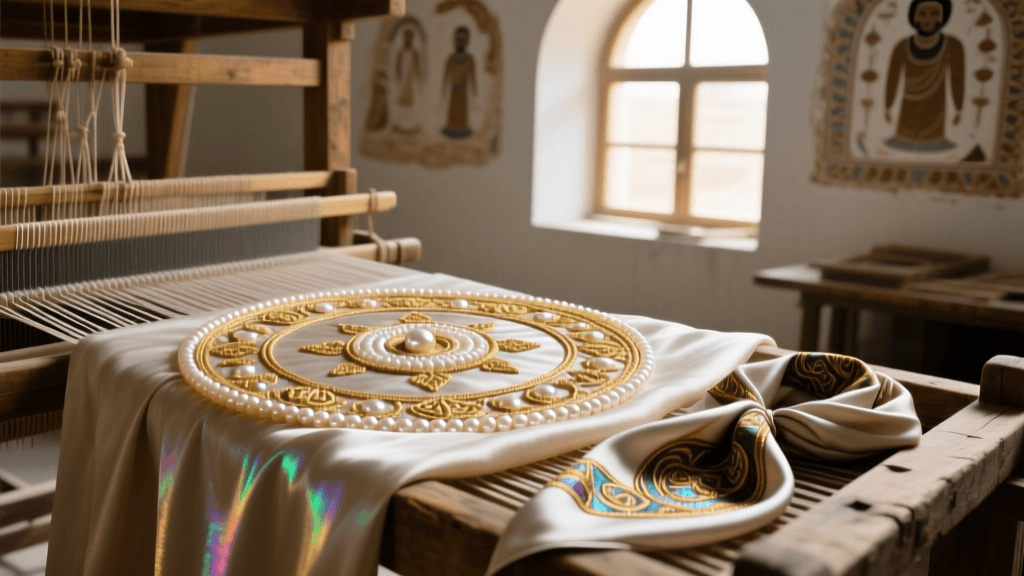
The Silk Road was not merely a conduit for spices, jade, and precious metals; it was a vibrant superhighway of aesthetic, cultural, and technological exchange. Among the most fascinating artifacts to emerge from this ancient network are the Sogdian-influenced pearl roundel silks. Known in Chinese as lianzhuwen (连珠纹), the pearl roundel motif features a continuous border of overlapping pearls enclosing a central figure—often a mythical beast, a waterfowl, or a floral medallion. Originating in Sassanid Persia, this design was carried eastward by Sogdian merchants, the undisputed master traders of Central Asia, before being enthusiastically adopted and adapted by Tang Dynasty weavers.
As we navigate the fashion and textile landscape of 2026, the intersection of ancient archaeological finds and modern conservation technology has sparked a massive revival of these patterns. Today, the Xin Zhongshi (New Chinese Style) movement is drawing heavily upon these excavated textiles, translating 8th-century loom techniques into contemporary luxury garments. To understand this 2026 renaissance, we must first look beneath the sands of the Turpan Depression.
Astana Cemetery: The Time Capsule of Silk Road Textiles
The Astana Cemetery, located near the ancient oasis city of Gaochang in modern-day Xinjiang, serves as one of the most critical archaeological sites for Silk Road textile research. Due to the region's extreme aridity, organic materials that would have decomposed elsewhere were naturally mummified and preserved. Excavations here have yielded hundreds of intact silk garments, shoes, and burial banners dating from the 3rd to the 8th centuries.
For textile historians, Astana is the ultimate proving ground for studying the evolution of samite—a luxurious, weft-faced compound twill silk. Sogdian weavers were famous for their mastery of samite, which allowed for complex, multi-colored geometric and figural patterns that were impossible on traditional Chinese warp-faced looms. When Tang Dynasty artisans encountered Sogdian samite, they reverse-engineered the technique, leading to a golden age of cross-cultural textile manufacturing. According to the UNESCO Silk Roads Programme, the synthesis of Persian motifs, Sogdian weaving structures, and Chinese silk cultivation represents one of the earliest and most successful examples of globalized design in human history.
2026 Conservation Breakthroughs: Multispectral Imaging
Historically, studying the Astana silks required physical sampling, which risked damaging the fragile, millennia-old fibers. However, 2026 has ushered in a new era of non-invasive archaeological conservation. Leading laboratories in Xi'an and Beijing are now utilizing AI-assisted multispectral imaging and Raman spectroscopy to analyze the chemical composition of ancient dyes without ever touching the fabric.
Through these 2026 technological advancements, researchers have successfully mapped the faded remnants of safflower red, madder, and indigo on pearl roundel fragments. This precise color-mapping has allowed digital archives, such as those hosted by the International Dunhuang Project (IDP), to release ultra-high-definition, color-corrected 3D models of the textiles. These open-access digital twins have become the foundational blueprints for modern textile engineers and fashion houses looking to recreate the exact vibrancy of Tang-era silks.
Decoding the Motif: A Comparative Analysis
While the pearl roundel is often broadly categorized as a 'Silk Road motif,' its execution varied wildly depending on the weavers' geographic and cultural origins. Understanding these nuances is critical for modern collectors and designers in 2026 who wish to create historically accurate Xin Zhongshi garments.
| Origin/Era | Central Motif | Pearl Border Style | Weaving Technique |
|---|---|---|---|
| Sassanid Persia (3rd-7th C.) | Senmurv, Boar, Lion | Large, uniform spherical pearls | Weft-faced compound twill |
| Sogdiana (5th-8th C.) | Ducks, Panthers, Winged Horses | Alternating pearls and diamond shapes | Samite with Z-spun silk |
| Tang Dynasty China (7th-9th C.) | Dragons, Phoenixes, Floral Medallions | Smaller pearls, often merging with floral vines | Warp-faced compound tabby & Samite |
As the table illustrates, the Tang Chinese adaptation softened the rigid, martial aesthetic of the Sassanid and Sogdian designs, integrating auspicious local fauna and fluid botanical elements into the rigid pearl boundary.
The 2026 Xin Zhongshi Revival: From Tomb to Runway
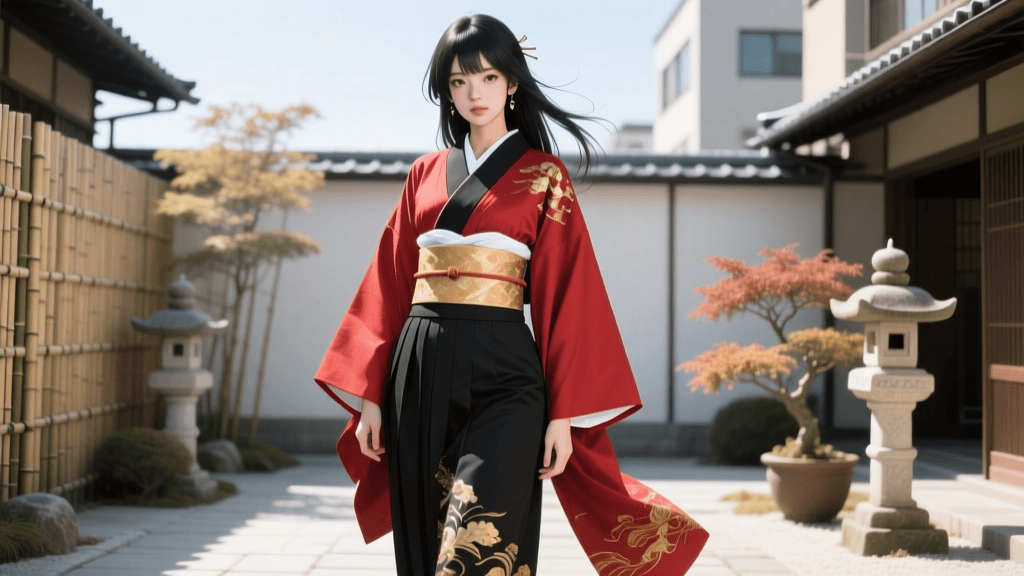
In 2026, the Xin Zhongshi (New Chinese Style) movement has evolved beyond simple Mandarin collars and embroidered plum blossoms. High-end consumers are demanding deep historical authenticity, driving a surge in 'archaeological fashion.' Avant-garde designers in Shanghai and Hangzhou are collaborating directly with textile archaeologists to reproduce Astana pearl roundels using modern, computerized Jacquard looms.
Unlike the flat, digital prints that saturated the market in the early 2020s, the 2026 standard for luxury Xin Zhongshi requires structural weaving. By utilizing 100% Grade 6A mulberry silk and metallic threads wrapped in genuine gold leaf, contemporary weavers are achieving the heavy, sculptural drape characteristic of Tang Dynasty samite. A genuine, woven pearl roundel jacket from a top-tier heritage brand in 2026 typically retails between $1,200 and $3,500, reflecting the immense computational and mechanical effort required to program the Jacquard punch-cards for weft-faced compound twills.
Collector’s Guide: Sourcing Authentic Jacquard Reproductions
If you are looking to invest in a historically accurate pearl roundel garment this year, it is vital to know how to distinguish a true structural weave from a superficial imitation. Here is what to look for when shopping:
- The Reverse Side Test: Authentic samite and compound twill reproductions will show a distinct, albeit messier, inverse of the pattern on the reverse side, with long 'floats' of colored thread. If the reverse side is completely blank or shows a uniform grid, it is a digital print or a basic satin weave.
- Thread Twist Direction: Sogdian and early Tang silks frequently utilized Z-spun silk (twisted to the right), whereas later Chinese silks favored S-spun. Premium 2026 reproduction houses often custom-spin their silk to match the Z-twist of the Astana originals, giving the fabric a slightly nubbier, more organic texture.
- Motif Accuracy: Beware of anachronisms. A genuine Tang-era pearl roundel will not feature Ming Dynasty cloud collars or Qing Dynasty bat motifs. The central figures should strictly adhere to 7th- and 8th-century iconography, such as paired ducks (symbolizing marital fidelity) or confronting panthers.
Archival Storage and Maintenance for Silk Brocades
Owning a heavy, metallic-threaded silk brocade requires meticulous care, as the structural complexity of the weave makes it susceptible to snagging and environmental degradation. To preserve your 2026 Xin Zhongshi investments, adhere to the following conservation-grade storage protocols:
- Climate Control: Silk is highly sensitive to fluctuating humidity, which can cause the fibers to expand and contract, eventually snapping the delicate metallic threads. Maintain a stable relative humidity (RH) of 45% to 55%. Many luxury collectors in 2026 are installing smart-climate wardrobe modules that actively regulate moisture and filter out airborne pollutants.
- UV Protection: Even indirect sunlight will rapidly degrade natural dyes like madder and safflower. Store garments in a dark environment, and when displaying them, ensure the room is equipped with UV-filtering window films.
- Padding and Folding: Never hang heavy samite garments on standard wire or wooden hangers, as the weight of the fabric will distort the warp threads over time. Instead, fold the garment loosely, padding the folds with acid-free, unbuffered tissue paper to prevent hard creases, and store it flat in an archival-quality textile box.
Conclusion
The pearl roundel silks of the Astana Cemetery are far more than fragile relics of a bygone era; they are a testament to the collaborative genius of the ancient Silk Road. Through the lens of 2026's multispectral imaging and advanced Jacquard technology, the Sogdian merchants and Tang Dynasty weavers are speaking to us once again. By understanding the archaeological roots of these textiles, modern enthusiasts can appreciate the Xin Zhongshi movement not just as a fleeting fashion trend, but as a living, breathing continuation of a millennia-old cross-cultural dialogue.