Ultimate Kimono Buying Guide: Types, Occasions and Costs
The Art of Choosing the Perfect Kimono
Buying a traditional Japanese kimono is far more complex than purchasing a standard piece of Western clothing. It is an investment in art, history, and cultural heritage. Unlike modern fashion, where personal expression often overrides strict rules, the kimono operates on a highly structured system of formality, seasonality, and social context. Whether you are a collector, a practitioner of traditional arts, or a tourist looking to bring home an authentic piece of Japan, understanding the nuances of kimono types is essential.
According to the Victoria and Albert Museum, the kimono evolved from a simple undergarment in the Heian period into the highly codified outer garment we recognize today, with its patterns, colors, and materials serving as a visual language that communicates the wearer's age, marital status, and the formality of the occasion. This guide will break down the primary types of women's kimono, how to navigate the buying process, and what to expect regarding sizing and costs.
Understanding the TPO Rule: Time, Place, and Occasion
In Japanese fashion, the TPO rule (Time, Place, Occasion) is paramount. A garment that is breathtakingly beautiful might be considered highly inappropriate if worn to the wrong event. The formality of a kimono is determined by several factors: the presence and number of family crests (kamon), the type of fabric, the dyeing technique, and the length of the sleeves. Before making a purchase, you must ask yourself where and when you intend to wear the garment.
Comparison Chart: Kimono Types and Formality
The following table provides a quick reference guide to the most common types of women's kimono, ranked from casual to most formal.
| Kimono Type | Formality Level | Sleeve Length | Best Occasions | Est. Price (USD) |
|---|---|---|---|---|
| Komon | Casual | 50-70cm | Daily wear, shopping, casual dining | $30 - $150 |
| Tsukesage | Semi-Formal | 50-70cm | Tea ceremonies, theater, parties | $100 - $400 |
| Houmongi | Formal | 50-70cm | Weddings (guest), formal tea events | $200 - $1,000+ |
| Furisode | Very Formal | 100-114cm | Coming of Age Day, unmarried women | $300 - $2,500+ |
| Kurotomesode | Most Formal | 50-70cm | Weddings (close married family) | $500 - $3,000+ |
Deep Dive into Key Kimono Types
Komon: The Everyday Staple
The Komon is the most casual and versatile type of kimono. It is characterized by a repeating pattern that covers the entire garment, with no specific directional flow. Because it lacks formality, it is perfect for exploring the city, attending casual gatherings, or practicing traditional hobbies like pottery or flower arranging. A sub-category, the Edo Komon, features incredibly fine, micro-patterns that appear solid from a distance but reveal intricate designs up close, allowing it to be dressed up slightly with a more formal obi.
Tsukesage and Houmongi: The Semi-Formal and Formal Staples
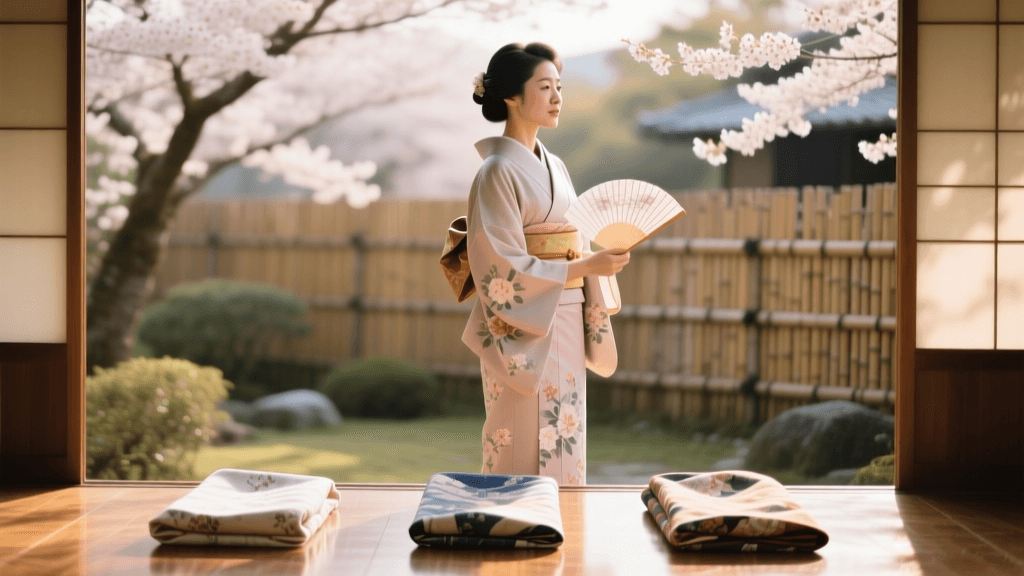
These two types are often confused by beginners, but the distinction lies in the pattern application. A Tsukesage features patterns that are dyed onto the fabric before it is cut, meaning the motifs do not cross the seams. It is an excellent, versatile choice for semi-formal events. The Houmongi, however, is a true formal visiting wear. Its patterns are woven or dyed to flow seamlessly across the seams, creating a continuous, picturesque landscape or motif (known as eba-moyo). As noted by the Metropolitan Museum of Art, the seamless integration of pattern across the structural seams of a Houmongi represents a high level of artisan craftsmanship, making it the go-to choice for married women attending weddings as guests.
Furisode: The Unmarried Woman's Statement
Translating to 'swinging sleeves,' the Furisode is instantly recognizable by its dramatically long sleeves, which can measure over a meter in length. Historically, the swinging of the sleeves was thought to ward off evil spirits and signal romantic availability. Today, it is the most formal kimono for unmarried women, worn primarily for the Coming of Age Day (Seijin no Hi) and university graduation ceremonies. Because of their high cost and limited use, many Japanese families opt to rent Furisode, though buying a vintage or recycled silk Furisode is a popular alternative for international collectors.
Kurotomesode: The Pinnacle of Formality
The Kurotomesode is a black silk kimono featuring patterns only below the waist and bearing three or five white family crests. It is the most formal garment a married woman can wear, typically reserved for the mother of the bride or groom at a wedding. The stark black silk contrasts beautifully with the vibrant, gold-threaded hem patterns and the pristine white under-layers.
Fabric Choices: Silk, Polyester, and Wool
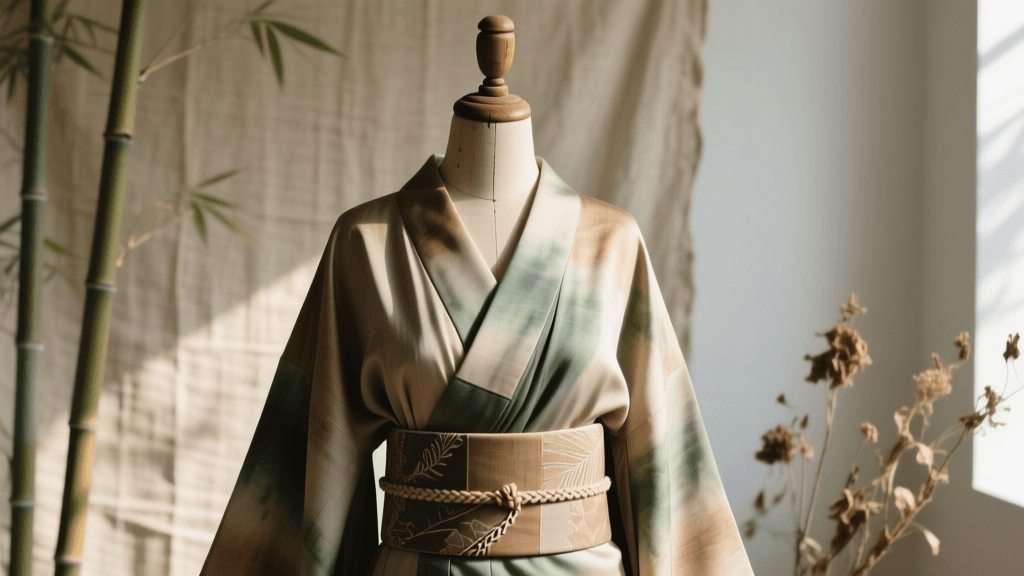
When buying a kimono, the material drastically affects both the price and the maintenance requirements. Silk (ginu) is the traditional and most prestigious choice. It offers a beautiful drape, a subtle sheen, and breathability. However, silk requires professional cleaning and careful storage to prevent moisture damage. For beginners or those on a budget, polyester kimono have become incredibly popular. Modern synthetic kimono are machine washable, wrinkle-resistant, and much more affordable, though they lack the breathability of silk. Wool kimono are also available and are prized for their warmth and durability during the winter months, often worn as casual, everyday wear.
Navigating the Market: New vs. Recycle Shops
One of the best-kept secrets for kimono buyers is Japan's 'recycle' market. In Japan, second-hand kimono shops are referred to as 'recycle shops.' Here, you can find exquisite, hand-painted vintage silk kimono for a fraction of their original retail price. While a brand-new, custom-tailored silk Houmongi can easily cost upwards of $3,000 to $5,000, you can find a stunning vintage equivalent in a Kyoto recycle shop for $100 to $300. As highlighted by the Japan National Tourism Organization, exploring traditional craft districts and local markets is an integral part of the Japanese travel experience, and visiting a recycle kimono shop in areas like Kyoto's Higashiyama or Tokyo's Asakusa offers both a cultural experience and a sustainable way to purchase fashion.
Sizing and Measurements: Getting the Right Fit
Unlike Western clothing, kimono are not sold in standard sizes like Small, Medium, or Large. They are measured by specific dimensions. When buying online or in a shop, you need to know three key measurements:
- Yuki (Arm Span): Measured from the center of the back of the neck, over the shoulder, and down to the wrist bone. This determines the sleeve length and shoulder width. A standard modern Yuki is around 64-68cm.
- Mitake (Body Length): The length of the kimono from the base of the neck to the hem. Because kimono are worn with a fold at the waist (the ohashori), the garment should ideally be about equal to your height, or slightly shorter.
- Haba (Width): The width of the front and back panels. This must accommodate your hip and waist measurements to ensure the garment wraps securely without pulling.
Vintage kimono tend to be smaller, as the average height of Japanese women has increased significantly over the last century. Taller buyers may need to look for modern, custom-made garments or seek out specific 'tall' vintage pieces, which are rarer and more expensive.
The Hidden Costs: Essential Accessories
A common mistake first-time buyers make is budgeting only for the kimono itself. A kimono cannot be worn alone; it requires a specific ecosystem of accessories, which can sometimes cost more than the garment. When planning your purchase, ensure you budget for the following:
- Obi: The wide sash that holds the kimono closed. Formal obi (like the maru or fukuro obi) are heavily brocaded and can be quite expensive.
- Obiage and Obijime: The silk scarf-like cloth (obiage) and decorative cord (obijime) used to tie and secure the obi knot.
- Nagajuban: The under-kimono worn beneath the main garment to protect the silk from sweat and oils, and to provide a decorative collar peek.
- Tabi and Zori: The split-toe white socks (tabi) and the traditional sandals (zori) worn with formal kimono.
- Koshihimo: A set of long, thin cotton ties used to secure the kimono and ohashori in place before the obi is tied.
Conclusion
Purchasing a kimono is a deeply rewarding journey into Japanese aesthetics and craftsmanship. By understanding the strict hierarchy of formality, accurately measuring your body, and exploring both new and vintage markets, you can build a collection that is both culturally respectful and personally meaningful. Whether you opt for a casual, everyday Komon or invest in a breathtaking silk Houmongi, your kimono will serve as a wearable piece of history, bridging the gap between ancient tradition and modern appreciation.