Miao Silver Jewelry And Embroidery: A Sourcing Guide
The Living History of Miao Textile and Silver Heritage
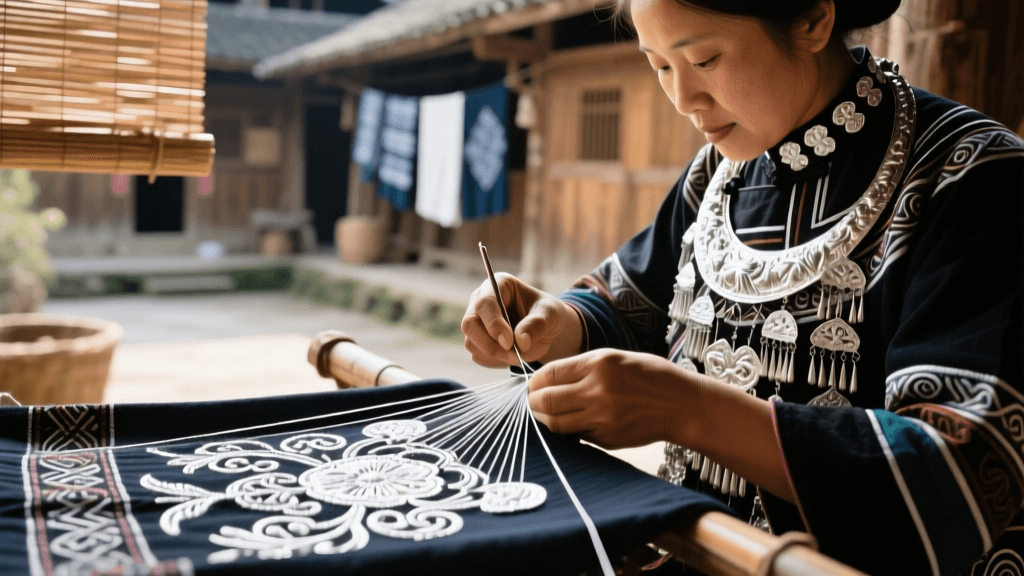
The Miao people, widely known in the West as the Hmong, possess one of the most visually stunning and culturally significant sartorial traditions in Asia. Concentrated primarily in the mountainous provinces of Guizhou, Yunnan, and Hunan in southwestern China, the Miao have historically utilized their clothing as a wearable archive. Because many Miao subgroups lacked a formal written language for centuries, their histories, migration routes, and mythological beliefs were encoded directly into the motifs of their embroidery and the craftsmanship of their silver jewelry. Today, collecting, studying, and wearing Miao garments offers a profound connection to this resilient heritage. For collectors, designers, and cultural enthusiasts, understanding the nuances of Miao craftsmanship is essential for authentic sourcing and proper preservation.
The Art of Miao Embroidery: Techniques and Motifs
Miao embroidery is renowned for its complexity, vibrant color palettes, and three-dimensional textures. According to archival collections documented by institutions like the Metropolitan Museum of Art, Miao textiles are distinguished by their dense, almost tapestry-like stitching that completely obscures the base fabric.
Core Embroidery Techniques
- Pingxiu (Flat Stitch): The most common technique, used for filling large areas with vibrant silk threads. It requires a steady hand to maintain uniform tension.
- Zhouxiu (Wrinkled/Pleated Stitch): A highly specialized 3D technique where silk threads are folded and stitched to create raised, textured surfaces resembling braids or scales. This is often used to depict dragons and water buffalo.
- Daxiux (Braid Stitch): Involves weaving silk threads into narrow cords on a small loom, which are then coiled and stitched onto the garment to form intricate, raised outlines.
- Shuangmianxiu (Double-Sided Embroidery): A master-level technique where the motif is identical and flawless on both sides of the fabric, leaving no loose threads or knots.
Actionable Advice: Authenticating Handmade Embroidery
When sourcing Miao jackets or baby carriers (beishan), always inspect the reverse side of the fabric. Machine-made replicas, which flooded the market in the early 2000s, feature a uniform, grid-like bobbin thread on the back and perfectly identical, repetitive motifs. Genuine hand-embroidered Miao pieces will show slight irregularities in stitch length, organic thread tension, and a complex, sometimes chaotic web of carrying threads on the reverse side. Furthermore, authentic vintage pieces often utilize hand-spun cotton and naturally dyed silk, which have a softer, more muted luster compared to the harsh sheen of modern synthetic threads.
Miao Batik (Lajian): The Scent of Indigo
Before embroidery begins, the base fabric is often prepared using lajian, or Miao batik. Artisans use a copper knife (ladao) to draw intricate geometric and floral patterns onto white cotton using melted beeswax. The cloth is then submerged in vats of fermented indigo dye for several days, sometimes up to a month, to achieve a deep, near-black blue. The wax resists the dye, and once boiled off, it reveals crisp white patterns against the indigo background. The characteristic "crackle" effect—where dye seeps into the natural fractures of the cooled wax—is a hallmark of authentic Miao batik. A high-quality, hand-drawn indigo batik scarf (approx. 180cm x 50cm) typically costs between $40 and $80 USD, depending on the density of the wax drawing.
Miao Silver Jewelry: Weight, Craftsmanship, and Cost
Silver is the soul of Miao adornment. It symbolizes wealth, spiritual protection, and familial status. A full festival ensemble for a Miao woman can include a horned headdress, multiple layered neck rings, chest plaques, hairpins, and bracelets, collectively weighing between 5 to 10 kilograms. The British Museum notes that the sheer volume of silver worn during festivals like the Lusheng Festival is a direct display of a family's prosperity and a dowry safeguard.
Silver Purity and Sourcing Costs
Traditional Miao silversmiths favor high-purity silver (990 or 999) because it is malleable enough for intricate filigree (huasi) and repoussé work. However, in modern tourist hubs, "Miao Silver" is often an alloy of copper, nickel, and zinc (known as Baiyin or white copper), which contains little to no actual silver.
- Testing: Pure silver is non-magnetic. Bring a strong neodymium magnet when sourcing; if the piece sticks, it is an alloy. Look for the "999" or "S990" hallmark, though vintage pieces may lack stamps.
- Pricing Structure: Authentic handmade silver is priced by weight plus a craftsmanship fee. Expect to pay the daily spot price of silver plus a premium of 30% to 100% for the artisan's labor. A 500-gram solid silver horn headdress will cost roughly $400 to $600 USD, whereas a tourist-market alloy replica of the same size may sell for $50.
Comparative Sourcing Guide: Garments and Accessories
| Item | Technique / Material | Creation Time | Average Cost (USD) | Primary Sourcing Location |
|---|---|---|---|---|
| Vintage Pleated Skirt (Baiqun) | Indigo-dyed cotton, hand-pleated | 3 - 6 months | $150 - $400 | Leishan County, Guizhou |
| Embroidered Baby Carrier (Beishan) | Zhouxiu (3D stitch), silk on cotton | 1 - 2 years | $300 - $800 | Taijiang County, Guizhou |
| Silver Horn Headdress | 999 Pure Silver, filigree & repoussé | 2 - 4 weeks | $400 - $900+ | Shidong Town, Taijiang |
| Indigo Batik Jacket | Beeswax resist, fermented indigo | 1 - 2 months | $80 - $200 | Danzhai County, Guizhou |
Practical Travel and Sourcing Timing
To source directly from artisans and witness these garments in their proper cultural context, timing your visit to Guizhou is crucial. The optimal periods align with major Miao festivals:
- The Sisters' Meal Festival (Zimei Fan Jie): Held on the 15th day of the 3rd lunar month (usually April) in Taijiang and Shidong. This is the premier event to see young women adorned in their full, heavy silver heirlooms and finest embroidered jackets. Artisans often set up temporary markets selling newly finished pieces.
- The Lusheng Festival: Occurring in the autumn (September/October), this harvest festival features massive communal dances. It is an excellent time to source pleated skirts and woven sashes, as the cooler weather prompts the wearing of layered, heavily embroidered textiles.
- Negotiation: When buying directly from village artisans, respect the time invested. Haggling aggressively over a piece that took a year to embroider is considered deeply offensive. A polite negotiation of 10-15% is acceptable for commercial stalls, but fixed prices are common for master artisans.
Care and Maintenance of Miao Textiles and Silver
Preserving these ethnic garments requires specific environmental controls and cleaning methods.
Caring for Indigo and Embroidery
Never wash authentic indigo-dyed Miao garments in standard alkaline laundry detergents, as this will strip the natural dye and turn the fabric a dull, muddy gray. If cleaning is necessary, hand-wash in cold water with a pH-neutral soap or a dash of white vinegar to set the color. Store embroidered jackets flat in a cool, dark place. Use cedar blocks rather than mothballs, as the harsh chemicals in mothballs can degrade the natural silk threads and tarnish any metallic accents woven into the fabric.
Maintaining Antique Silver Patina
Miao silver jewelry often features intentional oxidation in the recessed areas to highlight the raised filigree and repoussé motifs—a technique similar to niello. Do not use chemical silver dips or ultrasonic cleaners, as these will strip the dark contrast and leave the piece looking flat and overly bright. Instead, use a soft, dry jeweler's polishing cloth to gently buff only the high-relief areas, preserving the dark, antique patina in the crevices.
"To wear Miao silver and embroidery is to wear the cosmos. The butterfly mother, the water buffalo, and the dragon are not mere decorations; they are the ancestral guardians woven into the very fabric of survival and identity." — Cultural Heritage Proverb, Guizhou Province.
Conclusion
The clothing traditions of the Miao people represent a pinnacle of Asian textile and metallurgical art. Whether you are a collector seeking a museum-quality vintage baby carrier, a jeweler studying traditional filigree, or a traveler wishing to support indigenous artisans, approaching Miao garments with an understanding of their technical complexity and cultural weight ensures the preservation of this extraordinary heritage. For further reading on the intangible cultural heritage of the Miao people, including their oral traditions and craftsmanship, refer to the UNESCO Intangible Cultural Heritage archives.