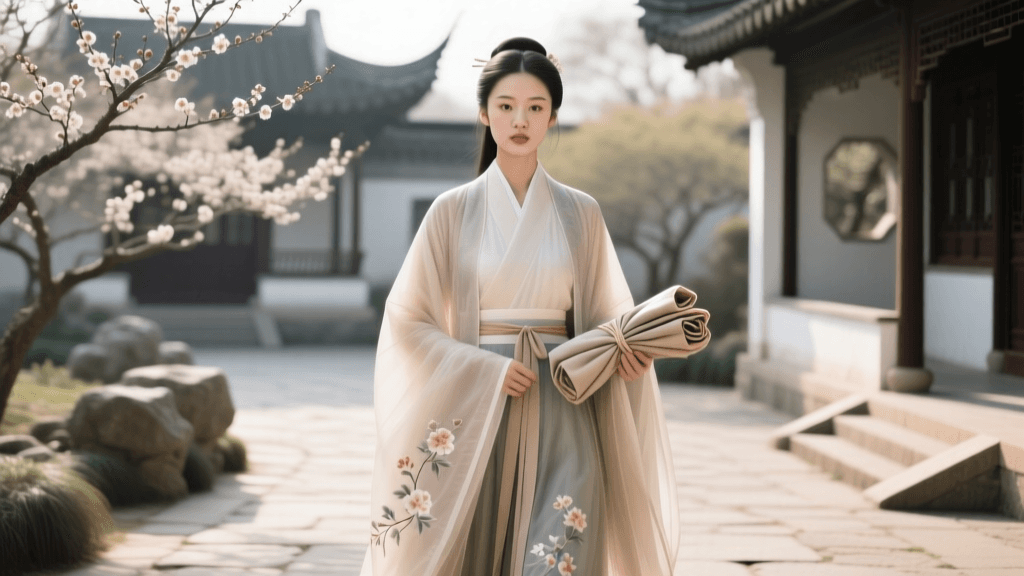
Decoding Hanfu Fashion in Chinese Scroll Paintings
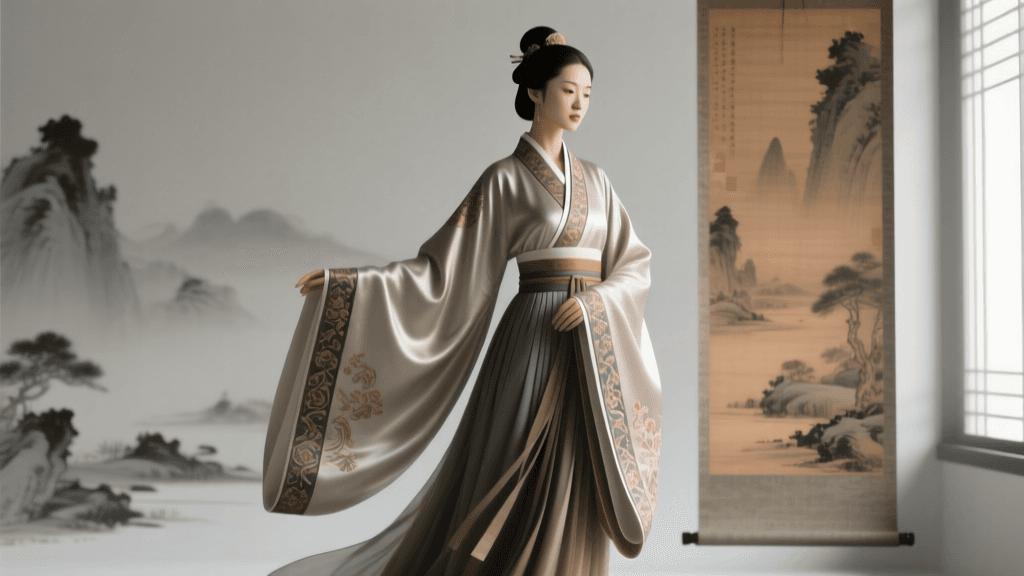
Chinese scroll paintings are celebrated worldwide for their masterful use of ink, profound philosophical depth, and breathtaking landscapes. However, for historians, textile enthusiasts, and modern Hanfu revivalists, these scrolls serve a dual purpose: they are meticulous sartorial archives. Long before the invention of photography, court painters and literati artists meticulously documented the fashion, textiles, and layering techniques of their eras. By learning how to 'read' the clothing depicted in these masterpieces, we can unlock a deeper understanding of traditional Chinese garment construction, seasonal fabric choices, and the social codes embedded in every fold and drape.
The Intersection of Silk and Ink: Why Scroll Art Matters
The tradition of Chinese figure painting (renwu hua) places a heavy emphasis on the depiction of clothing. The 'baimiao' (line drawing) technique, which relies on pure ink outlines without the distraction of color, was frequently used to capture the structural integrity and fluid drape of silk garments. Artists spent years mastering the 'eighteen strokes' of drapery painting, each stroke designed to mimic the behavior of specific fabrics—from the stiff, heavy brocades of winter court wear to the gossamer-thin silks of summer undergarments.
According to the Metropolitan Museum of Art's Heilbrunn Timeline, the Tang dynasty represented a peak in cosmopolitan exchange, which was directly reflected in the vibrant, flowing textiles depicted in the art of the period. The paintings do not merely show us what people wore; they illustrate how garments moved, how they were layered for temperature regulation, and how specific motifs denoted rank and occasion.
Decoding Dynastic Dress: A Visual Guide
When observing these masterpieces, it is crucial to recognize that Hanfu is not a monolith. The silhouette, collar style, and sleeve width shifted dramatically across dynasties. By analyzing scroll art, we can identify the defining characteristics of three major eras of Chinese fashion history.
| Dynasty | Key Garment Depicted | Silhouette and Drape | Famous Scroll Example |
|---|---|---|---|
| Tang (618-907) | High-waisted Qun and Pibo | Voluminous, flowing, wide sleeves, high waistlines | Court Ladies Adorning Their Hair with Flowers |
| Song (960-1279) | Beizi and Narrow-sleeve Ru | Slender, restrained, straight lines, modest layering | Along the River During the Qingming Festival |
| Ming (1368-1644) | Mamianqun and Ao | Structured, pleated, heavily layered, stand collars | Various Ming Emperor and Official Portrait Scrolls |
Masterpieces to Study: Three Essential Scrolls
To truly understand the evolution of traditional Chinese clothing, one must study the primary sources. Here are three essential scrolls that serve as foundational texts for Hanfu reconstruction.
1. Court Ladies Adorning Their Hair with Flowers (Tang Dynasty)
Attributed to the master painter Zhou Fang, this horizontal scroll is a masterclass in depicting luxury textiles. The painting showcases aristocratic Tang women adorned with oversized peony blossoms and elaborate hairpins. From a sartorial perspective, the scroll is invaluable for its depiction of the pibo (a long, draped silk shawl) and the high-waisted qun (skirt). The artist's use of soft, undulating lines perfectly captures the weight of sheer silk chiffon and the way it pools around the body, providing modern tailors with exact visual cues on how to proportion and drape Tang-style shawls.
2. Along the River During the Qingming Festival (Song Dynasty)
Zhang Zeduan's panoramic masterpiece is often praised for its architectural and societal detail, but it is equally a triumph of commoner and merchant fashion documentation. Unlike court paintings that focus on elites, this scroll captures the bustling streets of Kaifeng. Here, we see the practical application of the beizi (a long, side-slit jacket) and shorter, narrow-sleeved tunics designed for labor and mobility. The painting reveals how working-class citizens tied their skirts and tucked their garments to facilitate movement, offering brilliant insights into the functional adaptability of Song dynasty Hanfu.
3. Night Revels of Han Xizai (Five Dynasties Period)
Created by Gu Hongzhong, this narrative scroll was essentially an espionage report painted for Emperor Li Yu to observe the private life of his minister, Han Xizai. Because it takes place indoors during an evening banquet, the scroll provides a rare, intimate look at leisurewear and indoor layering. We see scholars and musicians in relaxed ruqun (blouse and skirt) ensembles, with outer robes casually slipped off the shoulders to reveal the intricate cross-collars (jiaoling youren) of their inner garments. It is a vital reference for understanding the etiquette of informal, private dress.
Actionable Guide: Experiencing Scroll Art and Sourcing Hanfu
Understanding the theory is only the first step. For those looking to immerse themselves in this intersection of art and fashion, or to commission historically accurate garments, here is a practical guide.
Where to View the Originals
To witness the true texture and scale of these paintings, visiting major cultural institutions is highly recommended.
- The Palace Museum (Beijing): Home to the original Along the River During the Qingming Festival. Tickets cost approximately 60 RMB ($8 USD) during the peak season and must be booked up to 7 days in advance via their official WeChat mini-program. The museum's textile galleries frequently rotate light-sensitive silk scrolls.
- The Metropolitan Museum of Art (New York): The MET holds exceptional Ming and Qing dynasty portrait scrolls and textile fragments. General admission is $30 USD. Visit the Asian Art department to study the actual weave structures of historical brocades displayed alongside painted portraits.
- Exploring Digital Archives: For those unable to travel, the The Palace Museum in Beijing offers high-resolution digital archives where you can zoom in to see individual brushstrokes and textile patterns on famous scrolls.
Tips for Commissioning Art-Accurate Hanfu
If you are working with a tailor or a specialized Hanfu brand to recreate a garment seen in a scroll, use the following actionable specifications to ensure historical accuracy:
- Fabric Weight and Momme: To replicate the ethereal drape of the Tang dynasty pibo seen in Zhou Fang's paintings, request 8mm to 10mm silk chiffon or georgette. For the structured, heavy pleats of a Ming dynasty Mamianqun (horse-face skirt), you must use a heavier fabric, such as 19mm silk charmeuse or a woven jacquard brocade, to ensure the pleats hold their shape when walking.
- Pattern Scale: Scroll paintings reveal that historical motifs were often scaled to the wearer's body. When sourcing brocade, avoid modern, overly dense, small-scale prints. Look for large, asymmetrical, or directional motifs that mirror the weaving techniques of the Song and Ming dynasties.
- Structural Layering: A common mistake in modern Hanfu reproduction is ignoring the undergarments. Paintings show that the crisp, sharp collars of outer garments rely on the stiff, white stand-collars of the zhongyi (inner shirt) for support. Always budget an extra $30 to $50 for high-quality, stiff-collared inner layers to achieve the silhouettes seen in Ming portraiture.
'The brushstroke that defines the fold of a sleeve in a Song dynasty scroll is not merely an artistic choice; it is a precise record of gravity acting upon woven mulberry silk.' — Traditional Chinese Textile Conservators.
Conclusion
Chinese scroll paintings are far more than aesthetic triumphs; they are vital, encoded manuals of traditional Asian fashion. By learning to decode the drape, layer, and line of these masterpieces, we bridge the gap between historical art and living culture. Whether you are planning a visit to view the Victoria and Albert Museum's Asian collections, studying digital archives, or commissioning your own historically accurate Hanfu, the ink-washed silhouettes of the past provide the ultimate blueprint for the sartorial revival of the present.