From Heian to Edo: The Evolution of the Japanese Kosode
The Dawn of Dynasty Fashion: The Heian Period (794-1185)
When discussing Japanese historical fashion, the Heian period represents the zenith of aristocratic courtly elegance. During this era, the elite class developed a highly codified aesthetic centered around the junihitoe (twelve-layer robe) for women and the kariginu (hunting attire) for men. In this highly stratified society, what we now recognize as the kimono was merely a humble undergarment known as the kosode (literally meaning small sleeves).
The Heian kosode featured narrow sleeve openings compared to the expansive, sweeping sleeves of the outer court robes. According to the Kyoto Costume Museum, the primary focus of Heian fashion was not the tailoring of the garment itself, but the exquisite layering of silk colors. Courtiers spent hours arranging the sleeves and hems of their layered robes to create specific seasonal color combinations known as kasane no irome. A famous winter combination was 'Beneath the Snow,' featuring a stark white outer layer over a deep crimson under-robe. The kosode remained mostly hidden, serving as a soft, white silk barrier between the body and the heavy, ornate outer layers.
'The true artistry of the Heian period lay not in the cut of the cloth, but in the poetry of layered colors and the subtle revelation of the kosode at the collar and cuffs.' - Historical textile analysis, Kyoto Costume Museum.
The Shift to the Kosode: Muromachi to Edo Period (1336-1868)
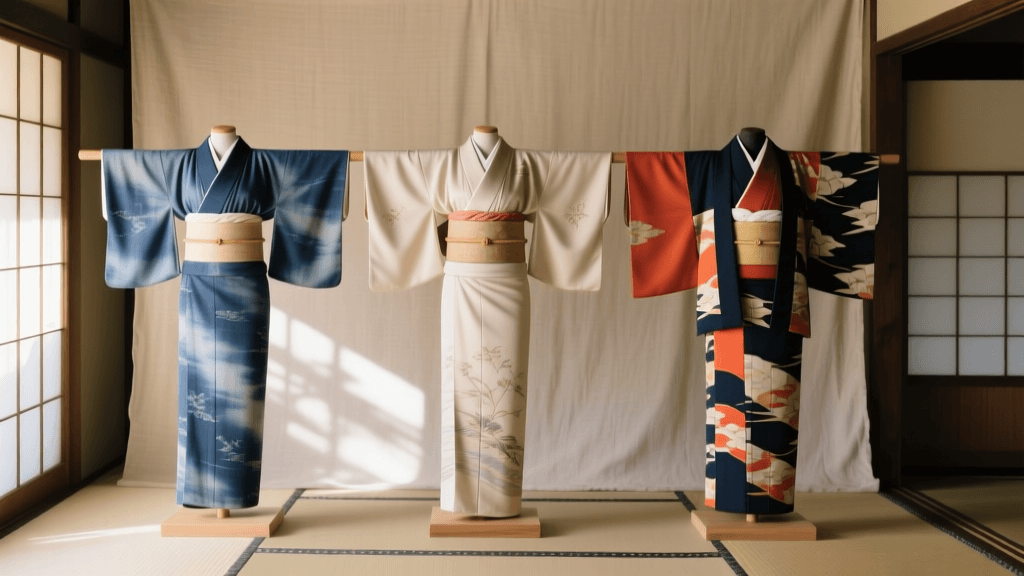
As the power of the imperial court waned and the samurai class rose to prominence, the cumbersome layers of the Heian period were abandoned for practicality. By the Muromachi period (1336-1573), the kosode had transitioned from an undergarment to the primary outer garment for both men and women. However, it was during the Edo period (1603-1867) that the kosode truly evolved into the masterpiece of Japanese textile art, eventually becoming what the Western world calls the kimono.
The Edo period brought prolonged peace and a booming merchant economy. With the samurai class restricted in their displays of wealth, the affluent merchant class (chonin) channeled their wealth into extravagant textiles. This era saw the invention of yuzen dyeing, a resist-dye technique utilizing rice paste that allowed for pictorial, painterly designs to span across the entire garment, unbroken by seams. Furthermore, the obi (sash) transformed from a thin, functional cord into a wide, decorative centerpiece, fundamentally altering the silhouette of the kosode and pushing the decorative focus to the back of the wearer.
As noted by the Victoria and Albert Museum, the Edo period also established strict sumptuary laws that dictated who could wear what. In response, commoners developed the concept of iki (subtle, understated elegance), hiding incredibly expensive, hand-painted silk linings beneath plain, subdued outer fabrics to bypass the censors while maintaining their sartorial pride.
Comparative Analysis: Heian vs. Edo Silhouettes
Understanding the structural differences between these two pivotal eras is crucial for collectors, historical reenactors, and traditional garment enthusiasts. Below is a comparison of the defining characteristics of Heian court wear versus the Edo period kosode.
| Feature | Heian Period (Junihitoe / Early Kosode) | Edo Period (Mature Kosode) |
|---|---|---|
| Primary Role | Undergarment (Kosode) / Outer Court Robes | Primary Outerwear for all classes |
| Sleeve Style | Narrow openings, attached to the body | Deep, swinging sleeves (Furisode for unmarried women) |
| Fastening / Sash | Thin silk cord (Himo) tied at the front | Wide, stiff Obi tied in elaborate knots at the back |
| Surface Design | Woven patterns, tie-dye (Shibori), focus on layering | Yuzen resist-dye, gold leaf, heavy embroidery |
| Modern Reproduction Cost | $3,000 - $10,000+ (Custom multi-layer silk) | $500 - $5,000 (Antique or modern Yuzen silk) |
Practical Guide: Sizing, Wearing, and Acquiring Historical Garments
For modern enthusiasts looking to acquire or wear historical Japanese garments, understanding traditional measurements and the contemporary market is essential. Unlike Western clothing, the kosode is not tailored to the exact contours of the body; it is cut from standard-width bolts of fabric (tanmono) and adjusted through folding and tying.
1. Taking Traditional Measurements
If you are commissioning a replica or buying a vintage Edo kosode, you must understand the three critical measurements:
- Yuki (Arm Span): Measured from the center of the back of the neck, over the shoulder, to the wrist. A standard modern women's yuki is 64cm, but historical Edo garments often feature shorter yuki (58-62cm) as historical diets resulted in smaller frames. When wearing an antique, you must fold the excess fabric at the shoulder to adjust the sleeve length.
- Take (Body Length): Measured from the nape of the neck to the ankle. The garment should ideally reach the ankle bone. For a wearer of 160cm, look for a take of 125-130cm. Historical garments often have a shorter take and may require wearing a modern inner slip to cover the ankles.
- Sode (Sleeve Depth): The vertical drop of the sleeve. Edo period furisode (swinging sleeves) for young women could drop up to 104cm, whereas a married woman's tomesode sleeve drops only about 49cm.
2. Where to Buy Antique Edo Kosode
Authentic Edo and Meiji period kosode are highly collectible. The best place to source them is the Toji Temple Flea Market (Kobo-san) in Kyoto, held on the 21st of every month. Here, you can find late-Edo silk kosode with hand-painted yuzen and gold thread.
- Condition & Cost: Expect to pay between 10,000 JPY and 50,000 JPY ($70 - $350 USD) for wearable antique silk. Pieces with fragile, shattering silk (known as 'moyu') should be avoided for wearing and reserved strictly for display or study.
- Inspection Tip: Always check the hakkake (bottom hem lining). In Edo fashion, the hem was padded with cotton or silk floss to create a beautiful, sweeping drape on the tatami mats. If the padding is missing or the lining is heavily stained, negotiate the price down by at least 30%.
3. Experiencing Heian Period Fashion
Because a full Heian junihitoe requires over 20kg of silk and specialized dressing knowledge, purchasing one is impractical for most. Instead, renting is the standard approach. In Kyoto, shops near the Heian Shrine offer historical dressing experiences.
- Timing & Booking: Book at least 4 weeks in advance, especially for the spring cherry blossom season (late March to mid-April).
- Cost: A full Heian court dress rental, including professional dressing and a 2-hour photoshoot, typically costs between 15,000 JPY and 25,000 JPY ($100 - $170 USD).
- Dressing Note: The Heian aesthetic requires the hair to be worn long and straight (suberakashi), or augmented with heavy hairpieces. Be prepared for a 60-minute dressing process, as the layers must be meticulously aligned at the collar and cuffs to show the kasane no irome.
4. Caring for Antique Edo Kosode
If you acquire a genuine historical piece, proper preservation is paramount. Antique silk is highly sensitive to light, moisture, and tension.
- Storage: Never hang antique silk on wire or wooden hangers, as the weight of the fabric and metallic threads will tear the shoulders over time. Store the garment flat, folded along its original seams, wrapped in acid-free washi paper inside a breathable cotton storage box called a tatou.
- Cleaning: Do not attempt to wash or dry clean an Edo period garment using modern chemicals. If cleaning is necessary, seek out a traditional arai-hari service, where the garment is completely taken apart, washed in specialized solutions, stretched on bamboo frames to dry, and meticulously re-sewn by hand.
Preserving the Legacy of the Kosode
The transition from the hidden, utilitarian kosode of the Heian period to the vibrant, canvas-like outerwear of the Edo period represents one of the most fascinating evolutions in global fashion history. Whether you are studying the layered poetry of Heian color combinations or hunting for a masterfully dyed Edo yuzen piece in the markets of Kyoto, understanding these historical contexts elevates your appreciation of Japanese traditional garments. As highlighted by the Tokyo National Museum, these textiles are not merely clothing; they are woven archives of Japanese social history, art, and philosophy that continue to inspire contemporary global fashion today.