Slavic Folk Dress 2026: Vyshyvanka & Ie Embroidery Guide
The 2026 Renaissance of Slavic and Balkan Textile Arts
The landscape of European folk dress is experiencing a profound renaissance in 2026, driven by a global desire for sustainable, heritage-rich fashion and a fierce cultural pride among Eastern European diasporas. At the heart of this movement are two iconic garments: the Ukrainian vyshyvanka and the Romanian ie (traditional blouse). Far from being static museum relics, these garments are living texts, woven with ancestral geometry, natural dyes, and regional identities. For textile enthusiasts, historians, and contemporary artisans, understanding the construction and embroidery techniques of these Slavic and Balkan masterpieces is essential. According to recent cultural preservation reports highlighted by the Smithsonian Center for Folklife and Cultural Heritage, 2026 has seen a record number of international workshops dedicated to reviving lost Soviet-era stitching techniques, bringing ancestral patterns back into the modern wardrobe.
Anatomy of the Icons: Vyshyvanka vs. Ie
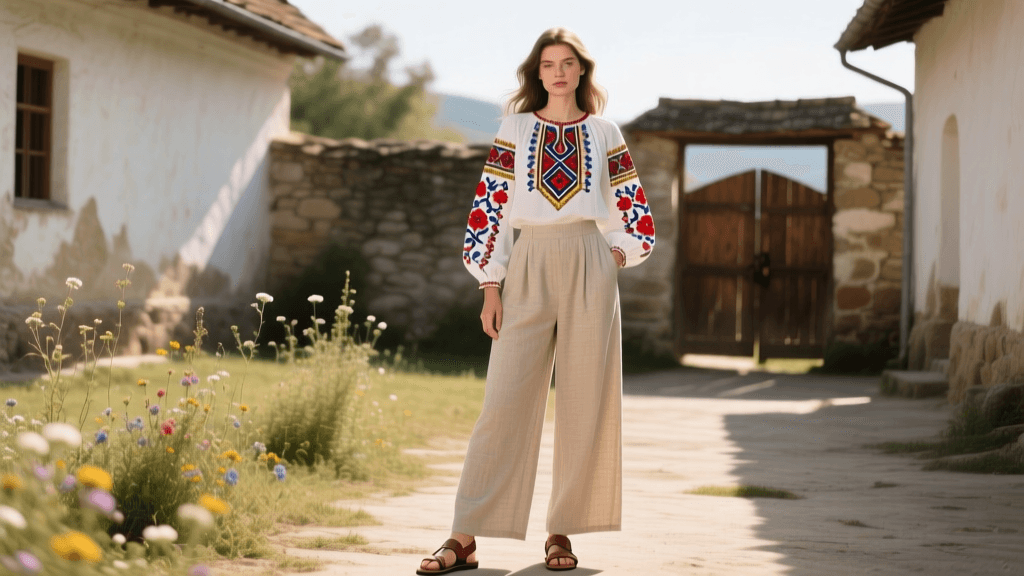
While both garments rely heavily on intricate embroidery, their structural anatomy and regional philosophies differ significantly. The vyshyvanka is fundamentally a tunic-style shirt, historically cut from a single width of handwoven linen or hemp to avoid wasting precious fabric. The embroidery is strategically placed on the cuffs, neckline, and chest placket—areas believed to be vulnerable to evil spirits, thus requiring protective geometric 'armor'.
In contrast, the Romanian and Moldavian ie is characterized by its distinct gathering at the neckline and its spectacular shoulder embellishment known as the altiță. The ie is traditionally constructed from multiple rectangular panels of cotton or flax, with embroidery cascading down the sleeves in continuous vertical bands or diagonal rivers. In 2026, contemporary weavers in the Carpathian basin are blending organic European flax with fine merino wool blends to create winter-weight ie blouses that maintain historical drape while offering modern thermal regulation.
Decoding the Geometry of Ancestral Motifs
The motifs found on Eastern European folk dress are not merely decorative; they are a complex semiotic system. Rhombuses represent sown fields and fertility, while zigzag lines symbolize water and the eternal cycle of life. To help artisans and collectors identify regional origins, we have compiled a comparative guide to the dominant 2026 revival motifs.
| Region | Garment | Primary Colors | Signature Motif | Symbolism |
|---|---|---|---|---|
| Hutsulshchyna (Ukraine) | Vyshyvanka | Orange, Black, Green | Ruzha (Eight-pointed star) | Solar energy, protection from dark forces |
| Poltava (Ukraine) | Vyshyvanka | White-on-White, Soft Grey | Derevo Zhyttia (Tree of Life) | Generational continuity, spiritual growth |
| Olt (Romania) | Ie | Crimson, Black, Gold | Cârlig (Shepherd's hook) | Pastoral wealth, guidance, strength |
| Maramureș (Romania) | Ie | Deep Red, Navy Blue | Coarnele Berbecului (Ram's horns) | Masculine vitality, agricultural abundance |
Traditional Stitching Techniques: Beyond the Cross-Stitch
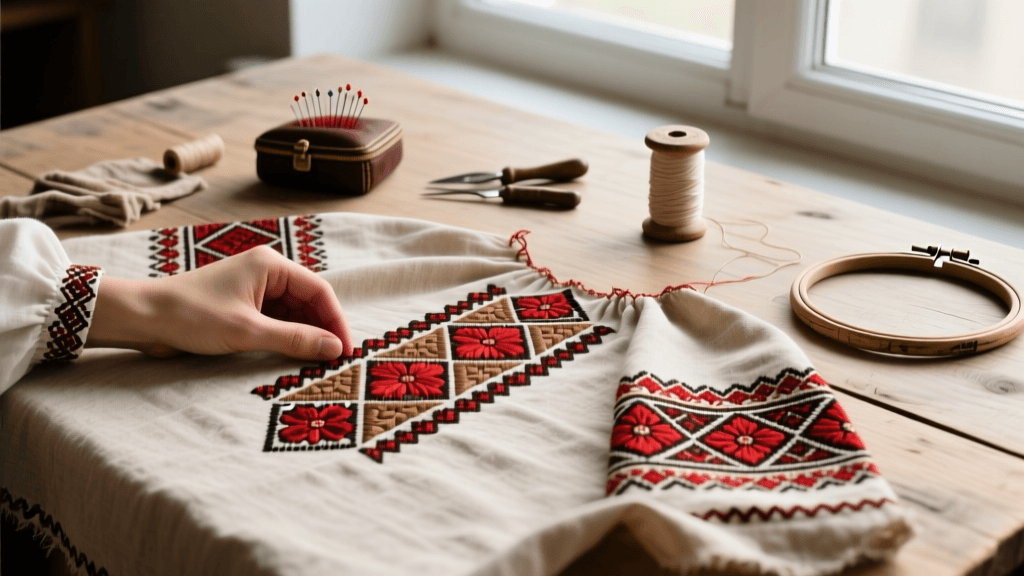
A common misconception in mainstream fashion is that Eastern European folk embroidery relies solely on the standard cross-stitch. While the cross-stitch gained popularity in the late 19th century due to the mass distribution of printed pattern charts, the oldest and most revered techniques are far more complex. Master artisans documented by the National Museum of the Romanian Peasant emphasize the importance of preserving these older methods.
- Nyz (Surface Darning): A Ukrainian technique where the pattern is created on the reverse side of the fabric, resulting in a subtle, textured negative-space design on the front. It requires counting threads with absolute precision and is highly prized by 2026 textile purists.
- Zavolikannya (Running Stitch): Used extensively in the Polissya region, this technique creates dense, horizontal bands of geometric patterns that mimic the look of woven fabric rather than surface embroidery.
- Punctul Bătrânesc (Old Stitch): The foundational Romanian stitch used to create the dense, velvety bands of the altiță. It involves a complex wrapping of the thread around the needle, creating a raised, three-dimensional texture that catches the light beautifully.
- Broderie en Relief (Raised Work): Often utilizing padded satin stitches, this technique is used to make floral and solar motifs literally stand off the linen base, a hallmark of premium Balkan folk dress.
Sourcing Authentic Materials in 2026
For those looking to recreate authentic Slavic and Balkan garments, the materials you source in 2026 dictate the historical accuracy and longevity of the piece. The modern market has shifted away from synthetic blends, with a heavy emphasis on traceable, heritage fibers.
The Linen Base
Authentic vyshyvankas and ie blouses require an evenweave fabric to facilitate thread-counting embroidery. In 2026, the gold standard is 24-count to 28-count handwoven linen produced by European flax cooperatives in Belgium and Northern France, or artisanal hemp-linen blends woven in the Transcarpathian region. Expect to pay between €35 and €55 per meter for certified heritage evenweave linen. Avoid modern, chemically bleached cotton-linen blends, as they lack the structural integrity to support heavy wool embroidery threads.
Threads and Natural Dyes
While mercerized cotton (like traditional DMC threads) is widely available, the 2026 artisan revival heavily favors naturally dyed wool and silk threads. Artisans are returning to botanical dyes: madder root for deep crimsons, woad and indigo for blues, and weld or onion skins for vibrant yellows. Sourcing hand-dyed wool yarn from Carpathian guilds ensures colorfastness and historical accuracy. A complete, hand-dyed artisanal embroidery kit, including the pattern chart, heritage linen, and botanically dyed threads, typically ranges from €95 to €160 in the current market.
Preservation and the Digital Archive Movement
The preservation of Eastern European folk dress has entered a high-tech phase. As of 2026, AI-assisted pattern reconstruction is being used to repair and digitize damaged rushnyky (ritual cloths) and blouses from the early 20th century. Organizations listed on the UNESCO Intangible Cultural Heritage registry are collaborating with university textiles departments to create open-source, high-resolution databases of regional stitches. This allows a modern embroiderer in Tokyo or Toronto to accurately replicate a specific 1890s Hutsul motif down to the exact thread tension and dye variation.
Caring for Your Heritage Garments
Proper care is vital to ensure these textile investments survive for future generations. Never machine-wash a hand-embroidered vyshyvanka or ie. The agitation will distort the linen base and cause natural dyes to bleed into the negative space.
- Washing: Submerge the garment in cool water with a pH-neutral, lanolin-based textile soap. Gently agitate by hand for no more than five minutes.
- Rinsing: Rinse in cool water with a splash of white vinegar to set the natural dyes and restore the linen's natural luster.
- Drying: Roll the garment in a clean, colorfast cotton towel to absorb excess moisture. Lay it flat on a drying rack away from direct sunlight, which degrades both the flax fibers and the botanical dyes.
- Ironing: Iron the garment while it is still slightly damp, always pressing on the reverse side over a thick terry cloth towel. This preserves the three-dimensional relief of the embroidery stitches on the front.
- Storage: Store folded in acid-free tissue paper inside a cedar-lined chest. Avoid wire hangers, which will stretch the delicate gathered neckline of the ie and distort the shoulder seams of the tunic.
Conclusion: Wearing History in the Modern Era
The Slavic and Balkan folk dress revival of 2026 is more than a fleeting fashion trend; it is an act of cultural resilience and artistic devotion. Whether you are meticulously stitching a Poltava white-on-white vyshyvanka or sourcing authentic materials to construct a traditional Maramureș ie, you are participating in an unbroken chain of textile heritage. By understanding the profound symbolism of the motifs, mastering the ancestral stitching techniques, and committing to the highest quality natural materials, you ensure that the vibrant language of Eastern European embroidery continues to be spoken, worn, and cherished for generations to come.