2026 Guide to Authentic Chiton & Roman Stola Reenactment
The Resurgence of Classical Antiquity in 2026
As we navigate the 2026 historical reenactment season, the fascination with classical antiquity has reached new heights. Organizations such as the Hellenic Heritage Network and various Roman legions reenactment societies are enforcing stricter authenticity guidelines than ever before. Gone are the days when a simple bedsheet wrapped with a rope belt would suffice for a classical festival. Today, enthusiasts and historians alike demand historical accuracy in textile weight, draping techniques, and accessory craftsmanship. Whether you are preparing for the expanded 2026 Mediterranean Antiquity Festival or simply wish to understand the profound engineering of ancient European folk dress, mastering the Greek chiton and the Roman stola is essential.
This comprehensive guide will walk you through the precise measurements, fabric sourcing, and draping techniques required to recreate these iconic garments. By consulting authoritative resources, such as The Metropolitan Museum of Art's guide on Ancient Greek Dress, we can bridge the gap between ancient archaeological evidence and modern 2026 textile availability.
Decoding the Greek Chiton: Doric vs. Ionic
The chiton was the fundamental garment of ancient Greece, worn by both men and women, though the length and draping styles varied significantly by gender, age, and region. According to the World History Encyclopedia's overview of Greek clothing, the chiton evolved primarily into two distinct styles: the Doric and the Ionic.
The Doric Chiton
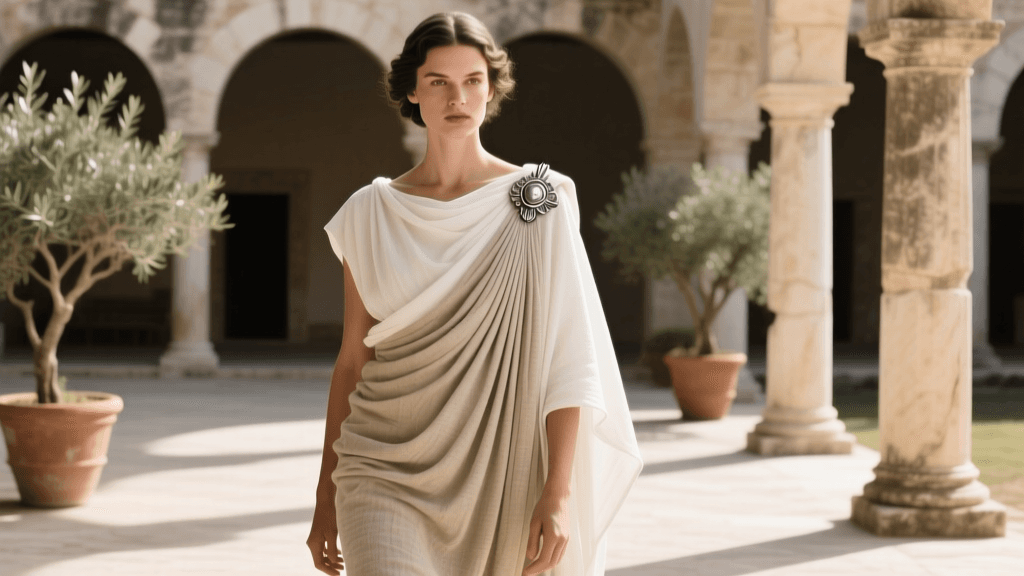
The Doric chiton is the older, more austere of the two styles. It was typically crafted from a single, wide rectangle of lightweight wool. The fabric was folded vertically to create a double layer, draped around the body, and pinned at the shoulders with heavy fibulae (brooches). The Doric style relies on the natural weight of the wool to create deep, structured, and architectural folds. For a modern reenactor in 2026, achieving this look requires sourcing a wool blend that mimics the hand-woven textiles of the Peloponnese, avoiding modern synthetic blends that drape too stiffly.
The Ionic Chiton
Emerging later and favoring lighter materials, the Ionic chiton was made from fine linen. Unlike the Doric version, the Ionic chiton was not folded over at the top. Instead, it featured wide sleeves created by pinning the fabric at multiple intervals along the arms. This style requires a significantly wider cut of fabric—often twice the span of the wearer's outstretched arms. The linen must be lightweight enough to hold crisp, narrow pleats but substantial enough not to become completely transparent when layered.
The Roman Stola and Palla: Matronly Elegance
While the Greek chiton influenced Roman fashion, the Roman Empire developed its own distinct markers of citizenship and social status. For the Roman matron, the stola was the ultimate symbol of modesty and marital status. As detailed in The Met's resource on Roman Dress, the stola was a long, sleeveless tunic worn over an inner tunic (the tunica interior). It was characterized by the instita, a distinctive flounce or border at the hem, and was belted high just under the bust with a cingulum.
Over the stola, a Roman woman would drape the palla, a large rectangular mantle that served as both a cloak and a veil. The palla was draped over the left shoulder, across the back, and either thrown over the right shoulder or wrapped around the waist. In 2026, recreating the palla requires mastering the art of managing heavy yardage without the use of modern tailoring or hidden safety pins, relying entirely on gravity and friction.
2026 Fabric Sourcing and Measurement Guide
Sourcing the correct fabric is the most common pitfall for modern reenactors. The textiles of antiquity were woven on warp-weighted looms, resulting in specific selvedges and drape characteristics that modern power looms struggle to replicate. Below is a structured guide to selecting the appropriate materials for your 2026 classical wardrobe.
| Garment | Primary Fabric | Ideal Weight (oz/yd²) | Drape Quality | Best 2026 Supplier Type |
|---|---|---|---|---|
| Doric Chiton | Lightweight Wool | 4.0 - 5.5 | Structured, heavy folds | Specialty Wool Weavers |
| Ionic Chiton | Fine Linen | 3.0 - 4.5 | Fluid, crisp pleats | European Linen Mills |
| Roman Stola | Linen or Silk Blend | 3.5 - 5.0 | Modest, layered | Historical Textile Guilds |
| Palla | Wool or Cotton Blend | 5.0 - 7.0 | Warm, enveloping | Artisan Weavers |
Measurement Tip: For an average height woman (approximately 5'6"), a Doric chiton requires a rectangle of fabric measuring roughly 60 inches wide by 72 inches long. An Ionic chiton for the same wearer will require a width of at least 120 inches to accommodate the elaborate sleeve pinning. Always pre-wash and press your natural fibers before hemming to account for any 2026 mill shrinkage.
Essential Hardware: Fibulae and Cingulum
No classical garment is complete without its functional hardware. The fibula (plural: fibulae) was the ancient equivalent of the modern safety pin, but crafted from bronze, iron, or precious metals. For a Doric chiton, you will need at least two heavy-duty penannular or bow fibulae capable of supporting the weight of wet or heavy wool. In 2026, several artisan blacksmiths and historical jewelers offer museum-grade replica fibulae that feature the correct spring tension to hold thick layers of fabric without slipping.
The cingulum, or belt, was equally important. For the Greek chiton, a simple braided wool cord or a woven linen sash was tied around the waist, and the fabric was bloused over it to create the kolpos (the overhang). For the Roman stola, a leather or woven textile belt was worn high under the bust to define the silhouette.
Step-by-Step Draping Instructions: The Doric Chiton
Draping a chiton is an interactive process that requires patience and a willing partner. Follow these steps for a historically accurate Doric drape:
- Step 1: The Fold. Lay your wool rectangle flat. Fold the top edge down by about 12 to 15 inches. This creates the apoptygma (the overfold).
- Step 2: The Wrap. Wrap the fabric around your body, starting under your left arm. The folded edge should be at the top, facing outward.
- Step 3: The Back Pin. Bring the back edge of the fabric up over your left shoulder. Bring the front edge up to meet it. Secure them together at the collarbone using your first fibula.
- Step 4: The Right Side. Pull the remaining fabric across your back and under your right arm, bringing it up over your right shoulder. Pin it to the back layer of the fabric at the right collarbone.
- Step 5: The Belt. Tie your cingulum around your waist. Reach inside the overfold, pull the fabric up and over the belt, and adjust the kolpos so it falls evenly around your hips, hiding the belt entirely.
Maintenance and Care for Natural Fibers
Authentic garments require authentic care. Linen and wool are naturally antimicrobial and odor-resistant, meaning they do not need to be washed after every wear. For your 2026 reenactment season, invest in a high-quality garment steamer to remove wrinkles from linen chitons without crushing the natural fibers. Wool stolas and Doric chitons should be aired out in the shade and spot-cleaned with a mild, lanolin-based soap. Avoid modern washing machines, as the agitation will felt the wool and destroy the carefully engineered drape of your garment.
Conclusion
Recreating the chiton and the stola is more than a simple sewing project; it is an exercise in understanding the geometry, climate adaptation, and social structures of the ancient Mediterranean world. By adhering to strict fabric weights, utilizing proper bronze fibulae, and mastering the art of the drape, you ensure that your 2026 historical interpretations honor the ingenuity of classical European folk dress. Whether you are walking the marble steps of a reconstructed temple or attending a modern heritage festival, the authentic flow of ancient textiles offers a profound, tangible connection to the past.