2026 Gaufest Guide: Authentic Bavarian Tracht & Schuhplattler Gear
The 2026 Gaufest Season: Beyond the Tourist Dirndl
As the 2026 summer festival circuit approaches, thousands of dancers and cultural enthusiasts are preparing for the Gaufest—the massive regional gatherings of Bavarian and Tyrolean Trachtenvereine (traditional costume clubs). While the world often associates Bavarian dress with the commercialized, mass-produced garments sold at tourist shops, the authentic folk dress worn for the Schuhplattler (the traditional Alpine folk dance) is a highly regulated, meticulously crafted, and deeply functional wardrobe. For participants in the 2026 festivals, understanding the distinction between Landhausmode (country-house fashion) and authentic Vereinstracht (club uniform) is critical. This guide breaks down the exact specifications, 2026 pricing, and functional requirements for traditional European dance costumes in the Alpine region.
The Anatomy of the Tanzdirndl (Women's Dance Dress)
The Tanzdirndl is engineered specifically for the rigorous spinning, jumping, and partnering required in Alpine folk dances. Unlike the fashion-dirndls seen at modern street festivals, a proper dance dirndl prioritizes modesty, structural integrity, and regional accuracy.
Bodice and Skirt Specifications
The bodice (Mieder) must be heavily structured. In 2026, master tailors in Upper Bavaria are continuing the tradition of using flexible steel boning encased in linen channels to provide back support during the rapid Drehen (spins). The skirt (Rock) length is strictly regulated by the Bayerischer Trachtenverband (Bavarian Costume Association). For dancers, the skirt must fall precisely to the mid-calf, typically measuring 75 to 80 centimeters from the natural waist. This 'mittellang' (medium length) ensures the hem does not tangle in the dancer's legs or her partner's footwear during complex footwork.
The Apron and Blouse
The apron (Schürze) is a vital component. For folk dancers, the apron is often slightly heavier than standard silk or cotton to prevent it from flying up during spins. Many 2026 dance costumes incorporate hidden, traditional snap closures or subtle stitching at the hip to keep the apron anchored to the skirt. The blouse (Bluse) must feature a high, modest neckline—often a Peter Pan collar or a delicate lace-trimmed round neck—and sleeves that reach at least to the elbow, adhering to the strict modesty guidelines of the traditional clubs.
The Plattler's Lederhosen: Built for Rhythmic Impact
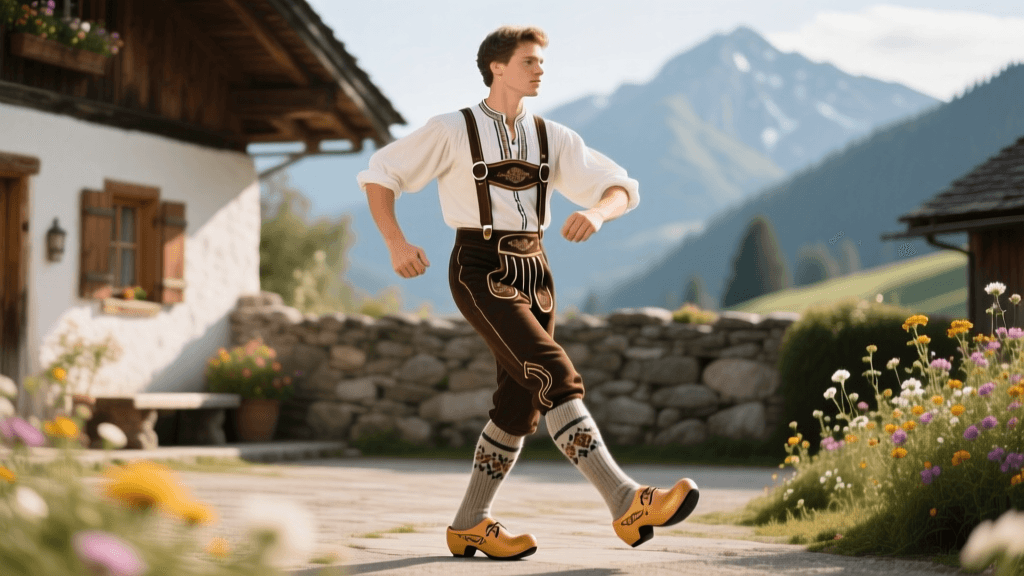
The Schuhplattler dance involves men rhythmically slapping their thighs, knees, and the soles of their shoes. Therefore, the men's leather breeches (Lederhosen) are not merely decorative; they are percussive instruments and protective gear.
Leather Selection and Thickness
Authentic dance Lederhosen are crafted from Säcklerhirsch (saddle-deer leather) or high-grade chamois. For the 2026 festival season, the preferred leather thickness for dancers is between 1.0mm and 1.2mm. This specific gauge is thick enough to withstand the repetitive, forceful slapping of the Plattler without tearing, yet supple enough to allow for deep knee bends and high kicks. The leather is traditionally tanned using natural fats and oils, giving it a distinctive, slightly smoky scent and a soft, suede-like finish on the inside that grips the skin during movement.
Embroidery and Construction
The embroidery (Stickerei) on the drop-front (Latz) and the suspenders (Hosenträger) is not chosen at random. Each Gau (regional district) has specific, historically documented motifs. According to textile archives preserved at the Bayerisches Nationalmuseum, these patterns date back to the 18th and 19th centuries and feature regional flora, hunting scenes, or religious symbols. The 'Arschnaht' (the iconic curved back seam) is engineered to provide extra room in the seat, allowing for the deep squats required in the dance.
Footwear and Hosiery for the Dance Floor
Footwear is arguably the most critical functional element of the Schuhplattler costume. The rhythmic stomping requires shoes that can endure immense physical stress while producing a sharp, resonant sound.
- Haferlschuhe (Bavarian Shoes): These traditional shoes feature side-lacing and a thick, stacked leather heel. For dancers, the sole must be made of rigid, unyielding leather to amplify the sound of the foot strikes against the wooden stage or the dancer's own hands. In 2026, custom dance-specific Haferlschuhe with reinforced toe caps and impact-absorbing inner cork footbeds are the standard for professional club members.
- Loferer Stutzen (Calf Warmers): These are not socks; they are hand-knitted wool calf sleeves that stop just below the knee. They must be knit from coarse, un-dyed or naturally dyed sheep's wool, featuring a specific folded cuff at the top. They protect the dancer's calves from the friction of the leather breeches and provide a secondary percussive surface when slapped.
2026 Sourcing Guide: Bespoke vs. Off-the-Rack
Acquiring authentic Vereinstracht requires planning. The post-pandemic supply chain issues of the early 2020s have stabilized, but the shortage of master Säckler (leatherworkers) and traditional embroiderers means lead times remain long. If you are preparing for the Summer 2026 Gaufeste, you must understand the current market realities.
2026 Pricing and Lead Times
| Garment Component | Off-the-Rack (Standard Quality) | Bespoke / Maßgeschneidert (2026 Pricing) | Current Lead Time |
|---|---|---|---|
| Dirndl (Complete Set) | €350 - €550 | €850 - €1,400 | 3 - 5 Months |
| Lederhosen (Knee-length) | €400 - €650 | €900 - €1,600 | 6 - 9 Months |
| Haferlschuhe (Custom) | €120 - €180 | €280 - €450 | 2 - 4 Months |
| Hand-knit Stutzen | €45 - €70 | €120 - €180 | 1 - 2 Months |
Note: Off-the-rack garments from specialized Trachten houses like Lodenfrey or Angermaier are acceptable for beginners, but active club members performing at the Gaufest are expected to wear bespoke garments tailored to their specific regional Gau's regulations.
Garment Care for the Festival Circuit
The 2026 summer festival season is grueling, often involving back-to-back weekend performances in open-air tents and beer gardens. Proper maintenance of your dance gear is essential.
Leather Maintenance
Lederhosen should never be washed with water or chemical detergents, as this strips the natural fats from the deer leather, causing it to stiffen and crack. After a sweaty performance, the Lederhosen must be hung in a well-ventilated, shaded area. Master leatherworkers recommend treating the leather once a season with a specialized Hirschfett (deer fat) conditioner to maintain its supple, percussive quality.
Textile Care
The Dirndl skirt and apron should be dry-cleaned only, as the heavy wool or structured cotton blends can warp and lose their pleating if subjected to standard washing machines. The delicate lace of the blouse should be hand-washed in cold water with a mild wool detergent and laid flat to dry to preserve the intricate bobbin-lace patterns.
Conclusion: Honoring the Tradition
Participating in the 2026 Gaufest season is a privilege that requires a deep respect for Alpine heritage. The authentic Bavarian Tracht and Schuhplattler gear are not costumes to be worn lightly; they are functional, historically significant garments that connect the wearer to centuries of European folk dance tradition. By investing in properly measured, regionally accurate, and meticulously crafted pieces, dancers ensure that the thunderous sound of the Plattler and the elegant swirl of the Tanzdirndl will continue to define the cultural landscape of Bavaria for generations to come.