Ukrainian Vyshyvanka Embroidery Protective Motifs And Threads
Origins and Spiritual Significance of Vyshyvanka Motifs
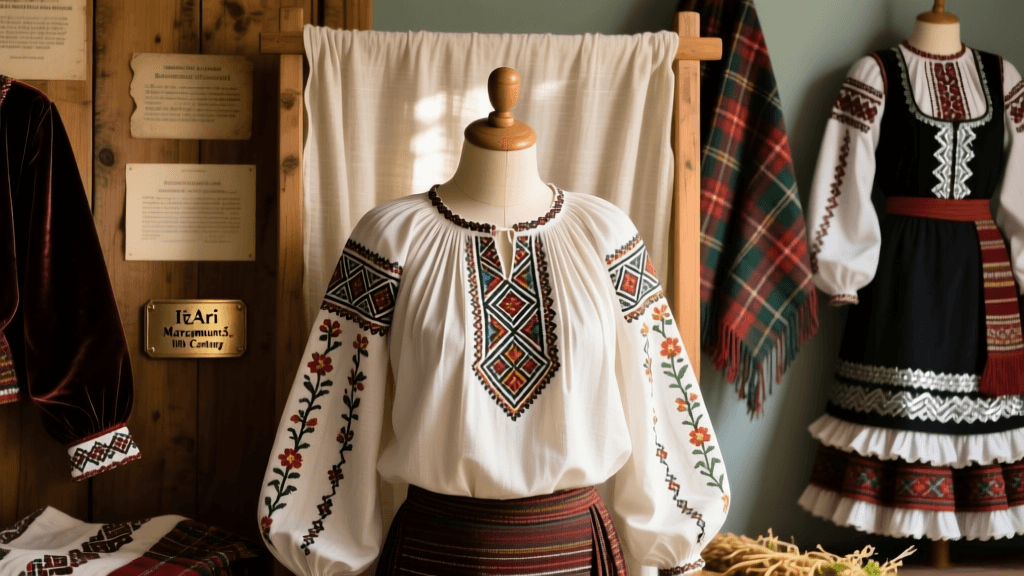
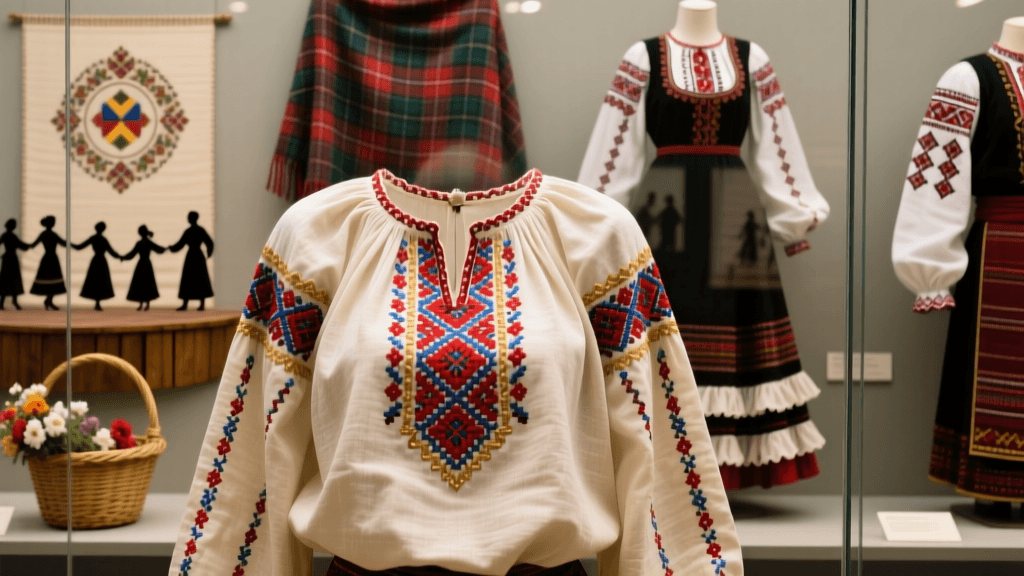
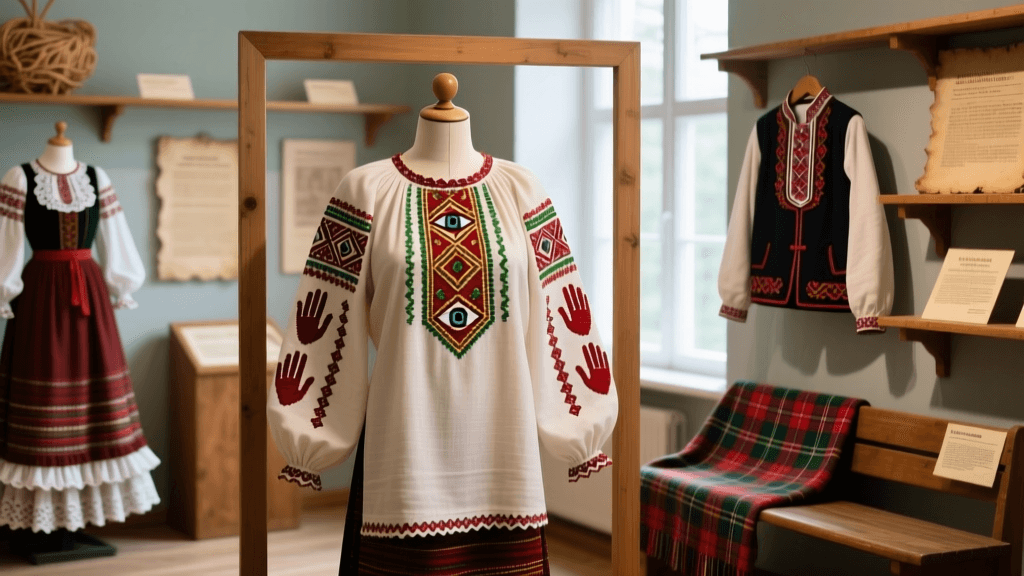
Ukrainian vyshyvanka embroidery traces its roots to pre-Christian Slavic cosmology, where geometric and botanical motifs functioned as apotropaic devices—intended to ward off evil spirits and misfortune. Archaeological evidence from the Trypillia culture (c. 5400–2700 BCE) reveals stylized sun symbols and rhomboid patterns incised into clay figurines, precursors to later embroidered forms. By the 10th century CE, with the Christianization of Kyivan Rus’, older solar and fertility symbols were reinterpreted through Orthodox iconography: the eight-pointed star became associated with the Virgin Mary’s protection, while the “tree of life” motif evolved to reflect both pagan ancestry and biblical tradition.
Each stitch carried intentionality: red thread, derived from madder root or cochineal, symbolized blood, vitality, and spiritual defense. In central Poltava region, girls embroidered their first vyshyvanka at age 12 using exactly 365 stitches—one for each day of the year—to ensure annual safeguarding. Ethnographers at the Institute of Art Studies, Folklore and Ethnology of the National Academy of Sciences of Ukraine documented over 2,800 distinct regional motif variations between 1928 and 1994, confirming that no two villages employed identical symbolic syntax.
Regional Distinctions Across Ukrainian Lands
Geographic isolation fostered highly localized stylistic conventions. In Hutsul regions of the Carpathians, embroidery features dense black-and-red cross-stitch on white linen, with motifs measuring precisely 2.5–3 mm per element—reflecting tight-knit community standards passed down through maternal lineages. Contrastingly, Polissia in northern Ukraine favors counted-thread whitework (known as *bilya vyshyvka*), where designs are executed in fine linen thread on unbleached fabric; motifs often span 8–12 cm in width and incorporate stylized birds and sprigs of wormwood.
Hutsul Embroidery Techniques
Hutsul artisans use a double-layered linen base reinforced with wool backing to withstand mountain climate extremes. The dominant “Hutsul diamond” motif measures exactly 1.7 cm per side and appears in repeating sequences of seven—symbolizing completeness in local numerology.
Polissia Whitework Precision
Polissia embroiderers maintain strict adherence to even-count grids: every design is plotted on 42-thread-per-centimeter linen, requiring magnifying lenses for accuracy. A single ceremonial shirt (*vyshyvanka*) may contain 1,200–1,500 hours of labor across three generations.
Festival Occasions and Ritual Use
Vyshyvankas are integral to cyclical rites: at Easter, women wear shirts with egg-shaped motifs stitched in gold thread measuring 1.2 cm in diameter; during Ivan Kupala Night (24 June), floral bands on sleeves feature 13 alternating petals—a number tied to lunar cycles and ancestral veneration. At weddings in the Chernihiv region, brides don shirts with 21 embroidered crosses placed along collar seams, each cross 0.8 cm tall, representing the 21 virtues enumerated in local wedding liturgies.
The annual Vyshyvanka Day, initiated in 2006 in Kyiv, now draws over 300,000 participants across Ukraine and diaspora communities. In Lviv’s historic Rynok Square, volunteers coordinate mass embroidery events where standardized 3.5 cm × 3.5 cm protective squares—featuring the “spider web” motif—are stitched onto communal banners.
Museum Collections and Conservation Efforts
European ethnographic museums preserve vyshyvanka traditions through rigorous documentation and public engagement. The Museum of Ukrainian Folk Decorative Art in Kyiv houses 14,200+ textile artifacts, including a 1782 vyshyvanka from Khmelnytskyi Oblast with intact silver-wrapped silk threads measuring 0.15 mm in diameter. The Ethnographic Museum in Warsaw holds 3,700 Ukrainian pieces acquired between 1921 and 1939, many annotated by Polish ethnographer Kazimierz Moszyński during fieldwork in Volhynia.
At the Victoria and Albert Museum in London, a 19th-century Poltava shirt underwent multispectral imaging analysis in 2019, revealing underdrawn charcoal guidelines spaced at exact 4 mm intervals—evidence of standardized grid systems predating industrial textile production.
“The vyshyvanka is not costume but covenant—each thread a vow spoken in pattern.” — National Museum of Folk Architecture and Life of Ukraine, 2017
Contemporary Revival and Material Continuity
Modern practitioners uphold historical fidelity while adapting tools. The Lviv-based cooperative “Rukotvory” sources flax from certified organic farms in Zhytomyr Oblast, where stalks are retted for precisely 18 days to achieve optimal fiber tensile strength of 420 MPa. Natural dyes follow medieval recipes: weld yields yellow at pH 7.2, while oak galls produce iron-tannate black with lightfastness rated at ISO 105-B02 level 6 after 40 hours of xenon arc exposure.
- Standard sleeve width on ceremonial vyshyvankas: 48 cm ± 0.5 cm
- Minimum thread count for museum-grade linen: 62 threads/cm
- Average number of motifs per chest panel in Podillia: 17
- Depth of traditional wooden embroidery frame grooves: 12 mm
- Maximum allowable deviation in motif symmetry: 0.3 mm
Researchers at the Ukrainian Center for Cultural Heritage Preservation conducted pigment analysis on 89 vyshyvankas dated 1840–1920, finding consistent use of hematite-based red (Fe₂O₃ content ≥ 87%) across 12 oblasts—demonstrating shared mineral sourcing networks despite imperial administrative divisions.
The Norwegian Museum of Cultural History in Oslo displays a 1903 vyshyvanka collected during ethnographic expeditions to Bukovyna, notable for its 5.1 cm-wide shoulder yoke band containing 117 individually stitched wheat ears—each rendered in stem stitch with 0.2 mm silk floss.
In 2022, the National Museum of Folk Architecture and Life of Ukraine launched a digital archive containing high-resolution scans of 3,200 vyshyvankas, geotagged to village coordinates and cross-referenced with oral histories recorded between 1958 and 2001 by the Institute of Ethnology of the National Academy of Sciences.
At the Museum of Folk Art in Kraków, a rotating exhibition titled “Threads of Resilience” presents vyshyvankas recovered from war-affected areas in Donetsk Oblast, including one 1915 shirt bearing bullet perforations carefully mended with period-accurate red silk—its original 2.3 cm protective border intact beneath the repair.
Conservators at the Ethnographic Museum in Warsaw employ humidity-controlled display cases maintaining 55% RH ± 3% and 18°C ± 0.5°C to prevent degradation of 19th-century flax fibers, which lose structural integrity below 45% relative humidity.
Contemporary designers collaborate with elders in Ivano-Frankivsk Oblast to reproduce archival patterns using hand-spun flax yarn spun to 18,000 m/kg linear density—a specification verified against samples held in the Kyiv museum’s textile lab.
When worn during the 2023 Kyiv Independence Day parade, over 12,000 participants wore vyshyvankas adhering to regional specifications codified in the State Register of Intangible Cultural Heritage, updated annually by Ukraine’s Ministry of Culture since 2015.
| Museum | Collection Size (Ukrainian Vyshyvankas) | Earliest Dated Piece | Key Conservation Protocol |
|---|---|---|---|
| Museum of Ukrainian Folk Decorative Art (Kyiv) | 14,200+ | 1782 | Low-oxygen storage (0.5% O₂) |
| Ethnographic Museum (Warsaw) | 3,700 | 1821 | Custom pH-neutral lignin-free mounts |
| Victoria and Albert Museum (London) | 84 | 1867 | UV-filtering glazing + microclimate framing |
Fieldwork conducted by the Institute of Ethnology (National Academy of Sciences of Ukraine) between 2010 and 2021 recorded 92 active vyshyvanka-making communities across 24 oblasts, with average practitioner age declining from 68 to 52 years—a shift attributed to pedagogical programs in 317 rural schools supported by UNESCO’s 2018 Safeguarding Grant.
The Chernivtsi Regional Museum maintains a living workshop where apprentices learn motif geometry using brass templates calibrated to millimeter precision, replicating tools found in 18th-century artisan inventories archived at the Central State Historical Archives of Ukraine.
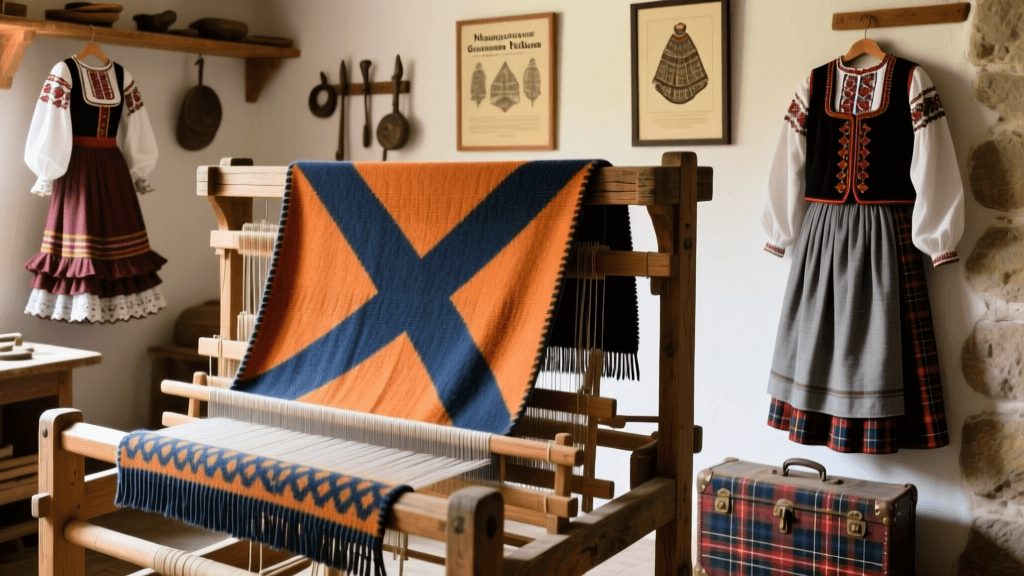
At the Museum of Folk Architecture and Life of Ukraine in Pyrohiv, visitors observe daily demonstrations of traditional frame tensioning—where warp threads are stretched to 12.7 kg force using calibrated spring gauges, matching specifications documented in 1932 ethnographic surveys.
A 2020 study published by the European Association for Folklore and Ethnology confirmed that vyshyvanka motifs from southern Mykolaiv Oblast show statistically significant divergence (p < 0.001) from northern Chernihiv examples in motif density, measured at 28 motifs/cm² versus 14 motifs/cm² respectively.