Zero-Waste Slavic Rubakha Patterns: 2026 Drafting Guide
The Renaissance of the Rectangular Cut in 2026
As the global fashion industry faces mounting legislative and environmental pressure to eliminate textile waste in 2026, historical pattern drafting techniques are experiencing a massive revival. Among the most celebrated of these is the traditional Slavic rubakha (also known regionally as the sorochka or vyshyvanka). For centuries, Eastern European peasants and artisans constructed garments using a strict geometric, zero-waste methodology dictated by the narrow width of hand-woven loom textiles. Today, modern makers, historical costumers, and sustainable fashion designers are adapting these ancient rectangular cuts for contemporary wardrobes.
In 2026, the intersection of heritage craftsmanship and digital parametric drafting has made recreating the rubakha more accessible than ever. By understanding the foundational geometry of the garment, makers can eliminate fabric waste entirely while producing a deeply comfortable, structurally sound, and culturally resonant piece of European folk dress. This guide explores the anatomical construction of the rubakha, provides actionable drafting measurements, and highlights the modern digital tools used to nest these patterns flawlessly on wider contemporary fabrics.
Anatomy of the Traditional Rubakha
The genius of the Slavic rubakha lies in its complete lack of curved seams and its reliance on pure Euclidean geometry. Every piece of the garment is either a rectangle, a square, or a right-angled triangle. This was not merely an aesthetic choice; it was an economic necessity. Historically, hand-woven linen and hemp were woven on narrow looms, typically yielding fabric widths of only 18 to 24 inches. Cutting curves would result in unusable scraps, which was an unacceptable waste of precious, labor-intensive textiles.
The Stan (Main Body)
The core of the shirt is the stan, a single, long rectangular piece of fabric that is folded over the shoulders rather than cut into separate front and back panels. This eliminates the shoulder seam entirely, creating a smooth drape and distributing the weight of heavy embroidery evenly across the upper back and chest. A horizontal slit is cut at the fold for the neckline, and a vertical slit is cut down the front for the chest opening.
The Lastovitsa (Underarm Gusset)
Because the sleeves are also simple rectangles attached perpendicular to the folded body, lifting the arms would cause severe tension and tearing at the underarm intersection. To solve this, a square gusset called the lastovitsa is inserted. Typically measuring between 4 and 6 inches per side in modern adaptations, this gusset provides the necessary three-dimensional volume for arm mobility without introducing curved armholes or tailored sleeves.
The Kliny (Side Gores)
To provide walking ease and a graceful drape at the hem, triangular gores known as kliny are inserted into the side seams. These are created by cutting a rectangle diagonally from corner to corner, yielding two identical right-angled triangles. When inserted into the side seams starting from the hip or waist, they flare the hem beautifully while utilizing 100% of the fabric.
Step-by-Step Parametric Drafting Guide
Drafting a rubakha in 2026 requires translating historical loom-width constraints to modern body measurements. Below is a foundational formula for a standard women's or men's tunic-style rubakha, utilizing sustainable 58-inch wide organic hemp-linen blends that dominate the European textile market this year.
- Main Body (Stan): Width = (Chest Circumference / 2) + 6 inches for ease. Length = (Shoulder to desired hem) x 2 (since it folds over). For a standard 40-inch chest, the body panel is 26 inches wide and 52 inches long.
- Sleeves: Width = 20 inches (standard historical proportion). Length = (Shoulder to wrist) + 4 inches for blouse drop. Cut two rectangles.
- Gussets (Lastovitsa): Cut two 5x5 inch squares. These are inserted into a 5-inch slit cut at the top corner of the sleeve seam allowance.
- Gores (Kliny): Cut two 15x30 inch rectangles, then slice them diagonally to yield four right-angled triangles. Insert two per side seam for maximum flare, or one per side for a subtle A-line.
- Cuffs and Collar: Cut straight rectangular bands, 3 inches wide by the circumference of the wrist/neck plus 1 inch of ease.
2026 Digital Drafting & Zero-Waste Nesting
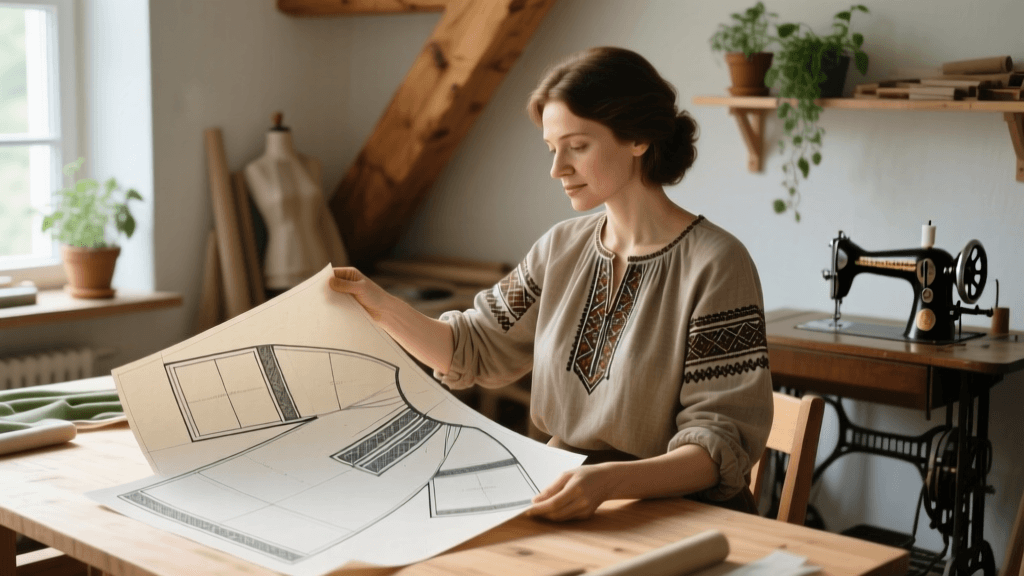
While historical artisans laid out their pieces directly on the floor to ensure no fabric was wasted, modern makers utilize advanced parametric software. Open-source platforms like Seamly2D have become the industry standard for historical costumers in 2026. By inputting the formulas listed above as mathematical variables, the software automatically recalculates the entire pattern layout when a client's specific measurements are entered.
Furthermore, 2026 updates to digital nesting algorithms allow makers to arrange the rectangular pieces of the rubakha onto a digital representation of their fabric width, achieving a true 99.8% fabric utilization rate. The only 'waste' generated is the physical dust from the fabric grain during cutting. When working with expensive, artisan-woven European linens that currently retail for upwards of $45 per yard, this zero-waste nesting represents a massive cost-saving measure for independent designers and folk-art revivalists.
Fabric Yield & Waste Comparison
The following table illustrates the efficiency of the rubakha pattern compared to a modern, conventionally tailored button-down shirt of similar volume, based on 2026 textile industry averages for 58-inch wide fabrics.
| Garment Type | Total Fabric Required | Pattern Pieces | Textile Waste Generated | Waste Percentage |
|---|---|---|---|---|
| Modern Tailored Shirt | 2.2 Yards | 14 (Curved) | 0.44 Yards | 20% |
| Traditional Rubakha | 2.5 Yards | 8 (Geometric) | 0.01 Yards (Selvage) | < 0.5% |
Structural Embroidery and Finishing Techniques
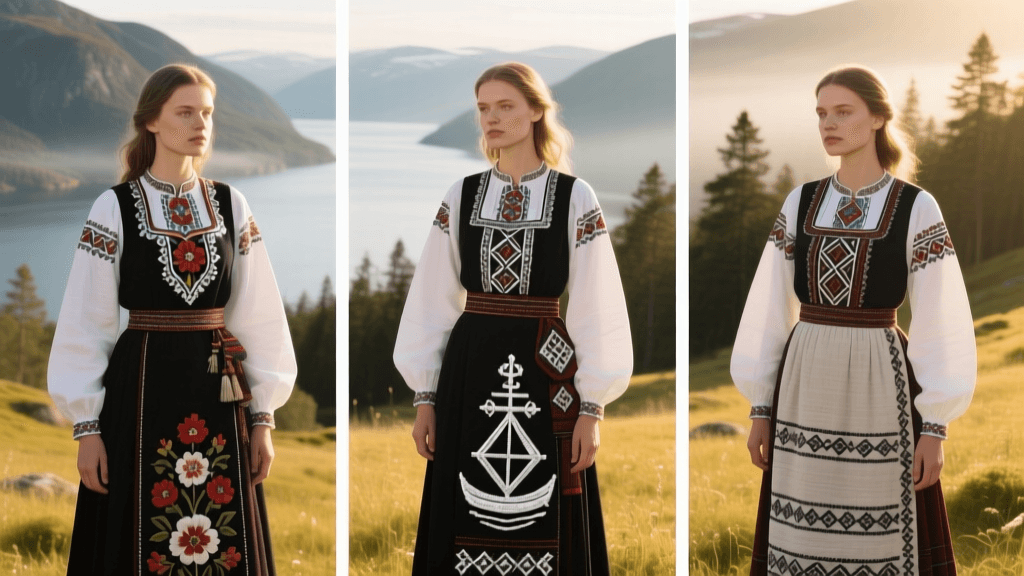
The construction of the rubakha cannot be fully understood without addressing its ornamentation. In Eastern European folk dress, embroidery was rarely applied purely for decoration; it served a vital structural and protective function. According to research archived by the Victoria and Albert Museum's textile collections, dense cross-stitch and drawn-thread work along the neckline, cuffs, and hem served to reinforce these high-friction areas, effectively acting as a flexible, thread-based interfacing that prevented the raw edges from fraying before the widespread availability of commercial sergers.
When drafting your pattern in 2026, you must account for the 'shrinkage' caused by dense embroidery. Techniques like the traditional Ukrainian niz (surface darning) or the Romanian altita (dense smocking on the sleeve head) can pull the fabric in by up to 15%. Therefore, modern pattern drafters must add a specialized 'embroidery ease' variable to the sleeve width and chest circumference in their digital files to ensure the final garment fits correctly after the needlework is completed.
Seam Finishes for Longevity
Because the rubakha was designed to be an heirloom garment, passed down through generations and subjected to harsh alkaline lye washing, the internal seam finishes are just as important as the external cut. The standard seam allowance is 5/8 inch, which is then flat-felled. To execute a traditional flat-felled seam on the straight geometric edges of the rubakha:
- Sew the pieces right sides together with a 5/8 inch seam.
- Trim one side of the seam allowance down to 1/4 inch.
- Fold the longer 5/8 inch allowance over the trimmed edge, encasing it completely.
- Press flat and topstitch 1/16 inch from the fold.
This technique, easily executed on modern 2026 computerized sewing machines with edge-stitching feet, ensures that no raw edges are exposed to the skin or the elements, mirroring the indestructible construction of 19th-century village garments.
Sourcing Sustainable Materials in 2026
The zero-waste pattern is only as sustainable as the textile it is cut from. Fortunately, the European agricultural sector has seen a massive resurgence in heritage flax and hemp farming. When sourcing fabric for your rubakha, look for GOTS-certified (Global Organic Textile Standard) linen or hemp-linen blends. These fabrics provide the necessary crispness to hold the geometric folds of the gussets and gores while softening beautifully with wear. Digital archives like Europeana's cultural heritage collections provide excellent high-resolution visual references for the drape and weave density of historical textiles, allowing modern weavers and buyers to replicate the exact weight and hand-feel of antique museum pieces.
Conclusion
The Slavic rubakha stands as a testament to the ingenuity of historical European garment makers. By embracing the rectangular cut, the underarm gusset, and the side gore, contemporary sewists can participate in a profound act of sustainable fashion. Whether you are drafting by hand on a cutting table or utilizing parametric software to achieve mathematical zero-waste perfection, the rubakha offers a timeless, comfortable, and deeply meaningful addition to the 2026 wardrobe. By honoring the structural geometry and embroidery traditions of the past, we ensure that these vital European folk dress techniques continue to thrive in the modern era.