Drafting the Slavic Rubakha: Zero-Waste Patterns 2026
The Renaissance of Zero-Waste Slavic Tailoring
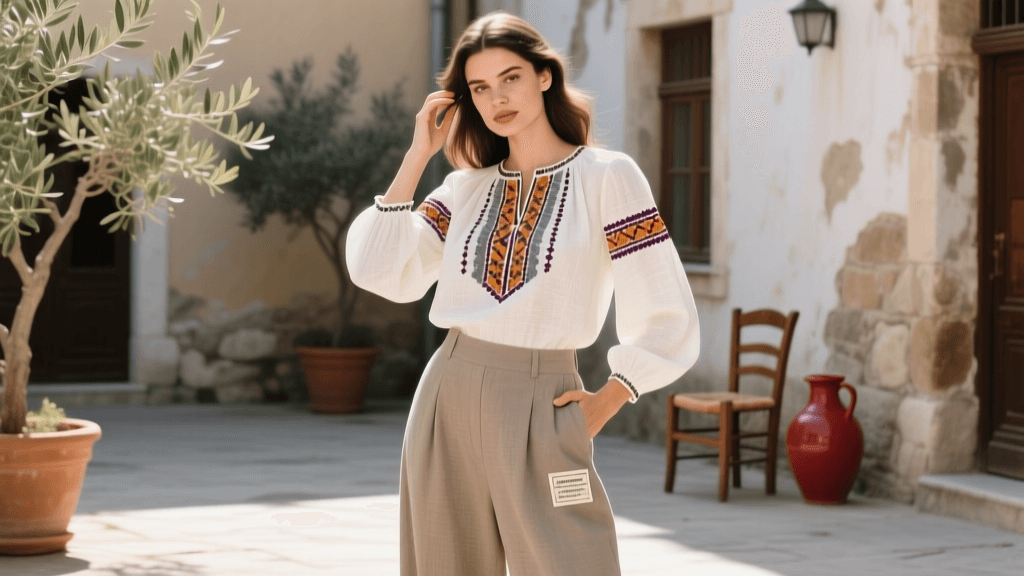
The Rubakha (also known regionally as the sorochka or kosovorotka) is the foundational garment of East Slavic folk dress. Historically worn by peasants and nobility alike across Russia, Ukraine, and Belarus, this traditional linen shirt is a masterclass in geometric efficiency. Unlike modern tailored clothing that curves around the body and generates significant fabric waste, the traditional Rubakha relies on strict, zero-waste pattern cutting. Every inch of the hand-woven linen was utilized, reflecting a deep cultural respect for the labor-intensive process of flax cultivation and weaving.
In 2026, as the global sewing community and sustainable fashion movements increasingly embrace zero-waste design, this ancient technique has seen a massive resurgence. Modern makers are looking to historical European folk dress not just for aesthetic inspiration, but for practical, eco-conscious construction methodologies. By studying the Rubakha, contemporary sewists can learn to draft patterns that yield absolutely no textile waste, utilizing rectangular geometry and strategic gussets to create garments that are both highly mobile and deeply rooted in heritage.
For deeper academic research into Eastern European peasant dress and historical construction methods, the Journal of Dress History offers extensive peer-reviewed analyses of regional variations. Furthermore, the Textile Research Centre (TRC) Leiden maintains an invaluable digital archive of traditional Slavic linen weaving and embroidery samples, providing crucial visual references for authentic reproduction.
Sourcing Authentic Materials in 2026
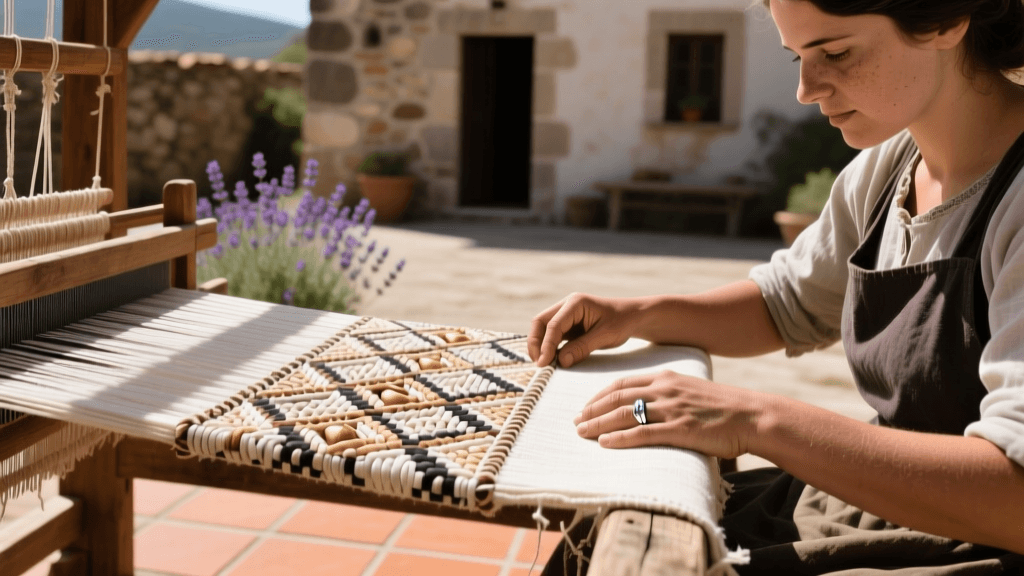
To authentically reconstruct a Rubakha, material selection is paramount. The garment was traditionally made from homespun linen, which possessed a slightly uneven texture and a natural, unbleached or softly bleached color. Today, you must source high-quality European flax linen that mimics these historical properties while providing the durability required for daily wear.
Below is a comprehensive guide to sourcing materials, including 2026 market pricing for premium European textiles.
| Material Category | Specification & Weight | 2026 Estimated Cost | Notes for Construction |
|---|---|---|---|
| Base Fabric (Body) | 100% Linen, 150-170 gsm | €22 - €28 per meter | Opt for a 60cm (24-inch) width to mimic historical loom widths and simplify zero-waste math. |
| Embroidery Thread | Linen or Cotton Floss (2-ply) | €4 - €7 per skein | Traditional colors are deep madder red and carbon black. Avoid synthetic sheens. |
| Seam Thread | 60/2 or 80/2 Linen Thread | €12 - €15 per spool | Essential for hand-flat-felling seams; provides historical accuracy and immense tensile strength. |
| Needles | Sharps (Size 8-10) & Tapestry | €5 per pack | Use sharps for woven linen seams and blunt tapestry needles for counted-thread embroidery. |
The Geometry of the Rubakha: Pattern Drafting
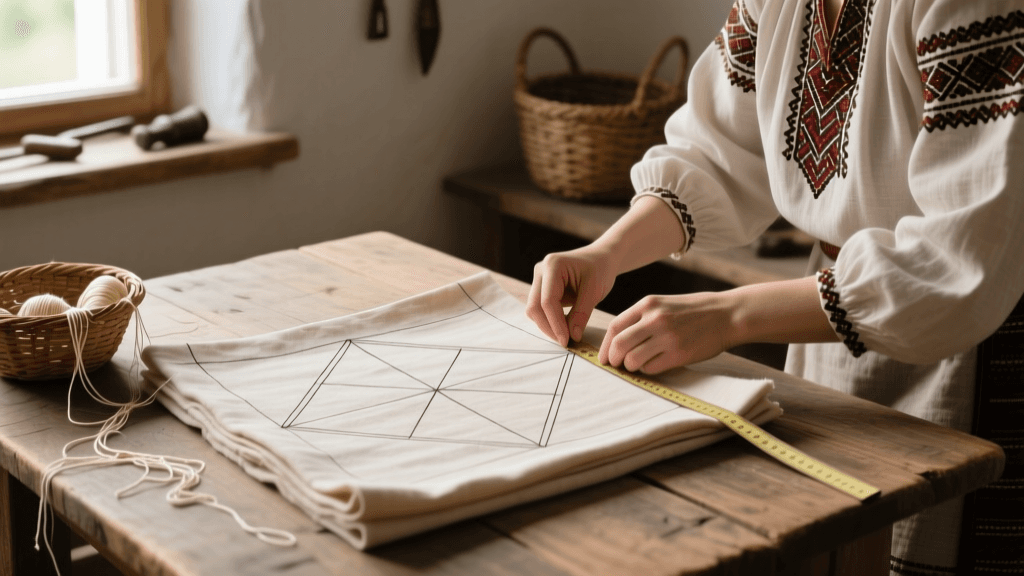
The genius of the Rubakha lies in its reliance on straight lines and right angles. There are no curved armholes, no princess seams, and no darts. The garment is constructed entirely from rectangles and squares, meaning the pattern can be drafted directly onto the fabric using a ruler and tailor's chalk, eliminating the need for paper patterns entirely.
Calculating the Rectangles
For a standard adult female Rubakha using 60cm wide linen, the cutting layout is as follows:
- Main Body Panels: Cut two identical rectangles. The width is the full width of the fabric (60cm). The length is determined by measuring from the highest point of the shoulder down to the desired hemline (typically mid-calf or ankle), plus 5cm for hem and shoulder seam allowances.
- Sleeves: Cut two rectangles. The width is again the full width of the fabric (60cm), which provides the characteristic deep, voluminous drape of the Slavic sleeve. The length is measured from the shoulder edge to the wrist, plus 8cm for a deep cuff and seam allowance.
- The Lastovitsa (Underarm Gusset): Cut two perfect squares, measuring exactly 12x12 cm. This small piece of fabric is the secret to the Rubakha's mobility, allowing the wearer to raise their arms fully without pulling the main body of the shirt upward.
- Collar and Cuffs: Cut long, narrow strips from the remaining fabric edges to create a stand collar (typically 4cm wide) and tight wrist cuffs (6cm wide).
Because the sleeves and body utilize the full width of the 60cm fabric, and the gussets and collar are cut from the selvedge edges or the negative space left by the sleeve length, the resulting fabric waste is effectively zero.
Constructing the Lastovitsa and Seams
Assembling a Rubakha requires a departure from modern commercial sewing patterns. The insertion of the lastovitsa (gusset) is the most technically demanding step, but it is essential for the garment's structural integrity and historical accuracy.
Step-by-Step Gusset Insertion
- With right sides together, sew the top edge of the sleeve rectangle to the side edge of the front body panel, stopping exactly 12cm from the shoulder fold line.
- Repeat this process for the back body panel. You now have a cross-shaped intersection with a 12cm gap at the underarm.
- Take your 12x12 cm gusset square. Align one edge of the gusset with the 12cm unsewn gap on the front panel, and the adjacent edge with the unsewn gap on the sleeve. Pin carefully.
- Using a fine running stitch or a modern machine straight stitch (set to a short 2.0mm length), sew the gusset into the corner. Pivot precisely at the inner corner to prevent puckering.
- Repeat for the remaining three sides of the gusset, connecting it to the back panel and the lower sleeve edges.
Historical Seam Finishes
To ensure the linen does not fray and to replicate the durability of 19th-century peasant garments, all interior seams must be flat-felled. In 2026, while sergers are common, traditionalists advocate for hand-felled seams using a slip stitch or a fine whipstitch. Trim one side of the seam allowance to half its width, fold the wider allowance over the trimmed edge, press flat with a steam iron, and stitch it down to the body of the garment. This creates a clean, ridge-like seam that is virtually indestructible and comfortable against the skin.
Embroidery Placement and Counted-Thread Techniques
A Rubakha is considered incomplete without its protective embroidery. In Slavic folk tradition, the openings of the garment (neckline, cuffs, and hem) were viewed as vulnerable entry points for malevolent spirits. Intricate geometric embroidery served as a spiritual talisman, guarding the wearer while simultaneously indicating their regional origin, marital status, and social standing.
Traditional Motifs and Symbolism
When charting your embroidery patterns, rely on counted-thread techniques such as cross-stitch, double-running stitch (Holbein stitch), and counted satin stitch. The following motifs are historically prevalent and carry deep agrarian symbolism:
- The Rhombus (Diamond): Often divided into four smaller squares with dots inside, this is the most ubiquitous Slavic motif, representing a sown field, fertility, and the earth goddess.
- The Berehynia: A highly stylized, geometric female figure with raised arms, often flanked by birds or horses. She is the protector of the home and the harvest.
- Solar Signs: Eight-pointed stars and swastika-like turning crosses (Kolovrat) representing the sun, the cycle of seasons, and life-giving energy.
- Hops and Vines: Wavy, intersecting lines with leaf-like appendages, symbolizing youth, vitality, and the unbreakable bond of family.
Execution and Timing
Embroidering a full Rubakha is a significant time investment. The hem alone may require tens of thousands of individual stitches. In 2026, many makers utilize digital pattern-charting software to design their motifs before transferring them to the linen. However, the physical stitching must be done by hand to maintain the correct tension on the woven flax.
Work the embroidery before assembling the final seams. It is vastly easier to hoop and stitch the flat rectangular panels of the sleeves and hem than it is to maneuver a partially assembled garment. Use a deep red linen thread for the primary motifs, outlining them with a single strand of black or dark indigo to create depth and contrast. Ensure your stitches follow the exact warp and weft threads of the linen; this counted-thread approach guarantees the geometric precision that defines authentic Slavic folk art.
Conclusion
Drafting and constructing a traditional Slavic Rubakha is far more than a sewing project; it is an immersion into a centuries-old philosophy of sustainability, geometry, and cultural storytelling. By embracing zero-waste pattern cutting and mastering the insertion of the lastovitsa, modern makers in 2026 can create garments that are not only historically authentic but also remarkably relevant to contemporary ecological values. Whether worn for cultural festivals, historical reenactment, or as a testament to sustainable slow fashion, the Rubakha stands as a timeless masterpiece of European folk dress.