Sardinian Pibiones Weaving and Nuoro Folk Dress Guide 2026
The Enduring Legacy of the Costume Sardo in Nuoro
When exploring the rich tapestry of European folk dress, few regions offer a textile heritage as fiercely preserved and visually striking as the Italian island of Sardinia. Isolated by the Mediterranean Sea, Sardinia developed highly localized sartorial traditions, with each village boasting distinct variations in color, embroidery, and weaving. At the heart of this island’s cultural identity is the costume sardo (traditional Sardinian dress), and nowhere is it more elaborate than in the mountainous Barbagia region, particularly around the city of Nuoro.
As we navigate the sustainable fashion landscape of 2026, Sardinian heritage garments and textiles have transcended their role as mere festival attire. Today, they represent the pinnacle of traceable, hyper-local luxury. Driven by a global demand for artisanal authenticity, contemporary heritage brands and weaving cooperatives are revitalizing ancient techniques, ensuring that the island's sartorial legacy thrives in the modern wardrobe. This guide explores the intricate anatomy of the Nuoro folk dress, the mesmerizing pibiones weaving technique, and the heritage cooperatives leading the craft's revival in 2026.
Anatomy of the Nuoro Traditional Garments
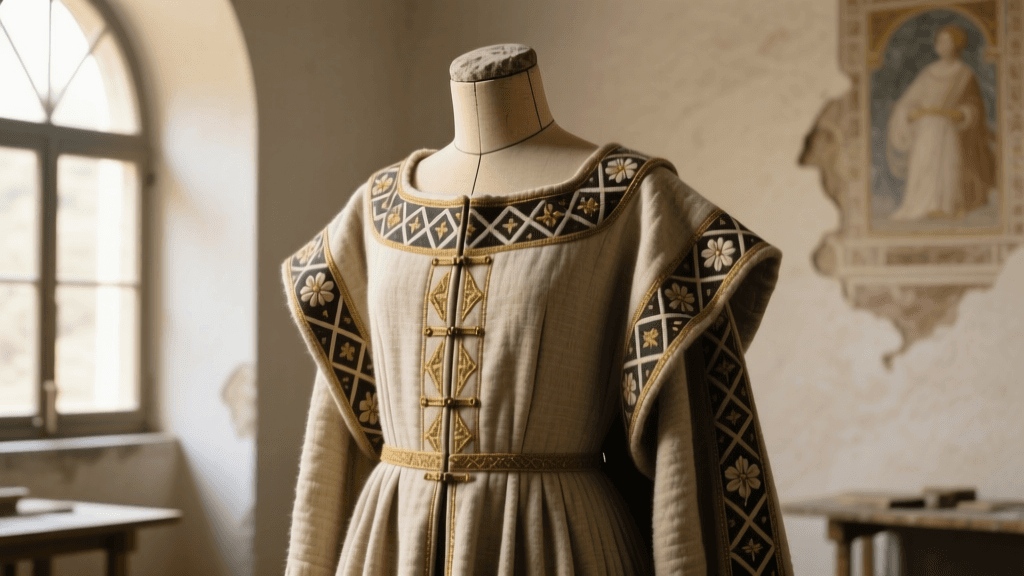
The traditional dress of Nuoro is a masterclass in layering, textile manipulation, and symbolic ornamentation. Historically, the garments communicated a wearer’s marital status, social standing, and village of origin. Today, these garments are proudly worn during major cultural events like the Sagra del Redentore and the Festa della Madonna della Neve.
Women’s Attire: Su Costume 'e Femina
The women’s traditional dress from Nuoro is characterized by its rich, dark color palette punctuated by vibrant silk embroidery and heavy gold filigree jewelry. The ensemble is constructed through several key layers:
- Sa Camisa (The Shirt): A voluminous, naturally dyed linen shirt featuring incredibly fine, hand-stitched embroidery around the collar and cuffs. The motifs often include the pavoncella (peahen), an ancient symbol of immortality and protection.
- Su Zippone (The Bodice): A structured, sleeveless bodice typically crafted from deep burgundy, dark green, or black velvet. It is heavily reinforced and fastened at the front with ornate silver or gold hooks, allowing the embroidered sa camisa to billow through the lacing.
- Sa Unnedda (The Skirt): A heavy, pleated wool skirt that falls to the ankles. The hem is adorned with s'oradura, a wide band of silk or velvet appliqué, often in contrasting colors like crimson or gold, which adds weight and a distinctive swaying motion when walking.
- S'Iscalia (The Apron): The most visually dominant piece of the ensemble. Worn over the skirt, the apron is crafted from fine wool or silk and features dense, metallic thread embroidery depicting stylized floral and geometric patterns.
Men’s Attire: Su Costume 'e Omine
While slightly more subdued in color, the men’s traditional dress is equally complex in its construction and textile layering, designed originally for the rugged pastoral life of the Barbagia highlands.
- Sa Berritta (The Cap): An iconic, long, knitted wool cap, usually black or dark brown. It is worn folded back on itself or draped over the shoulder, serving as both a status marker and protection against the mountain chill.
- Su Zippone (The Jacket): A double-breasted jacket made from heavy orbace (a traditional, coarse Sardinian wool) or velvet. It features intricate black-on-black embroidery along the lapels and cuffs.
- Sas Ragas (The Kilt): A pleated, skirt-like garment made of white or natural linen, worn over the trousers. It is a direct descendant of ancient Mediterranean tunics and provides ease of movement for shepherds and dancers.
- Sos Cartzones (The Trousers): Loose-fitting white linen trousers that are tucked into heavy leather gaiters (cosinzos), protecting the lower legs from thorny brush and rocky terrain.
The Pibiones Weaving Technique: Grain by Grain
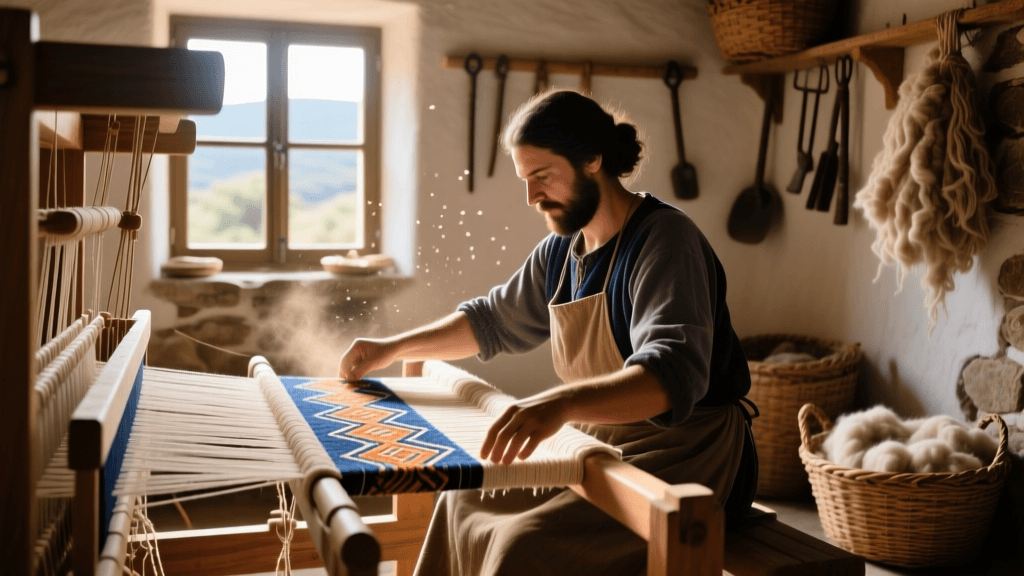
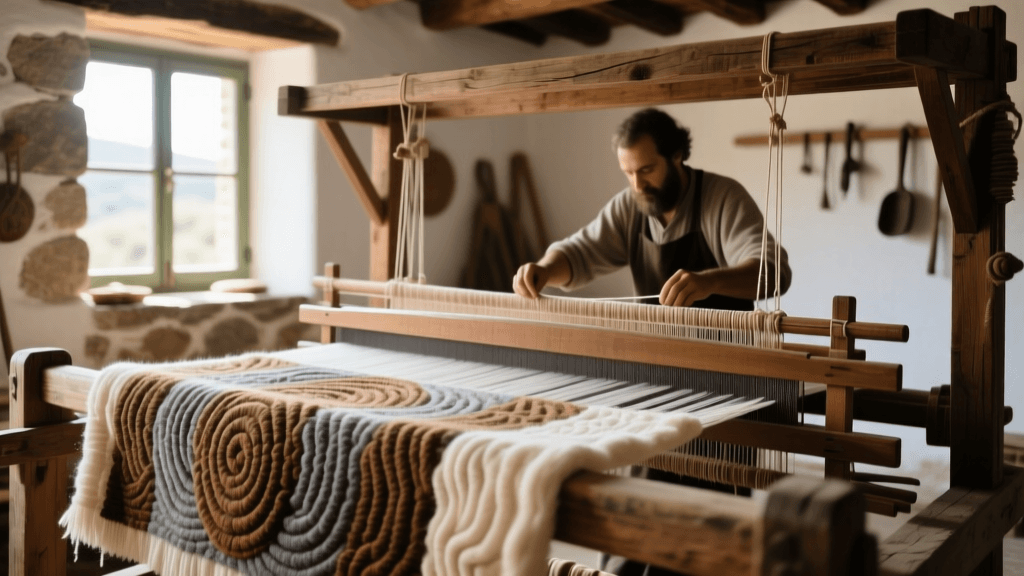
Beyond the garments themselves, Sardinia is globally renowned for its textile weaving, specifically the pibiones (pronounced pee-bee-oh-nee) technique. Translating to 'grapes' or 'grains' in the Sardinian dialect, pibiones refers to the distinctive raised, three-dimensional bumps that form the patterns on the woven fabric.
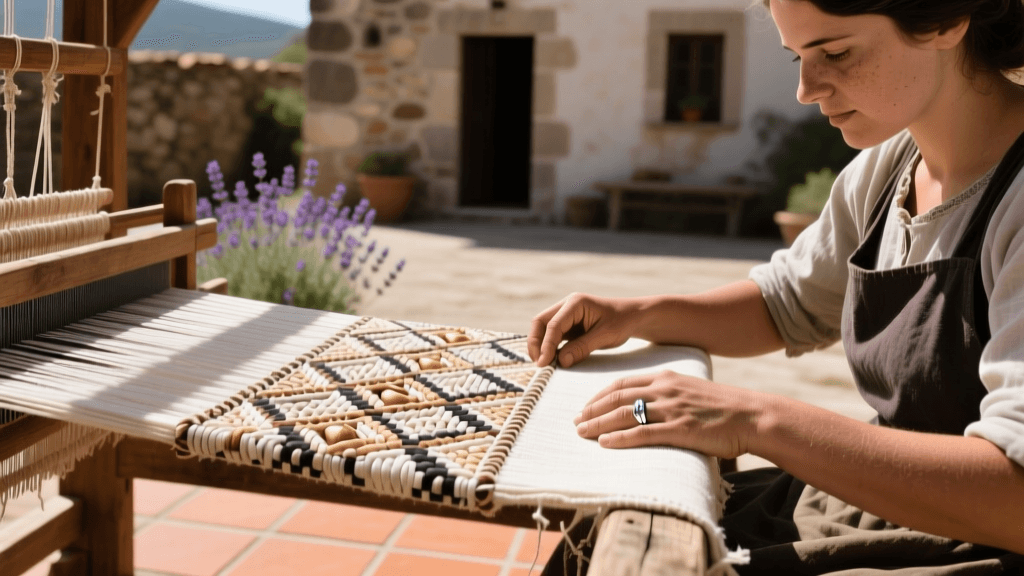
Executed on traditional wooden floor looms (lizu), this technique requires immense physical strength and mathematical precision. The weaver uses a thick, smooth rod—traditionally made of iron or hardwood—placed horizontally across the warp threads. As the weft is passed through, the artisan manually loops the yarn over the rod, creating a raised 'grain.' Once the row is beaten tightly into place with the loom's heavy wooden comb, the rod is removed, leaving a permanent, textured bump on the surface of the fabric.
In 2026, authentic hand-loomed pibiones textiles are highly sought after by interior designers and fashion houses. The raised texture not only provides exceptional durability and insulation but also creates a tactile, sculptural quality that industrial jacquard looms simply cannot replicate. According to the Sardegna Cultura Portal, the geometric patterns woven into these textiles—such as the rosa (rose), the spiga (wheat ear), and the diamante (diamond)—are believed to hold apotropaic (evil-averting) properties dating back to the Nuragic civilization.
Heritage Brands and Cooperatives Leading the 2026 Revival
The survival of the pibiones technique and the traditional Nuoro dress relies heavily on a network of dedicated artisan cooperatives and heritage brands. In 2026, the market has shifted away from mass-produced 'fast fashion' interpretations of folk dress, favoring verifiable, ethically produced heritage textiles.
Organizations like the ISRE Museo Etnografico Sardo (Istituto Superiore Regionale Etnografico) have been instrumental in cataloging historical garments and providing masterclasses to a new generation of weavers. Furthermore, the World Crafts Council Europe has recently highlighted Sardinian weaving cooperatives in their 2026 heritage preservation reports, noting the successful integration of digital traceability.
Many cooperatives in weaving hubs like Samugheo and Nuoro have adopted blockchain-verified 'digital passports' for their textiles in 2026. By scanning a discreet QR code woven into the hem of a pibiones runner or shawl, consumers can view the exact artisan who wove the piece, the origin of the wool, and the natural dyes used (such as walnut husk for brown, or pomegranate rind for yellow). This transparency has allowed heritage brands to command fair, luxury-tier pricing, ensuring the economic viability of the craft.
Comparative Guide: Traditional Festival Wear vs. 2026 Heritage Adaptations
While the full costume sardo remains reserved for festivals and weddings, contemporary heritage brands have successfully adapted these traditional techniques for everyday luxury. Below is a comparison of traditional garments versus their modern 2026 adaptations.
| Garment / Textile | Traditional Use & Materials | 2026 Heritage Brand Adaptation | Estimated 2026 Price Range |
|---|---|---|---|
| Pibiones Runner | Bedspreads and dowry chests; heavy local wool and linen. | Narrower table runners and wall hangings using softer merino blends and organic cotton. | €450 - €1,200 |
| Su Zippone (Bodice/Jacket) | Festival wear; stiff velvet or orbace wool, heavy silver hooks. | Unstructured, tailored blazers for women and men featuring subtle velvet lapels and tone-on-tone embroidery. | €800 - €2,500 |
| Sa Berritta (Cap) | Daily pastoral wear; coarse, tightly knitted black sheep's wool. | Refined, softer-knit beanies and slouchy caps in earthy, naturally dyed tones for urban streetwear. | €85 - €180 |
| Iscalia (Apron) Textiles | Ceremonial aprons; silk and metallic gold thread. | Luxury silk scarves and pocket squares featuring digitized, loom-woven reproductions of apron motifs. | €250 - €600 |
Actionable Advice: Sourcing Authentic Sardinian Textiles in 2026
If you are looking to invest in authentic Sardinian folk garments or pibiones textiles, navigating the market requires a discerning eye. The rise in popularity of Mediterranean folk aesthetics has unfortunately led to an influx of industrial imitations. Here is how to ensure you are purchasing genuine heritage pieces in 2026:
- Examine the Reverse Side: True hand-loomed pibiones will show the continuous loops of the raised 'grains' on the back of the fabric. Industrial jacquard imitations will often have floating threads or a fused backing where the pattern is merely stitched on top of a flat weave.
- Look for the ISOLA Mark: The Istituto Sardo Organizzazione Lavoro Artigiano (ISOLA) provides certification tags for authentic Sardinian crafts. In 2026, ensure the physical tag is accompanied by a verifiable digital ledger link confirming the artisan's cooperative.
- Assess the Imperfections: Hand-woven textiles on wooden looms will have slight, natural variations in tension and selvedge alignment. If the fabric is mathematically perfect and uniformly stiff, it has likely been produced on a computerized industrial loom.
- Verify the Dyes: Premium heritage cooperatives now explicitly list their natural dye sources. Look for descriptions mentioning guado (woad for blue), robbia (madder root for red), and mallo di noce (walnut husk for brown). Synthetic, overly bright neon tones are a red flag for mass production.
- Visit the Source: While online boutiques offer convenience, the best way to acquire high-end Nuoro folk dress components is to visit the artisan workshops in the Barbagia region during the Cortes Apertas (Open Courtyards) festival in autumn, where weavers open their private studios to the public.
By understanding the profound history behind the Nuoro folk dress and the meticulous mechanics of pibiones weaving, collectors and fashion enthusiasts can make informed, respectful investments. In 2026, supporting these Sardinian heritage brands is not just about acquiring a beautiful garment; it is an active participation in the survival of one of Europe's most captivating textile traditions.