Slavic Folk Shirt Patterns: Zero-Waste Drafting Techniques for 2026
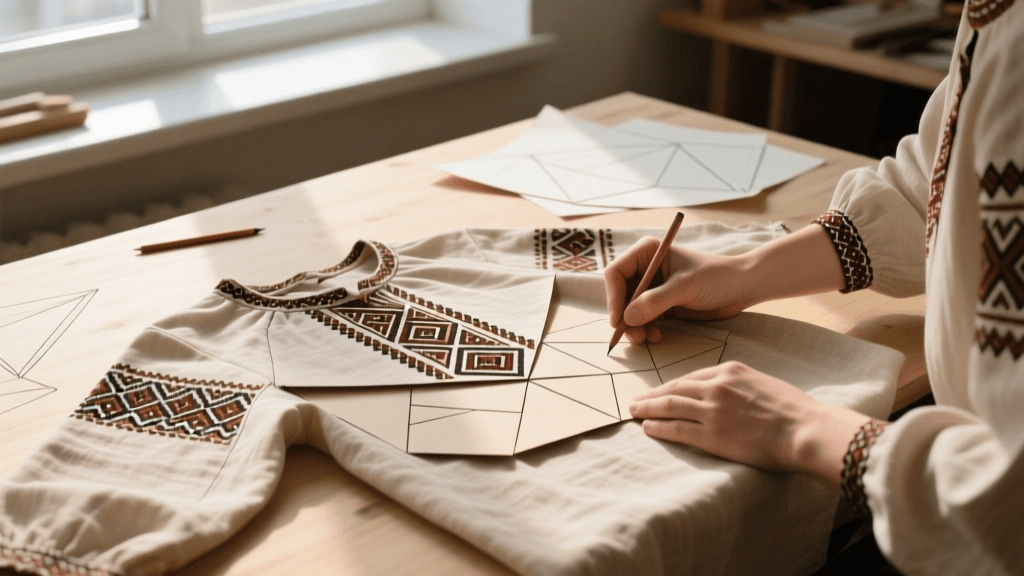
The Genius of Loom-Width Geometry in Slavic Dress
In the study of Eastern European folk dress, few garments demonstrate the intersection of mathematical precision and sustainable design as brilliantly as the traditional Slavic shirt. Known as the rubakha in East Slavic regions and the košulja in South Slavic territories, this foundational garment was historically constructed without curved cuts or wasted fabric. In 2026, as the global fashion industry pivots aggressively toward zero-waste pattern drafting and circular textile economies, modern makers and historical costumers are looking back to these ancient geometric techniques for inspiration.
Historically, fabric was a precious, labor-intensive commodity. Weavers produced cloth on narrow handlooms, typically yielding widths between 14 and 18 inches (35 to 45 cm). Rather than cutting curves and discarding the offcuts, village tailors and home sewers designed garments that utilized the exact loom width. The resulting patterns are masterclasses in modular geometry, relying entirely on rectangles, squares, and triangles. According to the Europeana Traditional Costumes Archive, these geometric constructions not only minimized waste but also created highly durable garments that could be easily disassembled, repaired, and repurposed across generations.
Core Components of the Rubakha and Košulja
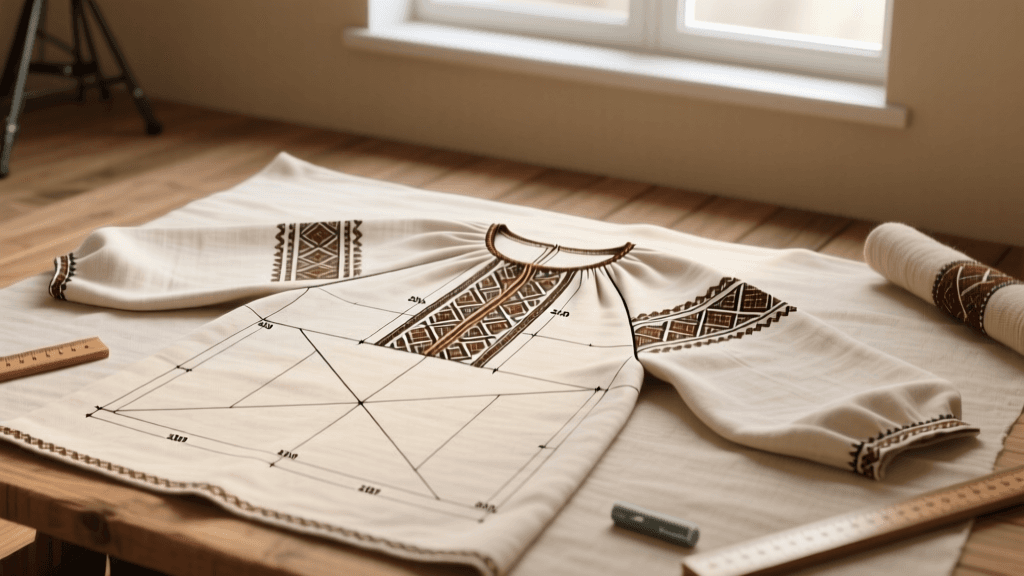
To draft a traditional Slavic folk shirt using zero-waste principles, one must understand the modular anatomy of the garment. Unlike modern Western shirt patterns that feature curved armholes, shaped side seams, and tapered sleeves, the Slavic shirt is an assembly of flat geometric shapes.
The Body and Sleeves (Rectangular Foundations)
The main body of the shirt consists of two to four identical rectangular panels. If the loom width is narrow, two rectangles are sewn together at the side seams to form the front, and two for the back. The sleeves are also simple rectangles. The width of the sleeve rectangle dictates the volume and gathering at the cuff, while the length is determined by the measurement from the shoulder to the wrist, plus an allowance for the traditional bloused drape over the forearm.
Gussets (Lastovitsa) and Godets (Klin)
Because the body and sleeves are simple rectangles, joining them at a 90-degree angle would severely restrict arm movement. To solve this, a square or rhomboid gusset—known as the lastovitsa in Russian or ladanica in Serbian—is inserted under the arm. This small geometric insert acts as a pivot point, granting the wearer a full range of motion without stressing the main seams. Similarly, triangular inserts called godets (or klins) are added to the side seams from the waist to the hem, providing the necessary flare for walking and working while maintaining a zero-waste cutting layout.
The Polik (Shoulder Insert)
In many regional variations, particularly in Ukraine and southern Russia, a rectangular shoulder insert called a polik bridges the gap between the body panel and the sleeve. Often heavily embroidered, the polik serves both a structural purpose—distributing the tension of the gathered sleeve—and a decorative one, signaling the wearer's regional identity and marital status.
2026 Zero-Waste Drafting: Adapting Historical Patterns
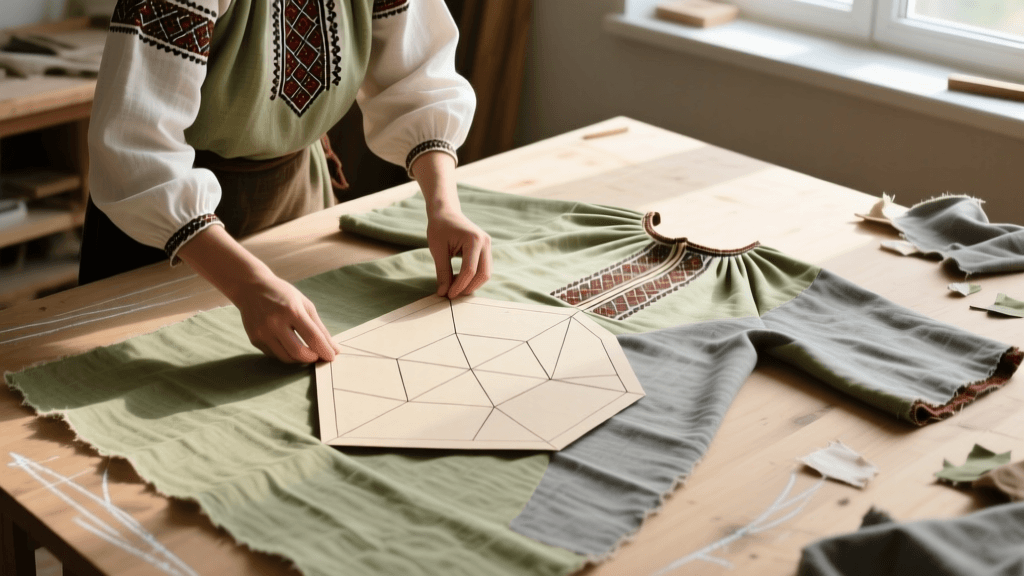
Adapting these historical patterns for modern sewists in 2026 requires translating narrow handloom widths to contemporary fabric bolts. Modern commercial linens and cottons are typically woven at 54 to 60 inches (137 to 152 cm). To maintain the zero-waste ethos, pattern drafters must mathematically divide the modern fabric width into the historical modular units.
| Garment Zone | Historical Loom Width | 2026 Standard Fabric Width (140 cm) | Zero-Waste Adaptation Strategy |
|---|---|---|---|
| Body Panels | 35 - 40 cm | 140 cm | Cut four 35 cm panels across the width; zero offcuts. |
| Sleeves | 35 - 40 cm | 140 cm | Cut two 40 cm sleeve panels; use remaining 60 cm for gussets. |
| Underarm Gussets | 15 x 15 cm squares | Derived from sleeve offcuts | Cut four 15 cm squares from the 60 cm sleeve remnant. |
| Hem Godets | Half-width triangles | Derived from body offcuts | Cut diagonally from the remaining 20 cm body remnant. |
By nesting the smaller geometric shapes (gussets and godets) into the negative space left by the larger rectangles, modern makers can achieve a 98% to 100% fabric utilization rate. The Victoria and Albert Museum's Textile Collection frequently highlights how historical peasant garments achieved this remarkable efficiency, a standard that contemporary 2026 sustainable fashion brands are now striving to replicate using algorithmic nesting software.
Sourcing Sustainable Linens in 2026
The traditional fabric for the Slavic folk shirt is linen, woven from flax. In 2026, the demand for heritage, ethically produced European linen has surged, driven by a consumer shift away from water-intensive cotton and petroleum-based synthetics. When sourcing fabric for a traditional rubakha, the weight and weave of the linen are critical.
- Medium-Weight Linen (180-220 gsm): Ideal for the main body and sleeves. It provides enough opacity for a shirt while remaining breathable. Look for GOTS-certified dew-retted linen from Lithuania or Romania, which ensures the flax was processed without chemical water pollution.
- Lightweight Linen (120-150 gsm): Best used for the gussets and godets to reduce bulk at the underarm and hem intersections.
- Evenweave Linen (25-28 count): Essential if you plan to execute traditional counted-thread embroidery. The warp and weft threads must be perfectly uniform to ensure geometric cross-stitch and blackwork patterns align correctly.
Current 2026 pricing for premium, heritage-milled European linen averages between $45 and $65 per yard. While this is a premium investment, the zero-waste cutting layout means you will need significantly less yardage than a modern curved-seam pattern requires, often offsetting the higher cost per yard.
Step-by-Step Assembly and Seam Finishes
Constructing a Slavic folk shirt requires seam finishes that are as durable and functional as the pattern itself. Because linen frays easily and the garment is designed to be worn during rigorous physical labor, raw edges are never left exposed.
The Flat-Felled Seam Technique
The traditional method for joining the rectangular panels is the flat-felled seam (often called a run-and-fell seam in historical contexts). This technique encloses all raw edges and creates a highly durable, flat finish that is comfortable against the skin.
- Offset the Edges: Place the two fabric pieces right sides together, but offset one edge by exactly 1/4 inch (6 mm).
- First Stitch: Sew a straight stitch 1/4 inch from the shorter edge, catching both the shorter edge and the longer edge.
- Wrap and Press: Open the fabric flat. The longer 1/4 inch allowance will naturally fold over the shorter allowance. Press this fold flat against the garment.
- Topstitch: Fold the entire wrapped seam down against the garment body and topstitch close to the edge. This results in a seam with two visible lines of stitching on the outside and a completely enclosed, fray-proof interior.
In 2026, many sewists use high-quality, waxed linen thread for these structural seams. Beeswax-coated linen thread mimics the historical preparation of hand-spun yarn, providing immense tensile strength and natural water resistance.
Embroidery Placement and Structural Reinforcement
In Eastern European folk dress, embroidery is rarely purely decorative; it is deeply structural and symbolic. The areas of the shirt most vulnerable to wear and tear—the neckline, the cuffs, the shoulder inserts (polik), and the hem—are heavily reinforced with dense counted-thread embroidery.
The traditional technique of zavijanje (gathering) involves stitching parallel rows of running stitches at the neckline and cuffs, then pulling the threads tight to gather the rectangular fabric into a dense, ruffled collar or cuff. This gathering is then secured with intricate cross-stitch or herringbone stitch, which locks the gathers in place and creates a thick, reinforced band that resists friction and tearing.
For modern makers recreating these garments in 2026, using a high-contrast, colorfast mercerized cotton thread (such as DMC or Anchor) in traditional red, black, or deep indigo provides both the historical aesthetic and the modern durability required for machine washing. However, purists continue to seek out hand-dyed wool or linen threads to maintain absolute historical accuracy.
Conclusion
The construction patterns of the Slavic rubakha and košulja represent a pinnacle of functional, zero-waste design. By understanding the genius of loom-width geometry, modern sewists and fashion designers can create garments that are not only historically authentic but also aligned with the most pressing sustainability goals of 2026. Through careful mathematical drafting, mindful material sourcing, and structural seam finishes, the traditional folk shirt remains a living, breathing masterclass in the art of garment construction.