2026 Tudor Kirtle Guide: Fabrics, Patterns & Stitching Tips
The Renaissance Silhouette: Understanding the Tudor Kirtle
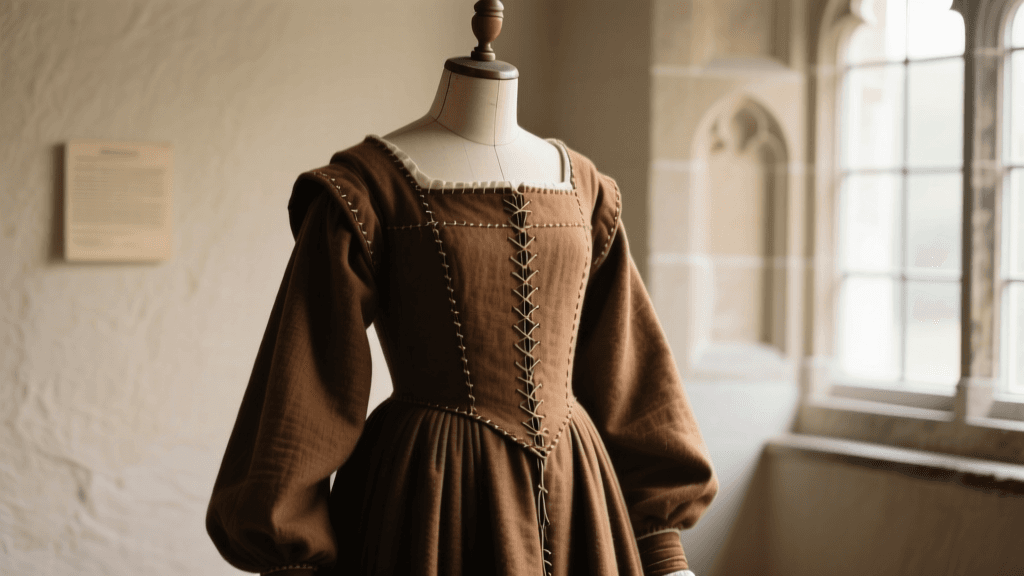
The transition from the soft, flowing drapery of the late medieval period to the structured, conical silhouettes of the 16th century represents one of the most fascinating shifts in European folk dress and courtly fashion. According to the Metropolitan Museum of Art's Heilbrunn Timeline of Art History, this sartorial evolution was largely driven by a desire to project wealth, status, and structural rigidity. At the very heart of this transformation lies the Tudor kirtle. Far from being a simple undergarment, the kirtle in the early to mid-16th century served as the primary structural foundation for a woman’s ensemble, supporting the heavy skirts and elaborate sleeves that defined the era.
For modern historical costumers, reenactors, and folk dress enthusiasts in 2026, constructing a Tudor kirtle requires a departure from modern tailoring principles. Unlike contemporary garments that rely on curved seams and darts to follow the natural contours of the body, the 16th-century kirtle relies on geometric, rectangular cutting, heavy interlining, and strategic boning to mold the torso into the fashionable conical shape. This comprehensive guide will walk you through the exact materials, pattern drafting techniques, and construction methods required to build a historically accurate Tudor kirtle today.
Sourcing Authentic Textiles in 2026
The foundation of any historical garment is its textile. In 2026, the global supply chain for natural fibers has shifted, making it both easier to find specialized historical weaves and more important to verify the authenticity of your sources. Synthetic blends must be strictly avoided if you are aiming for museum-quality accuracy. The Tudor kirtle typically consists of an outer layer of wool or silk, a sturdy inner lining of linen, and a heavy interlining of hemp or linen canvas.
For the outer fashion fabric, worsted wool is the most historically accurate choice for the middle and upper-middle classes, while silk taffeta or damask was reserved for the nobility, often dictated by strict sumptuary laws. When sourcing linen for the lining and interlining, look for 'tabby' weaves that are slubbed and opaque. Modern bleached linens often lack the body of their historical counterparts, so opting for unbleached or naturally dyed medium-to-heavy weight linens will yield a much more authentic drape and structural support.
2026 Fabric Sourcing and Cost Comparison
| Material | Weave / Type | Weight | Best Garment Part | 2026 Est. Cost / Yard |
|---|---|---|---|---|
| Linen | Tabby (Medium) | 5.3 oz | Bodice Lining, Smock | $18 - $26 |
| Wool | Worsted / Broadcloth | 7.0 - 9.0 oz | Kirtle Bodice & Skirt | $38 - $55 |
| Silk | Taffeta / Damask | 4.0 - 6.0 oz | Forepart, Sleeves, Trim | $65 - $95 |
| Canvas | Hemp / Heavy Linen | 10.0 - 12.0 oz | Bodice Interlining | $16 - $22 |
Drafting the Pattern: Measurements and Geometry
Drafting a Tudor kirtle pattern requires a fundamental shift in how you view the human form. The goal is not to cup the bust or hug the natural waist, but to create a smooth, flattened cone from the underbust to the natural waist, with a slight flare over the hips. To achieve this, historical tailors utilized a four-panel bodice construction: two front panels and two back panels, with side seams and a center back seam (or center front seam, depending on the specific decade and lacing preference).
Begin by taking your measurements while wearing your historical smock and any soft corsetry or bust support you intend to wear beneath the kirtle. You will need your underbust, natural waist, torso length (from the nape of the neck to the waist, and from the shoulder to the waist), and the circumference of your hips at the widest point. For visual references on extant garments and period tailoring techniques, the Victoria and Albert Museum's Fashion Collections remains an indispensable digital archive for modern historical costumers studying 16th-century silhouettes.
Draft the bodice pattern on heavy paper. The armscye (armhole) in the 16th century was cut much higher and tighter under the arm than modern patterns, and the shoulder strap was typically quite wide, sitting further out on the shoulder joint. The neckline is usually a deep, squared shape in the front, with a shallow curve or slight V-shape in the back. Once your paper mock-up is drafted, create a toile out of cheap muslin and heavy canvas to test the fit. The bodice should feel snug and supportive, effectively redistributing the weight of the heavy skirts from the shoulders and waist to the torso.
Structural Engineering: Boning and Interlining
The rigid, conical shape of the Tudor kirtle is achieved through a combination of heavy interlining and strategic boning. While the earliest kirtles of the late 15th and very early 16th centuries relied solely on multiple layers of pad-stitched canvas for stiffness, by the 1530s and 1540s, the integration of 'bents' (bundles of reeds) and whalebone became standard practice for the upper classes.
In 2026, traditionalists can still source natural hazel reeds or bundled river reeds from specialized historical suppliers, which provide a remarkably authentic, breathable stiffness. However, for durability and ease of maintenance, many modern costumers opt for high-quality synthetic whalebone (such as German plastic boning or 7mm flat steel for areas of extreme tension). Avoid cheap, flimsy Rigilene, as it will buckle and warp under the weight of a cartridge-pleated wool skirt.
To construct the boned bodice, cut your heavy hemp or linen canvas interlining. Mark your boning channels directly onto the canvas. The channels should be concentrated primarily at the center front, the side seams, and the center back to prevent the fabric from buckling and to maintain the conical shape. Stitch the channels using a heavy-duty linen thread, then slide your boning material into the channels, capping the ends securely so they do not pierce the outer fashion fabric.
The Art of the Cartridge Pleat
One of the most defining features of the Tudor kirtle is the skirt. To achieve the massive volume at the hips without adding bulk to the waist, 16th-century tailors utilized cartridge pleating (also known as gauging). This technique involves gathering a massive width of fabric—often three to four times the waist measurement—into tight, cylindrical pleats that stand out perpendicularly from the waistband.
To execute cartridge pleats, first hem the top edge of your skirt fabric or bind it with a strip of linen to prevent fraying. Mark parallel lines across the top edge, spaced about half an inch to an inch apart, depending on the thickness of your wool or silk. Using a strong, waxed linen thread, sew multiple rows of running stitches along these marked lines. Once all rows are stitched, pull the threads simultaneously to gather the fabric into tight, uniform tubes. These pleats are then whipped directly to the bottom edge of the finished bodice, creating a remarkably strong and historically accurate join that supports the heavy skirts beautifully.
Hand-Finishing and Eyelet Placement
While modern sewing machines can be used for the inner structural seams and the hemming of the skirt to save time, the visible construction and finishing of a high-end Tudor kirtle should be done by hand. Pad stitching the interlining to the lining, whipping the cartridge pleats, and binding the edges of the bodice with linen tape or silk grosgrain ribbon are all tasks that require the tension control only hand-sewing can provide.
Finally, the closure of the kirtle is typically achieved through spiral lacing. Unlike modern corsets that use cross-lacing, spiral lacing involves a single continuous cord threaded through a series of offset eyelets. This allows for a much tighter, more even closure that is essential for the structural integrity of the bodice. Hand-stitch your eyelets using a heavy silk or linen buttonhole stitch, and use a metal awl to push the threads apart rather than cutting them, ensuring the eyelets remain strong and durable for years of wear. By combining these meticulous historical techniques with premium 2026 materials, you will create a Tudor kirtle that is not only a stunning piece of European folk dress revival but a wearable work of art.