2026 Tudor Kirtle Construction Guide: Patterns & Fabrics
The Evolution of the Tudor Kirtle in Modern Historical Dress
As we navigate the historical costuming and European folk dress revival in 2026, the demand for archaeological accuracy has never been higher. The transition from the soft, flowing drapes of the late Medieval houppelande to the highly structured, conical silhouettes of the 16th-century Renaissance represents one of the most fascinating shifts in European textile history. At the absolute center of this sartorial revolution is the Tudor kirtle. Once considered a simple undergarment, the kirtle evolved into the foundational support garment for women across all social classes during the 1500s. For modern makers, historical reenactors, and folk dress enthusiasts, understanding the precise construction of the Tudor kirtle is essential for achieving an authentic 16th-century silhouette.
In 2026, the intersection of traditional European folk dress and high-end historical reenactment has pushed makers to look beyond theatrical costumes and embrace rigorous, evidence-based garment construction. Thanks to ongoing textile conservation efforts and updated academic research, we now have a clearer understanding of how these garments were patterned, interlined, and stitched. According to textile conservation data from The Mary Rose Trust, the garments and textile fragments recovered from the 1545 shipwreck reveal a heavy reliance on layered linens, wool broadcloths, and intricate pad-stitching techniques that provided structure long before the widespread use of rigid boning.
The Anatomy of the 16th Century Kirtle
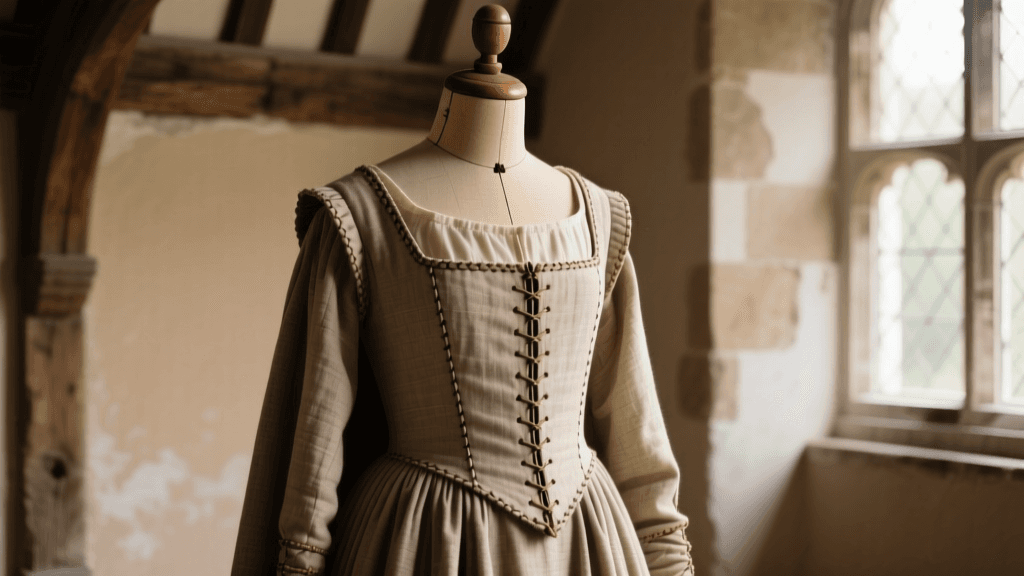
The Tudor kirtle is fundamentally composed of two main sections: a fitted, supportive bodice and a full, pleated skirt. While later Renaissance fashions often separated the bodice (or 'pair of bodies') from the skirt, the true kirtle of the early-to-mid 16th century was typically a joined garment. The bodice was designed to flatten the torso and support the bust, creating the distinct conical shape associated with the era. This was achieved not through modern steel corsetry, but through heavy interlining, pad-stitching, and strategic placement of natural or synthetic stiffeners.
The skirt of the kirtle was designed to conserve fabric while providing maximum volume at the hem. Unlike the circular skirts of the 19th century, 16th-century skirts were constructed from straight rectangular panels of fabric, pleated tightly at the waist to fit the bodice. This rectangular construction method minimized textile waste—a crucial consideration in an era when hand-woven wool and linen were incredibly expensive and heavily regulated by sumptuary laws.
2026 Fabric Sourcing and Textile Equivalents
Sourcing historically accurate fabrics in 2026 requires a keen eye for fiber content, weave, and weight. Modern commercial fabrics often lack the dense, fulled finish of historical broadcloth or the crisp hand of historical linen. When sourcing materials for your kirtle, prioritize natural fibers and avoid synthetic blends, which drape incorrectly and trap heat. The global supply chain for historical textiles has stabilized in recent years, allowing reenactors to source high-quality Melton wools and heavy linens directly from specialized European and domestic mills.
| Historical Textile | 2026 Modern Equivalent | Weight / Drape | Estimated 2026 Cost (per yard) | Best Used For |
|---|---|---|---|---|
| Wool Broadcloth | Melton Wool / Heavy Coating | 12-16 oz, dense, fulled | $45 - $75 | Outer bodice, winter skirts |
| Heavy Linen | Medium-to-Heavy Weight Linen | 5.5 - 7 oz, crisp | $18 - $28 | Interlining, smocks, lining |
| Silk Damask | Pure Silk Jacquard/Damask | Varies, heavy drape | $85 - $160 | Noble bodices, fore-sleeves |
| Kersey Wool | Wool Flannel / Twill Weave | 8-10 oz, softer drape | $30 - $50 | Commoner skirts, linings |
Interlining and Boning: Achieving the Conical Silhouette
One of the most pervasive myths in historical costuming is the necessity of steel boning to achieve a Renaissance silhouette. In reality, steel was rarely used in 16th-century bodices; it was heavy, prone to rusting, and difficult to shape. The primary structure of a Tudor kirtle bodice came from layers of heavy linen canvas, pad-stitched together to create a stiff, semi-rigid shell. For additional support, makers used bundles of reeds, broomstraw, or baleen (whalebone).
In 2026, modern reenactment guild standards heavily favor synthetic whalebone (such as German synthetic baleen) over steel or zip-ties. Synthetic whalebone mimics the flexibility and heat-molding properties of historical baleen, allowing the bodice to mold to the wearer's body over time while remaining entirely washable and rust-proof. When drafting your pattern, create boning channels that are 1/4 inch to 3/8 inch wide, placing them strategically along the center front, the side seams, and the back lacing rings to prevent fabric buckling.
Pad-stitching remains the gold standard for interlining. Using a heavy linen thread, stitch the outer wool or silk layer to the inner canvas layer using small, diagonal V-shaped stitches. This technique, thoroughly documented by the experts at The Tudor Tailor, ensures the fabric layers act as a single, cohesive unit, preventing the outer fabric from sagging or wrinkling across the torso.
Skirt Construction: The Art of Cartridge Pleating
To attach the heavy, rectangular skirt to the structured bodice, 16th-century tailors relied heavily on cartridge pleating. Unlike knife pleats or box pleats, which lay flat against the body, cartridge pleats force the fabric to jut out horizontally, creating the distinctive bell-shaped hip silhouette required to support the heavy outer gowns of the era. Cartridge pleating also allows an immense amount of fabric (often 3 to 5 yards) to be compressed into a small waistline.
Step-by-Step Cartridge Pleating Guide
- Prepare the Skirt Top: Fold the top edge of your skirt fabric down by 1/2 inch, and then down again by 1 to 2 inches to create a sturdy, reinforced header. This prevents the heavy fabric from tearing under its own weight.
- Mark the Pleat Lines: Using a water-soluble pen or tailor's chalk, draw horizontal lines across the reinforced header. For heavy wools, space the lines 1/2 inch apart. For lighter linens, space them 1/4 inch apart.
- Run the Gathering Threads: Using a heavy, waxed linen or silk buttonhole thread, sew a running stitch along each marked line. Ensure your stitches are exactly the same length and align perfectly vertically from row to row.
- Pull and Knot: Gently pull the threads to gather the fabric into tight, uniform pleats. Knot the threads securely at both ends. The pleats should resemble the cardboard tubes of yarn cartridges.
- Attach to the Bodice: Fold the pleats flat against the right side of the skirt. Whip-stitch the top edge of each individual pleat directly to the bottom edge of the finished bodice, ensuring the stitches catch only the top fold of the pleat to maintain the horizontal flare.
Fastenings and Historical Accuracy
The method of closure on a Tudor kirtle is just as important as its internal structure. While modern invisible zippers are tempting for quick changes, they completely ruin the historical line of the garment and are strictly forbidden in high-level 2026 reenactment circles. The most historically accurate closures are spiral lacing or heavy hook-and-eye tape.
For front-lacing kirtles (common among the working and middle classes), use hand-bound eyelets spaced no more than 1 inch apart, laced in a spiral pattern with a single cord. For side-lacing or back-lacing kirtles (preferred by the nobility to maintain a smooth, unbroken front panel), use brass hooks and eyes. Sew these directly to the interlining layer, allowing the outer fabric to roll over the edge, hiding the metal hardware completely while providing a secure, gap-free closure.
Contextualizing the Silhouette in Renaissance Fashion
Understanding the kirtle requires looking at the broader context of European folk dress and court fashion. For comprehensive visual analysis of the era's structural shifts, The Metropolitan Museum of Art's Heilbrunn Timeline of Art History provides invaluable context regarding how regional variations influenced garment construction. While the English Tudor kirtle favored a flat, conical bodice, contemporaneous Italian Renaissance dresses often featured softer, more natural waistlines and different sleeve attachments. Recognizing these regional distinctions is vital for anyone studying the diverse tapestry of European traditional garments.
Conclusion: Preserving Textile Heritage
Constructing a 16th-century Tudor kirtle in 2026 is more than just a sewing project; it is an act of experimental archaeology and cultural preservation. By utilizing historically accurate materials like Melton wool and heavy linen, mastering traditional techniques like pad-stitching and cartridge pleating, and abandoning modern shortcuts, makers can bring the vibrant, structured world of the Renaissance to life. Whether you are preparing for a historical festival, contributing to a museum's living history program, or simply deepening your appreciation for European folk dress, the kirtle remains the indispensable foundation of the 16th-century wardrobe.