Kraków Folk Costumes and Krakowiak Dance Guide 2026
Introduction to the Kraków Folk Dress and the Krakowiak
When discussing the most iconic and recognizable examples of European folk dress, the traditional Kraków costume, known locally as the Strój Krakowski, holds a position of unparalleled prestige. Originating from the Małopolska region in southern Poland, this vibrant attire transcended its regional boundaries in the 19th century to become a symbol of national identity. Today, as we navigate the 2026 cultural revival, the Kraków folk costume remains a living, breathing tradition, inextricably linked to the energetic and syncopated rhythms of the Krakowiak dance. Whether you are a textile enthusiast, a folk dancer, or a cultural traveler planning to attend the vibrant Polish summer festivals, understanding the intricate construction and cultural significance of these garments is essential.
According to the Polish Tourism Organization, the preservation of regional folklore has seen a massive surge in youth participation over the last few years, with 2026 marking a record number of registered folk ensembles in the Małopolska province. This renaissance ensures that the garments are not merely museum artifacts, but dynamic pieces of clothing engineered for the rigorous demands of traditional folk dance.
Anatomy of the Women’s Kraków Costume
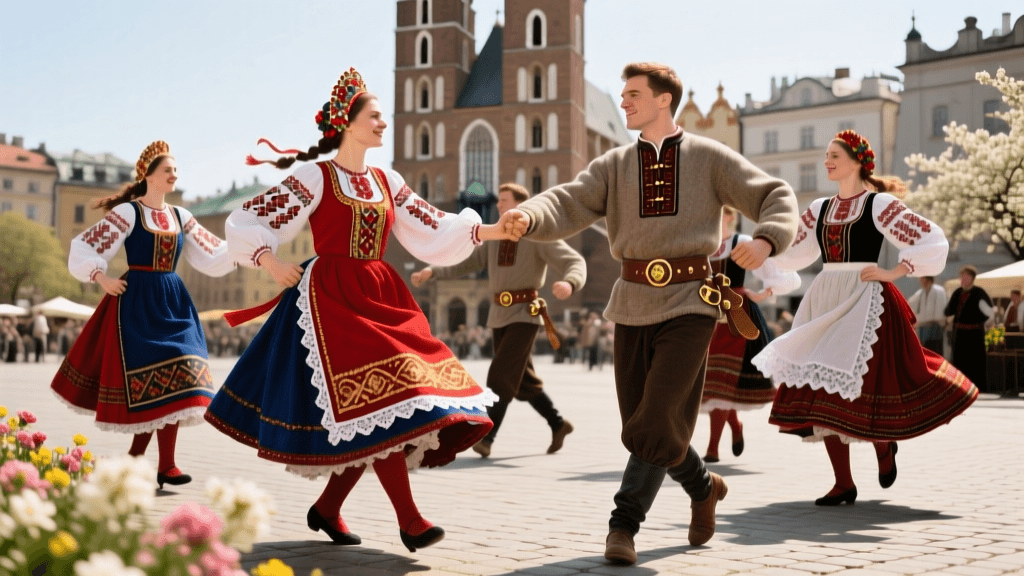
The women’s Kraków folk dress is a masterclass in color, layering, and intricate hand-embroidery. It is designed to create a striking visual silhouette that accentuates the spinning and leaping movements of the Krakowiak dance.
The Gorset (Corset) and Embroidery
The centerpiece of the female attire is the gorset, a tightly fitted, sleeveless corset typically crafted from dark velvet or broadcloth, most commonly in deep navy, black, or rich burgundy. In 2026, master artisans in the Bronowice district continue to hand-stitch the iconic floral motifs onto these corsets. The embroidery features stylized roses, cornflowers, poppies, and star thistles, executed with vibrant silk threads, sequins, and glass beads. The hem of the corset is finished with a distinctive peplum or a series of overlapping flaps called kaletki, which flare out dynamically when the dancer spins.
Spódnica (Skirt) and Fartuch (Apron)
Beneath the corset, dancers wear a crisp, white linen blouse with delicate broderie anglaise on the cuffs and collar. The skirt, or spódnica, is full and heavily gathered, falling just below the calf to allow for complex footwork. Traditional skirts are often made of lightweight wool or cotton in bright floral prints or solid jewel tones. Over the skirt, an apron (fartuch) of sheer white muslin or tulle is tied, featuring elaborate white-on-white embroidery that catches the light during performances.
Headwear and Footwear
Headwear strictly denotes marital status, a crucial detail in traditional village life. Unmarried women and young girls wear a wianek, an elaborate crown woven from fresh or artificial flowers, interspersed with ribbons that trail down the back. Married women cover their hair with a czepiec, a finely embroidered linen cap, often topped with a silk scarf tied in a specific knot. Footwear consists of red or black leather boots with a modest heel, designed to produce a sharp, percussive sound on wooden stages and cobblestones.
Anatomy of the Men’s Kraków Costume
The men’s attire is equally distinguished, characterized by its martial elegance and striking use of white, red, and dark blue. As noted by cultural historians at Culture.pl, the men’s Kraków costume was famously adopted by Tadeusz Kościuszko during the 1794 uprising, cementing its status as a patriotic emblem.
The Sukmana and Koszula
The outermost layer is the sukmana, a long, sweeping coat made of white or brown fulled wool. The sukmana features a dramatic, flared skirt and is adorned with intricate red and black cord embroidery, known as chwasty, around the collar, cuffs, and front opening. Beneath this coat, men wear a pristine white linen koszula (shirt), fastened at the neck with a red silk ribbon or a decorative coral bead brooch.
Portki, Pas, and Rogatywka
The trousers, or portki, are tailored from dark blue or black broadcloth, featuring a straight cut that is tucked into the boots. They are often embellished with subtle red embroidery along the side seams. A wide leather belt, heavily studded with brass rivets and sometimes featuring a concealed pocket, cinches the waist. The most iconic element of the men’s headwear is the rogatywka, a square-topped, brimless cap adorned with a magnificent peacock feather (pawie pióro) and a spray of artificial flowers. The feather sways and emphasizes the sharp, staccato head movements inherent to the Krakowiak dance.
Kierce: The Dancer’s Boots
For the male Krakowiak dancer, the footwear is a specialized tool. The kierce are tall, black leather boots with a hard, stacked heel and iron hobnails driven into the sole and heel. These hobnails are not merely for durability; they are designed to strike sparks against cobblestones and produce a sharp, rhythmic clicking sound that serves as an auxiliary percussion instrument during the dance.
The Krakowiak Dance: Movement and Costume Synergy
The Krakowiak is a fast-paced, syncopated dance in 2/4 time, characterized by its proud posture, sudden leaps, and intricate heel-clicks. The costume is not merely decorative; it is engineered to enhance these specific movements. The heavy, flared sukmana coat requires the male dancer to maintain a rigid, upright torso, while the weighted hem creates a magnificent swooping arc during turns. For the women, the layered skirts and beaded corset are balanced to allow for rapid pivots, with the kaletki flaring outward to visually amplify the speed of the spin. The synergy between the textile weight, the cut of the garment, and the choreography is a testament to centuries of functional design evolution.
2026 Festival Guide: Where to Experience the Tradition
If you wish to witness the Kraków folk dress and the Krakowiak dance in their natural, celebratory environment, the 2026 festival calendar offers spectacular opportunities. The Kraków Festival Office has curated a robust lineup of events that celebrate regional heritage.
| Festival Name | Month (2026) | Location | Costume & Dance Focus |
|---|---|---|---|
| Wianki Summer Solstice | June | Vistula Boulevards, Kraków | Floral wreaths (wianki), lightweight summer skirts, and communal folk dancing by the river. |
| International Folk Festival | August | Main Market Square, Kraków | Full ceremonial Strój Krakowski, competitive Krakowiak performances, and artisan craft fairs. |
| Dożynki Harvest Festival | September | Nowa Huta & Rural Małopolska | Heavier autumn sukmana coats, harvest wreaths, and traditional village dance circles. |
| Barbórka Miners’ Parade | December | Wieliczka & Kraków Center | Fusion of Kraków folk dress with traditional mining uniforms and winter capes. |
Sourcing Authentic Garments in 2026
For collectors, dancers, and cultural institutions looking to acquire authentic Kraków folk costumes in 2026, the market is divided between commercial replicas and bespoke artisan creations. It is vital to understand the pricing and sourcing channels to ensure you are supporting genuine craftsmanship.
- Bespoke Artisan Ateliers: For a fully hand-embroidered, custom-fitted women’s gorset and skirt ensemble, expect to invest between 2,500 PLN and 4,500 PLN (approximately $625 to $1,125 USD). Master embroiderers in districts like Bronowice and Zwierzyniec take commissions that often require a three-to-four-month waiting period due to the meticulous beadwork.
- Men’s Ceremonial Sets: A complete men’s set, including a high-quality wool sukmana, tailored portki, and a handcrafted rogatywka with a genuine peacock feather, typically ranges from 3,000 PLN to 5,500 PLN. The sourcing of ethically molted peacock feathers has become a strict standard for reputable hatters in 2026.
- Vintage and Antique Markets: The Targowisko Nowy Świat and specialized antique textile auctions in Kraków occasionally feature early 20th-century garments. However, these are highly fragile and command premium collector prices, often exceeding 8,000 PLN for well-preserved pieces with historical provenance.
- Performance-Ready Replicas: For amateur dance troupes or theatrical productions, specialized folk-costume cooperatives offer machine-embroidered, durable performance sets ranging from 800 PLN to 1,500 PLN. While they lack the tactile richness of hand-stitched silk, they are designed to withstand the rigors of frequent stage performances and rigorous laundering.
Conclusion
The Kraków folk costume and the Krakowiak dance represent a perfect synthesis of textile artistry and kinetic expression. As we move through 2026, the continued dedication of Polish artisans and folk ensembles ensures that this European folk dress tradition remains vibrant, relevant, and breathtaking to behold. Whether you are studying the intricate floral embroidery of a velvet corset, listening to the percussive strike of iron-hobnailed boots, or simply marveling at the sweep of a white wool sukmana across the Main Market Square, the living heritage of Małopolska offers an unforgettable window into the soul of European folklore.