Silk Road Hanfu: Tang Dynasty and Uyghur Fashion Influence
The Silk Road: A Loom of Cross-Cultural Exchange
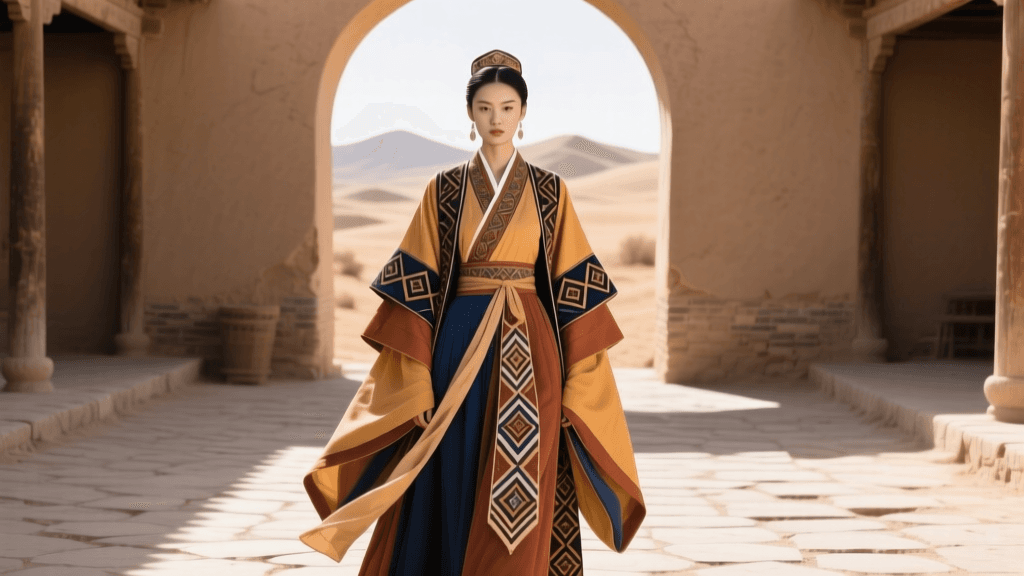
The historical Silk Road was far more than a mere conduit for spices, jade, and precious metals; it was a vibrant, sprawling loom where the textiles, motifs, and garments of East, Central, and West Asia were intricately woven together. Spanning from the ancient Chinese capital of Chang'an to the Mediterranean, this vast network of trade routes facilitated an unprecedented exchange of culture. According to the UNESCO Silk Road Programme, the movement of Sogdian merchants, Turkic nomads, and Persian artisans fundamentally altered the sartorial landscape of the regions they traversed. For modern enthusiasts of Asian traditions, understanding this cross-cultural pollination is essential to appreciating the depth of garments like Tang Dynasty Hanfu and traditional Uyghur clothing.
This article explores the profound impact of historical trade routes on Chinese and Central Asian fashion, specifically focusing on the nomadic influences of Tang Dynasty Hufu (foreign clothing) and the vibrant textile heritage of the Uyghur people. Furthermore, we provide a comprehensive, actionable guide on how to source, measure, and style these magnificent garments today.
Tang Dynasty Hufu: The Nomadic Influence on Hanfu
During the Tang Dynasty (618–907 CE), the cosmopolitan capital of Chang'an was a melting pot of global cultures. The traditional Hanfu of the era underwent a radical transformation due to the influx of Central Asian and nomadic styles, collectively referred to as Hufu. The Victoria and Albert Museum Asian Collections highlights how the Tang elite, including women, eagerly adopted foreign riding gear for its practicality and exotic allure.
Key Garments: Fanlingpao and Yuanlingpao
The most iconic Silk Road-influenced garment is the Yuanlingpao (round-collar robe). Originally designed for horseback riding by nomadic tribes, its circular collar and side slits allowed for unparalleled mobility. A variation of this is the Fanlingpao (lapel robe), which features folded lapels that can be worn open to reveal an inner layer, or buttoned up to form a round collar. These robes were often paired with Xue (leather riding boots) and Diexie belts (functional leather belts with hanging straps for carrying tools and weapons), a direct import from Turkic and Sogdian military attire.
Textiles also reflected this global exchange. Tang weavers integrated Persian motifs, such as the lingyang (pearl roundels) enclosing facing lions or ducks, into traditional Chinese silk damasks and brocades. This fusion created a uniquely Sino-Sogdian aesthetic that defined the era's high fashion.
Uyghur Traditional Dress: Atlas Silk and Desert Elegance
Moving westward along the trade routes to the Tarim Basin in modern-day Xinjiang, we encounter the rich sartorial traditions of the Uyghur people. Uyghur clothing is a testament to the oasis cities of Kashgar, Hotan, and Turpan, where desert climates and Islamic artistic influences merged with ancient Central Asian weaving techniques.
The Magic of Atlas Ikat
The crown jewel of Uyghur textile heritage is Atlas silk. As documented by the China National Silk Museum, Atlas is a traditional warp-ikat silk characterized by its vibrant, blurred geometric and botanical patterns. The dyeing process involves tightly binding sections of the warp threads before dyeing them in vats of brilliant pomegranate red, indigo, saffron yellow, and malachite green. When woven, the threads create a mesmerizing, feathered edge effect that mimics the flowing waters of oasis rivers.
Traditional Uyghur women wear long, flowing dresses made from Atlas silk, often layered with a velvet or brocade Chapan (a long, quilted or lined robe) during colder months. Men and women alike wear the Doppa, a meticulously embroidered skullcap that serves as a vital marker of regional identity, with patterns varying distinctly between Hotan, Kashgar, and Turpan.
Actionable Guide: Sourcing Silk Road Garments Today
For modern Hanfu enthusiasts and cultural fashion collectors, acquiring authentic or high-quality replica Silk Road garments requires specific knowledge of the market, materials, and logistics.
Where to Buy and What to Search
- Tang Dynasty Hufu: On platforms like Taobao or specialized Hanfu vendors, search for '唐制圆领袍' (Tang round-collar robe) or '唐制翻领袍' (Tang lapel robe). Brands like Shisanyu and Zhongzheng Hanfu offer historically informed cuts.
- Uyghur Atlas Silk: Search for '新疆艾德莱斯绸' (Xinjiang Atlas silk) or '维吾尔族传统服饰' (Uyghur traditional clothing). For authentic, hand-woven Atlas, look for sellers based in Hotan or Kashgar, or specialized Central Asian textile importers on Etsy.
Crucial Measurements for the Perfect Fit
Unlike modern Western tailoring, traditional Asian garments rely on flat-pattern cutting. To ensure your Fanlingpao or Atlas dress fits correctly, provide your vendor with the following precise measurements:
- Shoulder Width (Jiankuan): Measure from the edge of one shoulder bone to the other. For a traditional Tang drop-shoulder look, add 4-6 cm to your actual measurement.
- Sleeve Length (Xiuchang): Measure from the base of the neck (nape), over the shoulder, down to the wrist bone. Tang robes often require sleeves that extend slightly past the wrist (approx. 70-80 cm total).
- Bust and Waist (Xiongwei / Yaowei): Tang Hufu is relatively fitted at the bodice compared to later Hanfu. Provide your exact bust measurement plus 6 cm for ease of movement.
Costs, Timing, and Shipping Logistics
Budgeting and patience are key when sourcing cross-cultural garments from Asia.
- Costs: Entry-level polyester or cotton-blend Tang Hufu sets range from $40 to $70 USD. Premium mulberry silk or authentic brocade sets cost between $150 and $300+ USD. Hand-woven Xinjiang Atlas silk fabric costs about $30-$50 per yard, while a fully tailored, embroidered Uyghur dress and Chapan set can range from $120 to $250 USD.
- Timing: Many Taobao Hanfu vendors operate on a 'Yushou' (pre-sale) model. Production typically takes 15 to 45 days. If ordering custom Atlas silk from Xinjiang, allow an additional 20 days for hand-loom weaving.
- Shipping: Utilize shopping agents like Superbuy or Cssbuy. Standard ePacket shipping to North America or Europe takes 10-20 days, while SAL (Surface Air Lifted) is cheaper but takes 30-50 days.
Comparison Chart: Tang Hufu vs. Uyghur Chapan
Understanding the structural differences between these two Silk Road-influenced garments is vital for accurate styling and historical appreciation.
| Feature | Tang Dynasty Hufu (Fanlingpao) | Uyghur Traditional Chapan |
|---|---|---|
| Primary Fabric | Silk damask, brocade, hemp, twill | Atlas silk (ikat), cotton, quilted velvet |
| Silhouette | Fitted bodice, flared lower hem, side slits | Loose, straight-cut, A-line or rectangular |
| Collar Style | Round (Yuanling) or Folded Lapel (Fanling) | Mandarin collar or simple V-neck wrap |
| Fastenings | Knotted cloth buttons, leather Diexie belts | Hidden inner ties, outer woven sash |
| Primary Motifs | Pearl roundels, Sogdian lions, floral scrolls | Geometric ikat patterns, botanical vines, almonds |
| Footwear Pairing | Leather riding boots (Xue) | Embroidered leather slip-ons or soft boots |
Caring for Cross-Cultural Textiles
Garments born from the Silk Road demand meticulous care, particularly those featuring complex weaves or natural dyes.
- Atlas Silk Care: Because Atlas uses traditional warp-ikat dyeing, the colors can bleed during the first few washes. Always dry clean authentic hand-woven Atlas silk. If you must wash a modern, colorfast Atlas blend, use cold water and a pH-neutral silk detergent, and never wring the fabric.
- Brocade and Damask: Tang-style brocades often incorporate metallic threads. Avoid ironing directly on the fabric. Instead, use a garment steamer on a low setting, holding the nozzle at least 10 cm away from the textile to relax the wrinkles without melting the metallic yarns.
- Storage: Store heavy Chapan robes and structured Yuanlingpao on wide, padded wooden hangers to maintain the shoulder line. Never fold Atlas silk along sharp creases, as the delicate silk fibers will weaken and eventually snap along the fold lines over time.
Conclusion
The legacy of the Silk Road is not confined to museum archives; it lives on in the drape of a Tang lapel robe and the vibrant, blurred lines of Uyghur Atlas silk. By understanding the historical trade routes that brought these styles into existence, and by applying practical knowledge to source and care for them, modern wearers can actively participate in the continuation of this magnificent cross-cultural tapestry. Whether you are donning a Fanlingpao for a historical reenactment or wrapping yourself in an Atlas Chapan for a cultural festival, you are wearing a living map of Asian history.