The Silk Road's Impact on Tang Dynasty Hanfu and Modern Styling
The Silk Road: A Highway of Sartorial Exchange
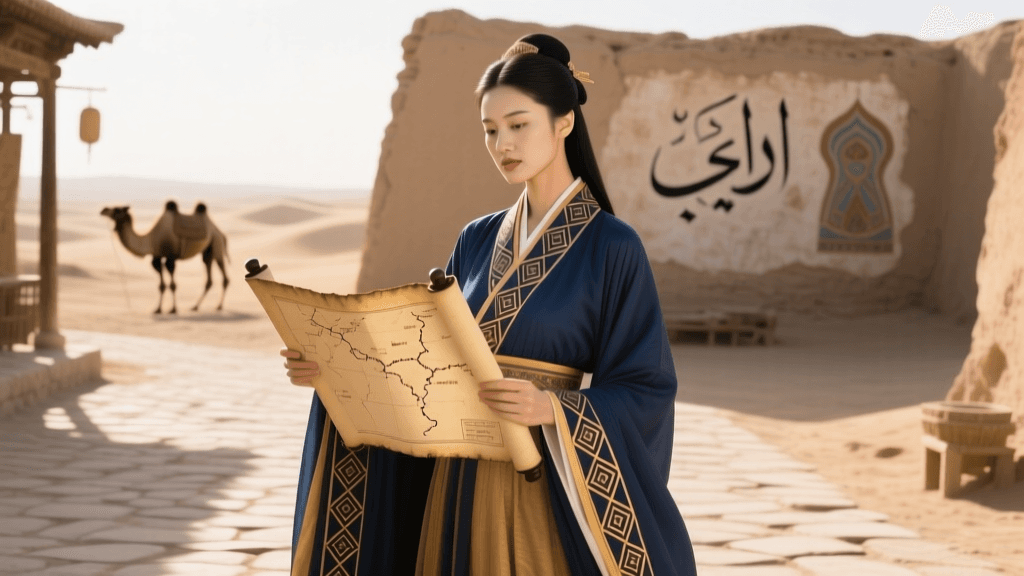
When we envision the Silk Road, we often picture caravans laden with raw silk, spices, and jade traversing the unforgiving Taklamakan Desert. However, as documented by the UNESCO Silk Roads Programme, this vast network of trade routes was equally a conduit for profound cultural, artistic, and sartorial exchange. During the Tang Dynasty (618–907 CE), the cosmopolitan capital of Chang'an (modern-day Xi'an) served as the eastern terminus of this network, hosting over a million residents, including Sogdian merchants, Persian artisans, and Turkic nomads. This unprecedented cross-cultural pollination fundamentally altered the trajectory of traditional Chinese clothing, giving rise to a unique fusion of Han Chinese elegance and Central Asian pragmatism.
For modern enthusiasts of Hanfu (traditional Han Chinese clothing), understanding the Silk Road's impact is essential. The garments born from this era represent a departure from the strict, indigenous Confucian dress codes of the preceding Han and Wei dynasties, embracing instead a vibrant, globalized aesthetic that prioritized mobility, exotic textiles, and bold geometric motifs.
Key Cross-Cultural Garments and Motifs
The Fanlingpao (Lapel Robe)
Perhaps the most striking visual evidence of Silk Road influence is the fanlingpao (翻领袍), or lapel robe. Originally derived from the riding coats of Sogdian and Persian horsemen, this garment featured a folded, asymmetrical lapel that could be buttoned at the shoulder or worn open to reveal a contrasting inner tunic. Unlike the traditional cross-collared (jiaoling) robes of indigenous Han culture, which always folded left over right, the fanlingpao accommodated the practical needs of horseback riding and archery. Tang Dynasty women, who enjoyed unprecedented social freedom, frequently adopted the fanlingpao for equestrian pursuits and daily wear, often pairing it with striped Central Asian trousers and leather riding boots.
The Yuanlingpao (Round-Collar Robe)
Similarly, the yuanlingpao (圆领袍), characterized by its circular neckline and side slits, was heavily influenced by the Xianbei nomads and subsequent Central Asian interactions. While it eventually became the standard official uniform for Tang magistrates and scholars, its origins are deeply rooted in the nomadic riding coats that filtered into China via the northern trade routes. The integration of the yuanlingpao into the official Tang court dress code exemplifies how foreign utility was seamlessly woven into the fabric of Chinese statecraft.
Sogdian Weaves and the Pearl Roundel
The textile trade introduced revolutionary weaving techniques and motifs to Chinese weavers. Sasanian Persian and Sogdian weft-faced compound twills (known in China as jin or brocade) became highly prized. The most iconic Silk Road motif adopted by Tang weavers was the 'pearl roundel' (连珠纹)—a circular border of pearls enclosing mythical beasts like the senmurv (a bird-dog hybrid), boar heads, or winged horses. According to research highlighted by the Smithsonian Magazine, these motifs were originally associated with Zoroastrian and Sasanian royal iconography, yet they were rapidly assimilated into Chinese silk production, eventually evolving to enclose indigenous symbols like dragons, phoenixes, and peonies.
Data Table: Evolution of Silk Road Textiles in Tang China
| Feature | Pre-Silk Road (Han/Wei Dynasties) | Silk Road Fusion (High Tang Dynasty) |
|---|---|---|
| Dominant Weave | Warp-faced compound tabby and gauze (luo) | Weft-faced compound twill (jin / brocade) |
| Primary Motifs | Cloud scrolls, dragons, geometric clouds | Pearl roundels, floral medallions, Sasanian beasts |
| Collar Style | Strictly cross-collared (left over right) | Round collars, lapels, and U-shaped necklines |
| Sleeve Cut | Extremely wide, floor-draping ceremonial sleeves | Tapered wrists for riding, or moderate width for daily use |
| Color Palette | Earthy tones, strict sumptuary color codes | Vibrant crimsons, ochres, lapis blues, and gold threads |
Actionable Buyer’s Guide: Sourcing Silk Road-Inspired Hanfu Today
For collectors, reenactors, and fashion enthusiasts looking to incorporate Tang-era Silk Road fusion garments into their wardrobe, navigating the modern Hanfu market requires specific knowledge. The market is flooded with generic costumes, but authentic, historically informed pieces are available if you know what to look for.
Measurements and Fit
Tang Dynasty garments, particularly the yuanlingpao and fanlingpao, rely on a structured, tailored fit across the shoulders, unlike the flowing, unstructured drape of earlier Han dynasty robes. When ordering from specialized makers, provide the following exact measurements:
- Shoulder Width: Measure from the acromion bone on one shoulder to the other. A proper Tang robe should sit exactly on the shoulder point, not droop down the arm.
- Bust/Chest Circumference: Add 10-15 cm (4-6 inches) to your actual chest measurement to allow for the inner tunic (zhongyi) and ease of movement.
- Sleeve Length: Measure from the center back of the neck to the wrist bone. For Silk Road riding styles, the sleeve should end exactly at the wrist or feature a fitted cuff, avoiding the excessive 'water sleeves' of later dynasties.
- Garment Length: For men's yuanlingpao, the hem should fall just above the ankles to accommodate riding boots. For women's fanlingpao, mid-calf to ankle length is standard.
Fabric Selection and Costs
To capture the authentic Silk Road aesthetic, fabric choice is paramount. Avoid cheap, shiny polyester satins. Instead, search for the following textile terms when browsing vendors:
- Zhijin (Brocade): Ideal for outer robes. Look for 'Tang-style floral brocade' or 'beast roundel jacquard.' Expect to pay between $80 and $150 USD for a mid-tier, silk-blend brocade robe.
- Luo (Gauze): Perfect for summer wear or layering. Authentic silk gauze is lightweight and breathable. A pure silk luo outer garment will typically cost between $200 and $350 USD.
- Stripe Weave: For the trousers traditionally worn under a fanlingpao, seek out 'warp-striped cotton' or 'silk-linen blend stripes,' which mimic the Central Asian textiles found in the Turfan tombs.
Pro-Tip for Sourcing: When searching on platforms like Taobao or specialized Hanfu boutiques, use the specific Chinese search terms: '唐制圆领袍' (Tang system round-collar robe) or '翻领袍 西域风' (Lapel robe Western Region style) to filter out generic Ming or Song dynasty garments.
The Diexie Belt: An Essential Accessory
No Silk Road-inspired Tang outfit is complete without the diexie belt (蹀躞带). Originally a nomadic utility belt featuring hanging leather straps for carrying knives, flint, and needles, the Tang court adopted it as a mandatory accessory for officials and riders alike. When sourcing a Tang outfit, a leather or high-quality faux-leather diexie belt with brass fittings is essential to anchor the silhouette. Budget an additional $30 to $50 USD for a quality reproduction belt featuring accurate Tang-era metalwork.
Timing and the Pre-Sale Culture
The most historically accurate Hanfu makers operate on a 'pre-sale' (预售) model to minimize textile waste and manage intricate jacquard weaving schedules. When you find a high-quality Silk Road-inspired collection, be prepared for a waiting period. Standard production times range from 45 to 60 days, with an additional 10-14 days for international shipping. Plan your purchases well in advance of historical festivals, cultural events, or photoshoots. Entry-level polyester sets can be found for $40-$60 USD with immediate shipping, but they often sacrifice the structural integrity and historical accuracy of the collar and lapel cuts.
Conclusion
The Hanfu of the Tang Dynasty stands as a testament to an era when China's borders were porous to ideas, art, and fashion. The integration of the Sogdian lapel, the Persian pearl roundel, and the nomadic riding boot into the Chinese sartorial lexicon created a vibrant, hybridized fashion culture that still captivates us today. By understanding the historical mechanics of the Silk Road and applying precise, actionable criteria to modern purchasing, enthusiasts can authentically resurrect the cosmopolitan spirit of Chang'an, wearing the rich, cross-cultural legacy of the ancient world.