The Silk Road's Impact on Tang Dynasty Hufu and Hanfu Style
The Silk Road: A Conduit for Textile and Sartorial Exchange
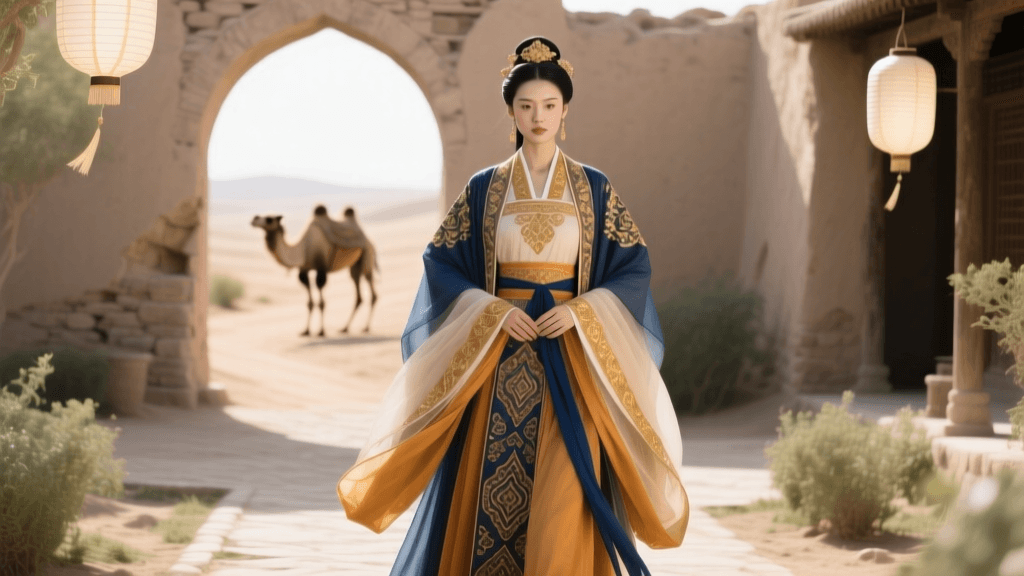
When we think of traditional Chinese clothing, the flowing, wide-sleeved silhouettes of Hanfu often dominate the imagination. However, the Tang Dynasty (618–907 AD) was an era of unprecedented cosmopolitanism, driven by the bustling trade routes of the Silk Road. The capital city of Chang'an was a global metropolis where merchants, diplomats, and artisans from Persia, Sogdiana, India, and the Turkic steppes converged. This immense cross-cultural exchange did not merely influence art and religion; it fundamentally transformed the Chinese wardrobe, giving rise to the widespread adoption of Hufu (foreign dress) and permanently altering the trajectory of Hanfu.
According to the UNESCO Silk Roads Programme, the movement of textiles along these ancient trade routes was a primary vehicle for cultural exchange. Silk moved westward, but equally important were the woolen tapestries, Persian brocades, and Central Asian weaving techniques that moved eastward into China, challenging and enriching domestic textile traditions.
What is Hufu? The Allure of Foreign Dress
Hufu (胡服) translates literally to 'clothing of the Hu' (a historical term for non-Han northern and western ethnic groups). While traditional Hanfu favored wide sleeves, crossed collars (jiaoling), and long, flowing skirts that restricted rapid movement, Hufu was designed for the rigors of horseback riding and the harsh climates of the steppes.
Key characteristics of Tang-era Hufu included:
- Narrow Sleeves: Allowing for ease of movement, particularly for archery and falconry.
- Lapel Closures: Often featuring round collars (yuanling) or翻领 (fanling, lapel collars) that folded outward, revealing contrasting silk linings.
- Trousers and Boots: Replacing the traditional skirt-and-robe combinations with practical leggings and leather riding boots (huxue).
- Belts with Metal Fittings: Known as diexie belts, featuring hanging straps for carrying tools, knives, and pouches.
'In the Tianbao era, the scholarly and the common alike favored Hufu, and women wore male clothing. The capital was filled with the styles of the Western Regions.' — Historical records from the Tang Dynasty, reflecting the profound sartorial shift of the 8th century.
Cross-Cultural Textiles: The Sogdian Pearl Roundel
The influence of the Silk Road extended far beyond garment silhouettes; it revolutionized Chinese textile patterns. The Victoria and Albert Museum notes that Sogdian merchants were instrumental in transmitting Persian and Central Asian motifs into the Tang court. The most iconic of these was the 'pearl roundel'—a circular border of pearls enclosing confronting animals like lions, winged horses, or peacocks.
Furthermore, the weaving technique itself shifted. Traditional Chinese silks were primarily warp-faced. However, the introduction of weft-faced compound twill (samite) from the West allowed for more complex, vibrant, and colorfast patterns, which Tang weavers rapidly mastered and localized. The Metropolitan Museum of Art highlights that these hybrid textiles, blending Chinese silk with Persian motifs and Central Asian weaves, became the ultimate luxury goods of the Silk Road.
Practical Guide: Sourcing and Styling Tang Hufu Today
For modern Hanfu enthusiasts, historical reenactors, and fashion historians, acquiring an accurate Tang Dynasty Hufu ensemble requires an understanding of both historical textiles and modern manufacturing. Below is a comparison chart to help you choose the right materials and makers for your wardrobe.
| Garment Type | Recommended Fabric | Estimated Cost (USD) | Lead Time | Best Use Case |
|---|---|---|---|---|
| Yuanlingpao (Round Collar Robe) | 19mm Silk Twill or Polyester Brocade | $65 - $180 | 15-30 Days | Formal events, historical photography |
| Banbi (Half-Sleeve Jacket) | Cotton-Linen Blend or Light Jacquard | $35 - $85 | 7-14 Days | Layering, casual daily wear |
| Fanling Pao (Lapel Robe) | Wool Blend or Heavy Damask | $90 - $220 | 20-45 Days | Winter wear, Sogdian merchant cosplay |
| Huxue (Traditional Riding Boots) | Vegan Leather or Suede | $50 - $120 | 10-20 Days | Equestrian styling, outdoor reenactment |
Actionable Advice: How to Measure and Order Custom Hufu
If you are ordering a custom-made Yuanlingpao (the most popular Tang Hufu garment) from specialized makers on platforms like Taobao or Etsy, precise measurements are vital. Unlike modern Western tailoring, traditional Chinese tailoring relies on flat-cutting, meaning the garment's fit is dictated by shoulder seams and collar placement rather than darts.
- Shoulder and Sleeve: Measure from the base of your neck, across the shoulder, and down to the wrist bone. For an authentic Tang look, the sleeve should end exactly at the wrist, allowing the narrow cuff to be fastened or tied back. Add 2 inches to your total arm span measurement for ease of movement.
- Collar Overlap: The round collar of a Yuanlingpao should sit snugly at the base of the neck. Specify a collar height of 1.5 to 2 inches. If you prefer the 'fanling' (folded lapel) look, instruct the tailor to add a 3-inch triangular silk contrast panel inside the lapel.
- Length and Hem: A standard men's or masculine-leaning Yuanlingpao should fall just below the knee or mid-calf. Measure from the prominent vertebra at the base of your neck down to your desired hemline, then add 1.5 inches for the hem allowance.
- The Diexie Belt: Do not rely on the tailor for the belt. Purchase a separate leather Diexie belt with brass or copper plaques. The belt should be sized to your natural waist (where the robe sits), typically 2-3 inches above the modern trouser waistline.
Styling and Accessories for the Modern Wardrobe
To complete the cross-cultural aesthetic, accessories are just as important as the garments. Tang men and women who adopted Hufu often wore Humao (foreign hats). The most recognizable is the Poweri cap, a soft, brimless cap that flops slightly to the side, or the structured, brimmed felt hats worn by Sogdian merchants.
For women adopting the popular Tang 'male dress' trend, pair a narrow-sleeved Yuanlingpao with striped silk trousers (a direct import from Central Asian weaving traditions) and pointed leather boots. Finish the look with a high, swept updo adorned with a single golden comb, contrasting the ruggedness of the foreign dress with traditional Han elegance.
The Legacy of Cross-Cultural Fashion
The integration of Hufu into the Tang Dynasty wardrobe is a testament to the fact that traditional clothing is never static. Hanfu is a living, breathing tapestry of history, woven with threads from across the Eurasian continent. By understanding the Silk Road's impact on Chinese textiles and silhouettes, modern wearers can appreciate their garments not just as ethnic dress, but as historical artifacts of a deeply connected, globalized ancient world.