Silk Road Influence On Tang Dynasty Hanfu And Textiles
The Crossroads of Antiquity: Trade Routes and Tang Fashion
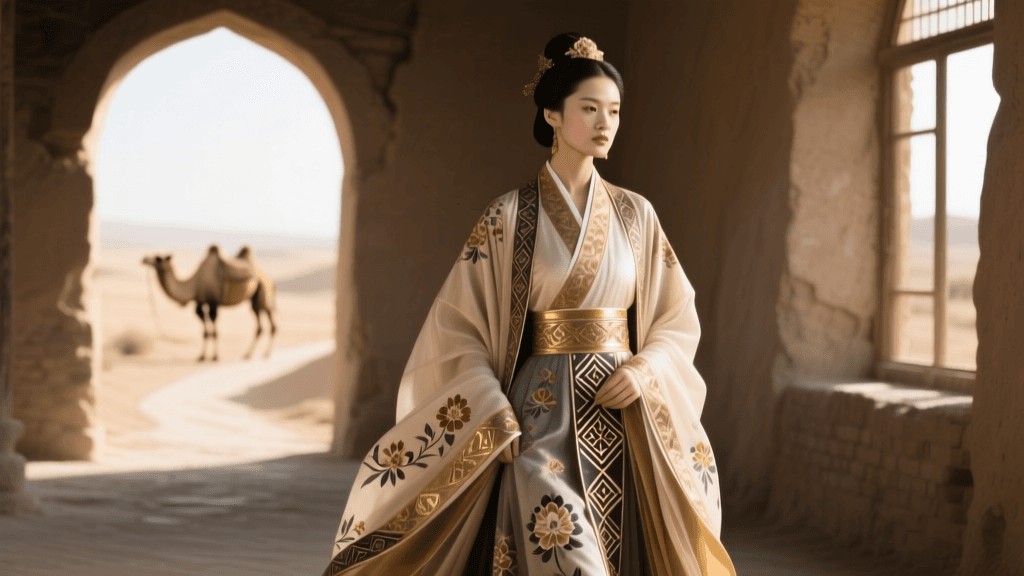
The Tang Dynasty (618–907 CE) represents the zenith of cosmopolitan culture in ancient China. At its heart was Chang'an (modern-day Xi'an), a sprawling metropolis of over one million residents and the eastern terminus of the vast Silk Road network. This era was defined by an unprecedented openness to foreign cultures, religions, and trade. According to the Metropolitan Museum of Art's Heilbrunn Timeline of Art History, the Silk Road was not a single path but a complex web of trade routes that facilitated the exchange of silk, spices, precious metals, and, crucially, textile technologies and fashion aesthetics between China, Central Asia, Persia, and the Byzantine Empire.
For modern enthusiasts of traditional Chinese clothing, understanding the Tang Dynasty requires looking beyond indigenous Han Chinese traditions. The garments worn by the elite and commoners alike were deeply infused with cross-cultural influences. Sogdian merchants, Persian weavers, and Turkic nomads brought new silhouettes, weaving techniques, and motifs that permanently altered the trajectory of Hanfu. The resulting fashion was vibrant, voluminous, and distinctly international, reflecting a society that celebrated diversity and global connectivity.
Sogdian Weaves and Persian Motifs in Hanfu
Before the Tang Dynasty, Chinese silk weaving was predominantly warp-faced, meaning the longitudinal threads dictated the pattern and color. However, the influx of Central Asian and Persian textiles introduced weft-faced compound twills, known in the West as samite and in China as jin (brocade) or fanjin (foreign brocade). This technique allowed for much more complex, colorful, and dense geometric and figurative patterns.
The most iconic visual legacy of this cross-cultural exchange is the 'pearl roundel' motif (lianzhu wen). Originating from Sassanian Persia, this design featured a circular border of pearls enclosing confronting animals like lions, boars, or mythical beasts. Tang weavers enthusiastically adopted this motif, blending it with indigenous Chinese symbols like the dragon, phoenix, and lotus. As highlighted by the UNESCO Silk Roads Programme, these hybrid textiles are some of the most compelling physical evidence of the deep artistic dialogue between East and West during late antiquity.
Key Cross-Cultural Textile and Garment Motifs
| Design Element | Traditional Han Origin | Silk Road / Foreign Influence |
|---|---|---|
| Collar Style | Cross-collar, right over left (Jiaoling Youren) | Round collar (Yuanling) and Lapel collars (Fanling) |
| Sleeve Shape | Wide, flowing, floor-draping (Guangxiu) | Narrow, fitted cuffs for riding and archery (Zhaixiu) |
| Textile Motifs | Clouds, indigenous flora, geometric lattices | Pearl roundels, confronting lions, lotus palmettes |
| Footwear | Silk slippers, woven straw sandals | Leather riding boots with upturned toes |
The Hufu Phenomenon: Foreign Dress in Chang'an
The most radical departure from traditional Hanfu during the Tang Dynasty was the widespread adoption of Hufu, or 'foreign dress.' Originating from the nomadic tribes of the northern steppes and Central Asia, Hufu was characterized by narrow sleeves, fitted bodices, lapel collars, trousers, and leather boots. While traditional Hanfu prioritized flowing robes and skirts that restricted vigorous movement, Hufu was highly practical for horseback riding, polo, and hunting.
Remarkably, Hufu was not relegated to men or foreign mercenaries; it became a massive trend among elite Tang women. Murals from the tombs of Princess Changle and Princess Yongtai depict women confidently striding in men's riding boots, round-collared robes, and striped trousers. This gender-fluid, cross-cultural fashion trend underscored the relatively high social mobility and liberal attitudes toward women in the early to mid-Tang period. The Tang Dynasty Art collections at the Met feature numerous ceramic figurines of female polo players in Hufu, immortalizing this dynamic sartorial rebellion.
Practical Guide: Sourcing and Styling Tang-Inspired Silk Road Garments Today
For modern Hanfu practitioners, historical reenactors, and fashion designers looking to recreate the cosmopolitan elegance of Tang Dynasty Silk Road fashion, authenticity in fabric, cut, and drape is paramount. Mass-produced 'costume' hanfu often relies on cheap polyester and inaccurate cuts. To achieve a historically grounded Tang-Silk Road aesthetic, follow these actionable sourcing and tailoring guidelines.
Fabric Sourcing and Cost Breakdown
The Tang aesthetic relies on heavy, structured silks that hold voluminous pleats and display intricate brocade patterns. Avoid lightweight chiffons or organzas, which belong to later dynastic aesthetics or modern fantasy designs.
- Outer Garment (Shan/Ao): Source heavy Silk Damask (Zhijin) or reproduction Samite brocade. Look for a fabric weight of 19 to 22 momme (approx. 70-85 grams per square meter). Authentic Shu Brocade (Shujin) from Sichuan or high-quality Song Brocade reproductions from Suzhou are ideal. Cost: $25 to $60 USD per meter.
- Skirts (Qun): For the iconic pleated skirts, use raw silk, silk noil, or heavy crepe de chine (16-19 momme) to ensure the pleats fall heavily and swing dynamically. Cost: $15 to $30 USD per meter.
- Linings and Interfacing: Use Habotai silk (8-10 momme) for breathability. Cost: $8 to $12 USD per meter.
- Timing: If ordering custom-woven brocade from specialized mills in Shengze (Suzhou), expect a lead time of 4 to 8 weeks, especially during the Spring and Autumn peak weaving seasons.
Measurements and Tailoring for Ruqun and Yuanlingpao
Tang Dynasty silhouettes are defined by their generous volume and high waistlines. When commissioning or sewing Tang-style garments, precise measurements are critical to avoid a restrictive or historically inaccurate fit.
- Qixiong Ruqun (Chest-High Skirt): The defining garment of Tang women's fashion. The skirt waistband must be tied securely above the bust. To achieve the luxurious, pooling drape seen in Tang murals, the total width of the skirt fabric must be at least 3.5 to 4 meters (approx. 138 to 157 inches) for an average adult. The length should be measured from the chest down to the floor, plus an additional 3 to 5 centimeters to allow for the fabric to break elegantly over the footwear.
- Yuanlingpao (Round-Collar Robe): Influenced by Hufu, this robe was worn by both men and women. The neck circumference should be your exact neck measurement plus 2 centimeters for comfort, fastened with a traditional knotted button (pankou) on the right shoulder. The armhole depth must be generous—around 25 to 30 centimeters—to allow for the insertion of underarm gussets, which provide the mobility necessary for the cross-cultural, active lifestyle the garment was designed for.
- Sleeve Wingspan: For formal Tang outerwear, the total wingspan (from left cuff to right cuff) should be a minimum of 180 centimeters, creating the sweeping, dramatic silhouette characteristic of the era.
Styling and Accessorizing the Silk Road Look
To complete the Tang-Silk Road aesthetic, pay close attention to accessories and grooming. The Hufu look is incomplete without leather or heavy fabric boots featuring slightly upturned toes, designed originally for securing into stirrups. For jewelry, incorporate motifs brought by Sogdian traders: turquoise, lapis lazuli, and amber set in gold filigree. Hair was often styled in elaborate, gravity-defying updos adorned with gold combs and fresh peonies, reflecting the era's love for opulence and foreign botanical imports.
Preserving a Cosmopolitan Legacy
The clothing of the Tang Dynasty is a testament to a time when China's borders were permeable, and its culture was enriched by the steady flow of ideas, goods, and people along the Silk Road. By understanding the structural and aesthetic contributions of Persian weavers, Sogdian merchants, and Central Asian nomads, we gain a much deeper appreciation for the complexity of traditional Chinese garments. Whether you are a historian studying weft-faced compound twills or a modern wearer commissioning a custom Qixiong Ruqun, recognizing these cross-cultural influences allows us to wear history not as a static relic, but as a vibrant, global tapestry.