Ainu Attus and Ryukyuan Bingata: Ethnic Fashion Guide
Japan's Hidden Textile Heritage: Beyond the Silk Kimono
Japan’s sartorial history is globally celebrated through the elegant silk kimono, yet the archipelago’s indigenous and ethnic minority groups harbor equally profound, yet lesser-known, textile traditions. The Ainu people of northern Japan (primarily Hokkaido) and the Ryukyuan people of the southern Ryukyu Islands (Okinawa) developed distinct garments shaped by their unique climates, spiritual beliefs, and historical trade networks. For collectors, cultural enthusiasts, and textile historians, understanding the nuances of Ainu attus and Ryukyuan bingata offers a gateway into the diverse soul of Japanese heritage.
Ainu Attus: The Bark Cloth of the Northern Frontier
Craftsmanship and Spiritual Significance
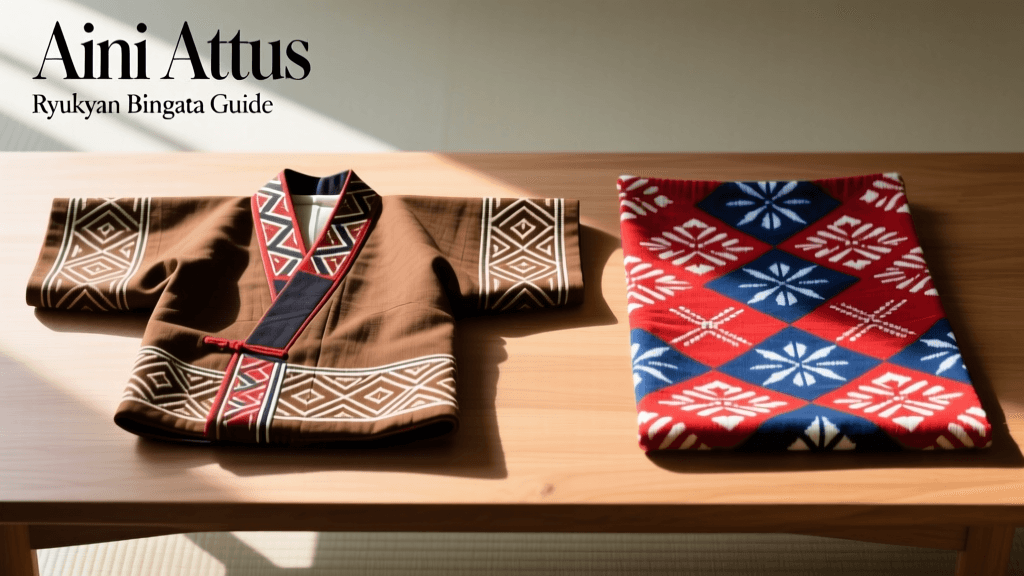
The Ainu, an indigenous hunter-gatherer society, traditionally crafted garments from natural fibers found in their harsh, northern environment. The most iconic of these is attus, a highly durable textile woven from the inner bark of the Japanese elm (Ulmus davidiana var. japonica) or the linden tree. Harvesting occurs in early summer when the sap flows freely. The inner bark is peeled, dried, and split into fine threads using the fingernails or a specialized bone tool. Weaving is done on a traditional backstrap loom (emush-at), resulting in a stiff, breathable, and highly water-resistant fabric.
Because attus is plain-woven and naturally brown, Ainu women historically decorated garments with cotton appliqué and embroidery, known as kaparamip. These motifs—such as the moreu (spiral) and aiushi (thorn)—are not merely decorative. According to the Foundation for Research and Promotion of Ainu Culture, these intricate patterns serve as spiritual talismans designed to ward off evil spirits from entering the body through the garment's openings.
"In Ainu cosmology, clothing is not merely a physical shield against the cold, but a spiritual armor that protects the wearer's soul from the unseen world."
The Transition to Cotton and Trade Textiles
While attus remained the everyday workwear for the Ainu, trade with mainland Japan and Russian merchants introduced cotton and silk to Hokkaido. These imported textiles, known as sarasa (calico) or chikarumpe (heavy cotton), were highly prized. Ainu artisans would cut these trade cloths and apply their traditional appliqué techniques, creating stunning hybrid garments that signified wealth and status. Today, vintage chikarumpe are highly sought after by collectors, often fetching prices upwards of $1,500 USD due to the intricate, large-scale cut-and-sew appliqué work that covers the entire garment.
Practical Guide: Sourcing and Sizing Ainu Garments
Authentic vintage attus-amip (garments) can be sourced through specialized antique dealers in Hokkaido or international auction houses. Expect to pay between $250 and $800 USD for a well-preserved mid-20th-century piece. When measuring, note that Ainu garments are typically cut in a straight, T-shape with wider sleeves and a looser fit than mainland kimono.
- Standard Length: A typical vintage attus robe measures approximately 110 cm from shoulder to hem.
- Sleeve Span: The arm span (yuki) is often shorter and wider, averaging 120 cm across the shoulders.
- Fit: Unlike the tightly wrapped mainland kimono, Ainu robes are worn loosely, often belted with a simple woven sash or leather cord.
Ryukyuan Bingata: The Subtropical Resist-Dye
The Bingata Process and Historical Context
In stark contrast to the earthy, utilitarian attus of the north, the Ryukyu Kingdom (modern-day Okinawa) developed bingata, a vibrant, stencil-resist dyeing technique heavily influenced by maritime trade with China, Java, and mainland Japan. Bingata utilizes intricate paper stencils (katagami) cut from mulberry paper treated with persimmon tannin. Artisans apply a thick rice-paste resist through the stencil onto silk or cotton. Once dry, mineral and botanical pigments are brushed into the exposed areas.
The signature technique, kumadori, involves shading the edges of the motifs with darker pigments to create a three-dimensional effect. Finally, the paste is washed away in the clear rivers of Okinawa, revealing brilliant yellows, reds, and blues. Historically, sumptuary laws dictated color usage; for instance, vibrant yellow was strictly reserved for the Ryukyuan royalty.
Post-War Revival and Resilience
The Battle of Okinawa in 1945 devastated the island's infrastructure, and the bingata tradition was nearly lost. Artisans survived by improvising; they used discarded US military flour sacks as canvas, melted down tin cans to carve makeshift stencils, and extracted pigments from lipstick and local flora. This profound resilience birthed a unique era of bingata characterized by bolder, more abstract motifs. Collectors today highly value these mid-century revival pieces, not just for their aesthetic beauty, but for their powerful historical narrative of cultural survival.
Acquiring Authentic Bingata: Costs and Verification
Authentic, hand-dyed bingata is a luxury craft recognized by the Japan Crafts Association. A modern, artisan-crafted silk bingata obi can cost between $1,500 and $3,500 USD, while a full custom kimono can exceed $8,000 USD. Vintage post-WWII pieces are more accessible, ranging from $300 to $700 USD.
To ensure authenticity, purchase directly from recognized workshops in Naha, such as the historic Shiroma or Chinen families. The Shiroma Bingata Studio, for example, has preserved traditional methods for over a dozen generations. When buying, verify the presence of the Okinawa Prefectural Government's traditional craft certification tag, which guarantees the piece was hand-dyed in Okinawa using traditional pigments.
Comparative Analysis: Attus vs. Bingata
| Feature | Ainu Attus | Ryukyuan Bingata |
|---|---|---|
| Base Material | Japanese elm or linden inner bark | Silk, cotton, or ramie |
| Primary Technique | Backstrap loom weaving, appliqué | Stencil-resist dyeing, shading |
| Motif Inspiration | Spiritual thorns, spirals, nature | Flora, fauna, Chinese/Ryukyuan myths |
| Climate Adaptation | Water-resistant, insulating, stiff | Breathable, open armpits, lightweight |
| Average Cost (Modern) | $400 - $1,200 USD (Artisan revival) | $1,500 - $8,000+ USD (Silk garments) |
| Care Requirements | Store flat, avoid folding, 50% RH | Dry clean only, avoid direct sunlight |
Preservation and Care Guidelines
Preserving ethnic minority garments requires specialized knowledge, as their materials differ vastly from standard silk kimono. For attus garments, the primary enemy is mechanical stress. The elm fibers can become brittle over time. Always store attus flat in acid-free tissue paper; never hang it, as the weight will distort the backstrap-woven structure. Maintain a humidity-controlled environment between 45% and 55% relative humidity to prevent the fibers from snapping.
Conversely, bingata garments face the threat of photodegradation. The botanical dyes, particularly the traditional fukugi yellow derived from the Garcinia tree, are highly photosensitive. Never expose a silk bingata kimono to direct, prolonged sunlight. Furthermore, because the rice-paste resist process leaves microscopic organic residues in the fabric weave, silk bingata requires professional dry cleaning by specialists familiar with traditional Japanese dyes to prevent color bleeding.
Modern Revivals and Contemporary Styling
In recent years, both Ainu and Ryukyuan textiles have seen a renaissance among younger generations and contemporary fashion designers. Modern Ainu artisans are revitalizing the backstrap loom, blending traditional elm bark with sustainable modern yarns to create accessible accessories like bags and scarves, priced between $50 and $150 USD. Similarly, Okinawan designers are adapting bingata patterns for modern aloha shirts, sneakers, and home goods, making the art form accessible to a global audience. When styling these pieces today, the key is respectful integration: pairing a vintage bingata haori with modern tailored trousers, or framing a fragment of antique attus as textile art, honors the craft without reducing it to mere costume.
Conclusion
The textiles of the Ainu and Ryukyuan peoples are far more than regional curiosities; they are profound expressions of survival, spirituality, and cultural identity. Whether you are drawn to the rugged, spiritual armor of the northern attus or the vibrant, sun-drenched elegance of the southern bingata, collecting and preserving these garments helps sustain the legacy of Japan's ethnic minorities. By understanding the craftsmanship, proper sizing, and meticulous care required for these textiles, enthusiasts can ensure these magnificent traditions endure for generations to come.