Historical Kimono Trade Routes: 2026 Collector Guide
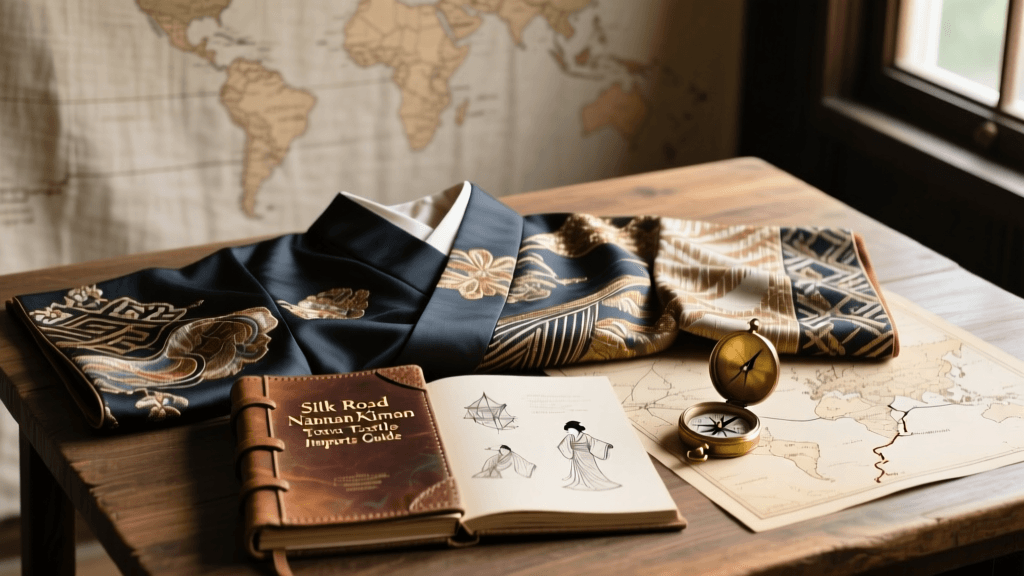
The Global Threads of the Kimono: An Introduction
When we envision the traditional Japanese kimono, it is easy to imagine an isolated, purely domestic art form born from the islands of Japan. However, as textile historians and collectors in 2026 well know, the kimono is actually a vibrant canvas of global trade, international diplomacy, and cross-cultural exchange. From the ancient overland Silk Road to the maritime Nanban trade routes of the 16th and 17th centuries, foreign textiles, dyes, and weaving techniques have profoundly shaped the evolution of Japanese garment-making. For modern collectors, understanding these historical import routes is no longer just an academic exercise; it is a crucial skill for authenticating, valuing, and appreciating vintage and antique kimono textiles in today's market.
In 2026, the secondary market for vintage textiles has seen a massive surge in interest regarding 'import-inspired' weaves. Collectors are actively seeking out garments that showcase the historical integration of foreign motifs, such as Persian arabesques, Indian chintz patterns, and Chinese brocades. This comprehensive guide will walk you through the major trade routes that influenced kimono textiles, how to identify these historical imports, and actionable advice for sourcing authentic pieces in the current 2026 market.
The Silk Road and the Shosoin Treasures
The earliest and most profound influence on Japanese textiles came via the Silk Road. During the Nara and Heian periods (710–1185), Japan was the eastern terminus of this vast trans-Eurasian trade network. Textiles, dyes, and weaving techniques flowed into Japan through China and the Korean peninsula. The most spectacular surviving evidence of this era is housed in the Shosoin Repository, managed by the Imperial Household Agency. The Shosoin holds thousands of 8th-century artifacts, including exquisite examples of Chinese brocades, Persian warp-faced compound twills, and Indian cottons that were gifted to the Japanese imperial court.
These early imports introduced Japan to advanced weaving structures like kara-ori (Chinese-style weaving) and nishiki (polychrome patterned weaves). The motifs imported during this time—such as the peony, the lion, and the grapevine—became permanently embedded in the Japanese textile lexicon. Today, high-end Nishijin-ori weavers in Kyoto still reproduce these Silk Road motifs, and garments featuring accurate 8th-century Shosoin reproductions command premium prices among serious collectors.
Nanban Trade: European and Indian Influences
Fast forward to the late 16th and early 17th centuries, and the maritime 'Nanban' (Southern Barbarian) trade routes brought an entirely new wave of foreign textiles to Japan's shores. Portuguese and Dutch traders arrived in Kyushu, bringing with them Indian chintz (known in Japan as sarasa), European woolens, and Southeast Asian ikats. Because Japan was largely a silk and hemp-producing nation, the introduction of vibrant, colorfast Indian cotton and warm European wool was revolutionary.
While the Tokugawa shogunate eventually restricted foreign trade to the artificial island of Dejima in Nagasaki, the Dutch East India Company continued to import Indian sarasa throughout the Edo period. Japanese artisans meticulously studied these imported cottons, eventually developing domestic dyeing techniques to mimic the exotic floral and geometric patterns of Indian chintz. By the mid-Edo period, wa-sarasa (Japanese-style chintz) was being used extensively for kimono linings, undergarments, and the sashes of tea ceremony practitioners. Furthermore, European woolens and heavy brocades were highly prized by the samurai class, who incorporated them into jinbaori (surcoats worn over armor) to project power and worldly sophistication.
Identification Guide: Spotting Historical Imports
For the 2026 collector, distinguishing between a purely domestic motif and one born from historical trade routes requires a keen eye for weave structure and pattern origin. Below is a structured comparison chart to help you identify the foreign roots of common kimono textiles.
| Trade Route Origin | Original Imported Textile | Japanese Adaptation | Key Visual Motifs & Cues |
|---|---|---|---|
| Silk Road (Tang China / Persia) | Polychrome Silk Brocades | Nishiki / Kara-ori | Roundels, confronting lions, grapevines, heavy metallic threads. |
| Maritime (India / SE Asia) | Painted & Mordant Cotton Chintz | Sarasa / Wa-Sarasa | Meandering vines, serrated leaves, geometric diaper patterns, madder reds and indigo blues. |
| Nanban (Europe) | Wool Broadcloth & Velvet | Velvet Yuzen / Jinbaori Wools | Heraldic crests, heavy nap textures, deep crimson and navy backgrounds. |
| Maritime (China / Ming Dynasty) | Satin Damasks (Rinzu) | Figured Satin (Rinzu) | Shippo (interlocking circles), sayagata (key fret), glossy background with matte pattern. |
Examining the Weave and Dye
When inspecting a potential historical import piece, turn the fabric over. Authentic Indian sarasa imported during the Edo period will show dye penetration that differs from Japanese surface-level stencil dyeing (katagami). Furthermore, early Japanese attempts to mimic European velvet (birodo) often feature a distinct slant in the pile, a hallmark of the specialized looms used in Kyoto's Nishijin Textile Center district during the 18th and 19th centuries.
2026 Market Trends and Pricing for Import-Inspired Textiles
As of 2026, the collector's market has shifted heavily toward provenance and cross-cultural narratives. Garments that tell a story of global trade are outperforming standard domestic designs in major auction houses in Tokyo and Kyoto. Here is what you can expect to pay for verified historical and import-inspired textiles in the current market:
- Edo-Period Jinbaori with Imported Wool: Surcoats featuring verified Dutch or Portuguese wool imports, often lined with domestic silk, are highly coveted. In 2026, pristine examples are fetching between ¥1,200,000 and ¥2,500,000 ($8,000 - $16,500 USD).
- Antique Wa-Sarasa Kimono Linings: While the outer silk of a kimono often degrades, the inner linings made of Japanese-chintz (wa-sarasa) survive beautifully. Extracted and framed linings from the late Edo period are currently selling for ¥45,000 to ¥85,000 per panel.
- Modern Nishijin-ori Shosoin Reproductions: Contemporary obi sashes woven by master artisans using traditional Silk Road motifs and real gold leaf threads are considered investment pieces. Expect to pay upwards of ¥800,000 for a new, master-weaver fukuro obi featuring Tang-dynasty roundel patterns.
Actionable Advice for Sourcing and Authentication in 2026
Navigating the vintage kimono market requires diligence, especially when sellers use buzzwords like 'Silk Road' or 'Nanban' to artificially inflate prices. Here are practical steps to ensure your investments are sound:
1. Consult the Victoria and Albert Museum Archives
Before making a high-value purchase, cross-reference the garment's motifs with established museum archives. The Victoria and Albert Museum Asian Collections feature extensive, high-resolution documentation of trade textiles. Comparing the exact geometry of a sarasa leaf pattern or the weave structure of a Chinese-inspired damask against these verified archives can save you from purchasing a 20th-century reproduction masquerading as an Edo-period import.
2. Verify the Metallic Threads
Historical imports from China and Persia often utilized real gold and silver. In Japan, this was adapted into kinran (gold brocade). By the late 19th century, synthetic metallic threads began to replace precious metals. To authenticate an older piece, use a jeweler's loupe. Genuine historical gold thread is made by applying gold leaf to paper or animal intestine, which is then cut into microscopic strips and wrapped around a silk core. If the thread appears perfectly uniform and highly reflective like modern plastic, it is a post-1920s reproduction.
3. Attend Specialized Trade Fairs
In 2026, the most reliable way to source authenticated trade-route textiles is through specialized antique textile fairs in Kyoto, such as the biannual Kobo-san and Tenjin-san markets, where multi-generational dealers specialize in Edo-period fragments. Building a relationship with a dealer who specializes in ko-texile (antique textiles) is invaluable. They can provide the oral provenance and historical context that online listings simply cannot offer.
Conclusion
The kimono is far more than a static symbol of Japanese tradition; it is a dynamic, woven archive of global history. From the camel caravans of the Silk Road delivering Persian silks to Nara, to the galleons of the Nanban trade unloading Indian cottons in Kyushu, foreign imports have continually pushed the boundaries of Japanese textile artistry. As a collector in 2026, learning to read these global threads not only enhances the value of your collection but also connects you to a fascinating era of international exchange. By understanding the origins of these motifs and mastering the physical cues of historical weaving, you can curate a collection that truly reflects the global atlas of the kimono.