Silk Road Echoes: How Trade Routes Shaped Tang Hanfu
The Cosmopolitan Capital: Chang'an and the Silk Road
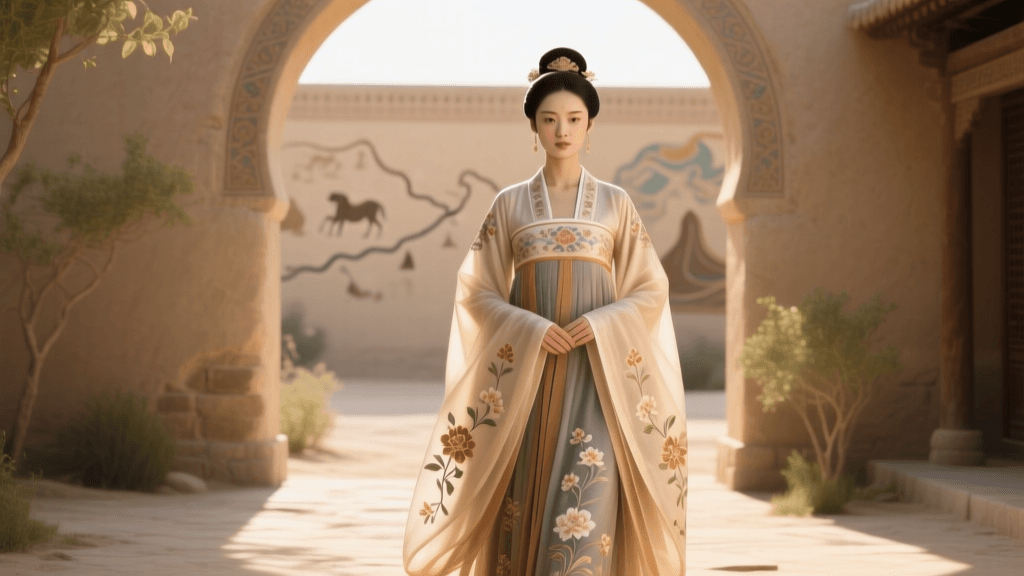
The Tang Dynasty (618–907 CE) is widely celebrated as the golden age of Chinese cosmopolitanism. At its heart lay Chang'an (modern-day Xi'an), a sprawling metropolis of over one million residents and the eastern terminus of the Silk Road. This vast network of trade routes did not merely facilitate the exchange of spices, jade, and precious metals; it served as a vital conduit for sartorial and textile exchange. As merchants, diplomats, and artisans from Central Asia, Persia, and the Byzantine Empire converged in Chang'an, their native garments and weaving techniques profoundly influenced traditional Chinese clothing, giving birth to a unique, syncretic fashion culture that modern Hanfu enthusiasts fiercely study and revive today.
According to the UNESCO Silk Roads Programme, the movement of peoples across Eurasia created a shared visual language of luxury and status. For the Tang elite, adopting elements of foreign dress—collectively known as Hufu (foreign clothing)—was a symbol of worldly sophistication. Today, understanding these cross-cultural influences is essential for anyone looking to accurately source, style, and appreciate Tang-style Hanfu.
Sartorial Syncretism: Key Garments of the Tang Dynasty
The integration of foreign silhouettes into the Han Chinese wardrobe resulted in several iconic garments that define the Tang aesthetic. Unlike the flowing, wide-sleeved robes of the preceding Han and Wei-Jin periods, Tang clothing embraced structure, mobility, and bold geometric tailoring inspired by nomadic and Central Asian equestrian cultures.
The Yuanlingpao (Round-Collar Robe)
The Yuanlingpao is perhaps the most recognizable garment of the Tang era. Characterized by its circular neckline, right-over-left lapel closure, and side slits for horseback riding, this robe was directly adapted from the practical attire of Turkic and Sogdian nomads. While traditionally worn by men, the Tang Dynasty saw a progressive blurring of gender lines in fashion, with aristocratic women frequently donning the Yuanlingpao paired with leather boots and riding caps. Modern reproductions often feature intricate jacquard weaves and require precise tailoring to ensure the collar sits flush against the neck without gaping, a hallmark of high-quality historical construction.
The Banbi (Half-Sleeve Jacket) and Kua (Trousers)
The Banbi, a short-sleeved or half-sleeved jacket worn over a long-sleeved inner robe, traces its origins to the practical vests worn by Central Asian laborers and soldiers. It provided warmth to the core while allowing unrestricted arm movement. Paired with the Kua (striped or tailored trousers) and knee-high leather boots, this ensemble represented the height of Hufu fashion. The Metropolitan Museum of Art notes that Sogdian merchants and entertainers were frequently depicted in Tang tomb murals wearing these layered, practical garments, which the Chinese elite quickly adopted for leisure and sporting activities like polo.
Motifs and Materials: The Persian and Sogdian Imprint
Beyond silhouettes, the Silk Road revolutionized Chinese textile production. Prior to the Tang Dynasty, Chinese silk weaving was predominantly warp-faced, resulting in lightweight, flowing fabrics like plain weave and gauze. However, contact with Persian and Sogdian weavers introduced weft-faced compound twill (samite). This technique allowed for denser, heavier fabrics with complex, large-scale patterns that could hide the binding threads, creating a rich, tapestry-like surface.
The most iconic motif born from this exchange is the pearl roundel—a circular border of pearls enclosing confronting animals (such as boars, lions, or ducks) or floral medallions. Originating in Sassanid Persia, the pearl roundel became a staple of Tang imperial brocades. When sourcing modern Tang-style Hanfu, seeking out fabrics featuring pearl roundels, lotus scrolls, and confronting beasts is a reliable way to ensure historical authenticity and pay homage to this cross-cultural textile legacy. For a deeper dive into the textile mechanics of the era, the Met Museum's essay on Silk Road textiles provides invaluable context on how these weaves traveled across continents.
Sourcing Tang-Style Hanfu: A Practical Comparison
For modern consumers, navigating the Hanfu market can be overwhelming. Tang-style garments require specific fabric weights and drapes to look authentic. Below is a structured guide to help you choose the right garments, fabrics, and price points for your wardrobe.
| Garment Type | Historical Influence | Recommended Modern Fabric | Avg. Cost (USD) | Best Use Case |
|---|---|---|---|---|
| Yuanlingpao (Robe) | Turkic / Sogdian Nomadic | Silk Brocade or Heavy Jacquard | $90 - $220 | Formal events, photoshoots, festivals |
| Banbi (Half-Sleeve) | Central Asian Vest | Cotton-Linen Blend or Damask | $45 - $85 | Layering, casual historical wear |
| Qixiong Shanqun (Chest Skirt) | Indigenous Han + Indian Drape | Copper Ammonia Silk or Chiffon | $60 - $130 | Summer wear, elegant indoor events |
| Hufu Trousers & Boots | Persian Equestrian | Wool Blend & Faux Leather | $70 - $150 | Active wear, martial arts, riding |
Actionable Guide: Measurements, Timing, and Costs
Purchasing authentic Tang-style Hanfu requires attention to detail, especially when ordering from specialized artisans or international marketplaces like Taobao. Follow these practical guidelines to ensure a perfect fit and timely delivery.
- Measurement Adjustments: Tang garments are meant to be layered and structured. When ordering a Yuanlingpao, add 12 to 15 cm to your actual chest circumference to allow for the traditional drape and to accommodate the inner garments (like the Zhongyi). For sleeve length, the cuff should ideally rest at the base of the thumb when arms are relaxed, requiring a measurement from the center back of the neck to the wrist joint.
- Collar Sizing: The round collar must be measured precisely around the base of the neck. Add exactly 2 to 3 cm for ease. If the collar is too large, it will collapse; if too small, it will choke the wearer and ruin the historical silhouette.
- Timing Your Purchase: High-quality Tang brocades are often woven in limited batches. If you are planning to wear your ensemble for major cultural events like the Qixi Festival (usually August) or the Spring Festival (January/February), place your custom orders at least 8 to 10 weeks in advance. Artisans require 3-4 weeks for weaving and another 3-4 weeks for hand-finishing the seams and hems.
- Budgeting for Authenticity: Avoid ultra-cheap polyester costumes (often priced under $30 USD), as they lack the structural integrity required for heavy Tang brocades and will shine unnaturally in photographs. Budget a minimum of $150 to $250 USD for a complete, historically informed three-piece set (inner robe, outer Yuanlingpao, and leather belt).
Caring for Cross-Cultural Textiles
The heavy weft-faced brocades and metallic threads used in Tang-style reproductions require meticulous care to maintain their structural integrity and historical appearance.
- Cleaning: Never machine wash silk brocades or jacquards. The agitation will cause the metallic threads to fray and the heavy fabric to warp. Always opt for professional dry cleaning for outer robes.
- Storage: Tang garments are heavy and can stretch out of shape if hung on thin wire hangers. Use wide, padded wooden hangers to support the shoulders of your Yuanlingpao. Store folded Banbi jackets in breathable cotton garment bags with natural cedar blocks to deter moths without introducing harsh chemical odors into the silk fibers.
- Ironing: Use a low-heat steam iron with a pressing cloth. Direct heat will melt synthetic blends and scorch natural silk, destroying the raised texture of the pearl roundel motifs.
Conclusion
The Tang Dynasty's sartorial legacy is a testament to the power of the Silk Road. By embracing the practical tailoring of the steppes and the luxurious weaving techniques of Persia, Han Chinese clothing evolved into a vibrant, cosmopolitan art form. Today, by understanding the historical roots of the Yuanlingpao, the Banbi, and the intricate samite weaves, modern wearers do more than just put on a costume—they participate in the ongoing story of global cultural exchange, wearing the echoes of the ancient trade routes on their sleeves.