Okinawan Ryusou vs Mainland Kimono: A Regional Guide
Introduction to Japan's Prefectural Textile Diversity
When the world envisions traditional Japanese clothing, the image of the mainland silk kimono, tightly bound by a brocade obi, almost universally comes to mind. However, Japan's rich sartorial history is deeply fragmented by geography, climate, and distinct historical kingdoms. Nowhere is this regional divergence more apparent than in the contrast between the mainland Japanese kimono and the Ryusou of the Okinawa prefecture. Once the independent Ryukyu Kingdom, Okinawa developed a unique textile and garment culture influenced by maritime trade with China, Southeast Asia, and the Japanese mainland. For cultural enthusiasts and garment collectors, understanding these prefectural variations is essential to appreciating the true breadth of Asian traditions.
In this comprehensive guide, we explore the structural, material, and cultural differences between mainland regional garments and Okinawan Ryusou, providing actionable advice for sourcing, styling, and investing in these regional masterpieces.
The Mainland Silhouette: Regional Adaptations
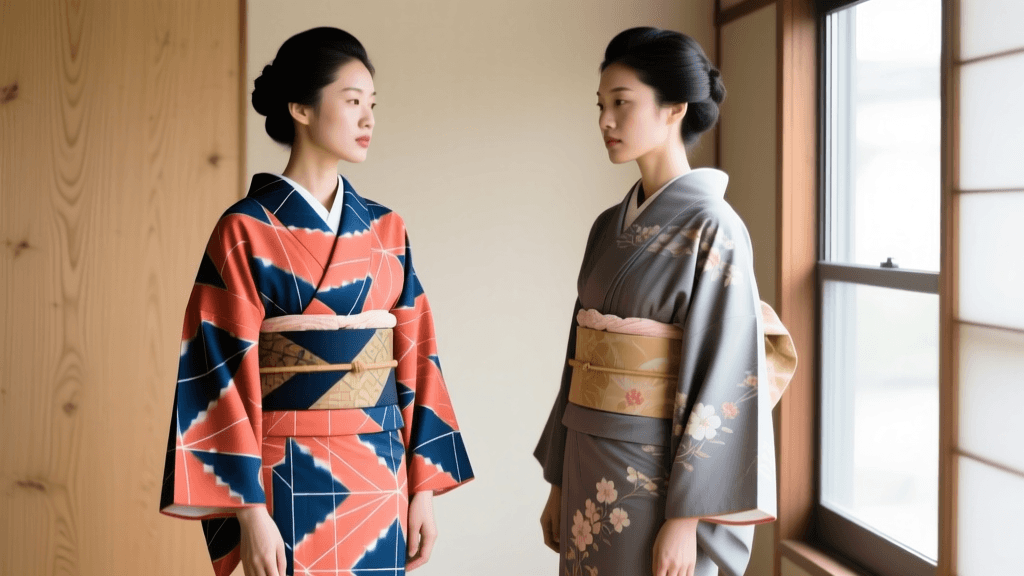
Even within the Japanese mainland, the kimono is not a monolith. Prefectural climates and local economies historically dictated textile choices. In the frigid northern prefecture of Aomori, the Tsugaru Kogin-zashi technique emerged. Farmers layered thick, indigo-dyed hemp and cotton, reinforcing the fabric with dense geometric white stitching to trap body heat and withstand harsh winters. Conversely, the mercantile hubs of Kyoto and Kanazawa championed Nishijin-ori (silk brocade) and Kaga Yuzen (elaborate paste-resist dyeing), catering to the aristocracy and wealthy merchant classes who required garments that displayed status rather than utilitarian warmth.
Despite these regional mainland variations, the fundamental architecture of the mainland kimono remained consistent: a T-shaped, straight-seamed garment with a narrow sleeve opening (or deep drop in the case of the furisode), always secured by a wide, stiff obi that restricts the torso and alters the wearer's posture and gait.
The Ryukyuan Distinction: Understanding Ryusou
Traveling 1,000 miles south to the subtropical Okinawa prefecture, the mainland kimono's heavy silks and restrictive obi become entirely impractical. Here, the traditional garment is the Ryusou. Developed during the Ryukyu Kingdom era (15th to 19th centuries), Ryusou reflects a synthesis of indigenous island culture and foreign maritime influences.
The silhouette of the Ryusou is distinctly looser and more forgiving than its mainland counterpart. It features wider, more open sleeves that allow for vital air circulation in the humid subtropical climate. Instead of the heavy, restrictive obi, the Ryusou is secured with a thin, soft sash known as an ushinchi or kaku-obi, which is tied simply at the front or side. This lack of rigid torso binding allows for a natural, fluid range of motion, historically necessary for island labor, traditional Ryukyuan court dances, and martial arts.
Furthermore, the layering system differs drastically. While mainland formal kimono often require multiple layers of undergarments (nagajuban and hadajuban), the Ryusou is frequently worn as a single, lightweight layer over simple cotton underclothes, utilizing breathable indigenous textiles like bashofu (banana fiber cloth) and miyako jofu (ramie linen).
Comparative Analysis: Ryusou vs. Mainland Kimono
To fully grasp the functional and aesthetic differences between these prefectural styles, we must examine their structural components side-by-side. The following table outlines the primary distinctions between the traditional Okinawan Ryusou and the standard mainland Japanese Kimono.
| Feature | Mainland Japanese Kimono | Okinawan Ryusou |
|---|---|---|
| Primary Climate | Temperate (Four distinct seasons) | Subtropical (Hot, humid, typhoon-prone) |
| Traditional Fabrics | Silk, heavy cotton, wool, hemp | Bashofu (banana fiber), ramie, lightweight cotton |
| Sleeve Structure | Narrow wrist openings, deep underarm drops | Wide, open wrist cuffs for ventilation |
| Fastening (Obi) | Wide, stiff, heavily padded, tied at the back | Thin, soft sash (ushinchi), tied at the front/side |
| Silhouette | Cylindrical, restricts stride and posture | A-line, flowing, allows natural movement |
| Layering | Multiple layers (juban, kimono, haori) | Single layer or lightweight double layer |
According to the Visit Okinawa official cultural guide, the Ryusou's design is a direct evolutionary response to the island's environment, proving that traditional Asian garments are deeply pragmatic as well as ceremonial.
Textile Techniques: Bingata vs. Yuzen and Kasuri
The divergence in garment structure is matched only by the stark contrast in regional dyeing techniques. Mainland Japan is famous for Yuzen (intricate, nature-inspired paste-resist dyeing from Kyoto and Kanazawa) and Kasuri (ikat weaving). However, Okinawa's crown jewel is Bingata.
Bingata is a vibrant, stencil-based resist-dyeing technique unique to the Ryukyu Islands. Unlike the muted, seasonal elegance of mainland Yuzen, Bingata is characterized by explosive, high-contrast colors—brilliant yellows, deep crimsons, and vivid blues—and motifs that reflect the subtropical ecosystem and historical trade routes. You will frequently see stylized hibiscus, palm fronds, ocean waves, and even Chinese dragons and peonies integrated into a single Bingata textile.
Historically, the colors and motifs of Bingata were strictly regulated by the Ryukyuan court. The ruling class and royalty wore brilliant yellow and deep purple Bingata robes, while the general populace was restricted to indigo and simpler cotton weaves. Today, as highlighted by the Japan Traditional Crafts Association, authentic Bingata remains a protected and highly revered craft, requiring master artisans to carve intricate stencils from mulberry paper and apply soybean milk resist before hand-painting the pigments.
Practical Guide: Sourcing, Costs, and Styling Regional Garments
For collectors, travelers, and cultural practitioners looking to acquire or experience these regional variations, understanding the market, costs, and styling protocols is vital.
Sourcing and Costs
- Mainland Kimono (Kyoto/Tokyo): A standard, machine-washable polyester casual kimono (komon) costs between 5,000 and 15,000 JPY. Vintage silk kimono can be found in Tokyo's Otsuka or Kyoto's Toji flea markets for 3,000 to 10,000 JPY. Custom, hand-painted Yuzen silk kimono from a master artisan will start at 500,000 JPY and can exceed 2,000,000 JPY.
- Okinawan Ryusou and Bingata: Authentic, hand-dyed Bingata fabric is sold by the bolt (tan) in specialty shops along Naha's Kokusai Dori and the Tsuboya Pottery district. Expect to pay 80,000 to 150,000 JPY for a standard cotton Bingata bolt, and upwards of 300,000 JPY for silk. Tailoring a Ryusou requires specialized knowledge of the wider sleeve cuts; many mainland tailors are unfamiliar with the exact proportions, so sourcing a tailor in Okinawa or a specialized Ryukyuan cultural center is highly recommended.
Rental and Experiential Tourism
If purchasing is not immediately feasible, experiential rentals offer a fantastic alternative. In Kyoto, a full kimono rental experience (including dressing, obi tying, and hair styling) typically costs 5,000 to 8,000 JPY for the day. In Okinawa, Ryusou rentals are increasingly popular for photoshoots at UNESCO World Heritage sites like Shuri Castle or Sefa-Utaki. These rentals generally range from 4,000 to 7,000 JPY and are notably faster to put on due to the absence of complex obi knots.
Styling and Etiquette
When styling a Ryusou, the choice of undergarment is crucial. Because the fabric is often sheer (especially bashofu and ramie), a lightweight, breathable cotton slip (hadajuban) is worn. Unlike the mainland kimono, where the collar is pulled tight and the nape of the neck is exposed, the Ryusou collar is worn softer and more relaxed. Footwear also varies; while mainland kimono demand zori or geta with tabi socks, the Ryusou is historically paired with bare feet in sandals or simple leather gushinchi (traditional Ryukyuan sandals), though modern practitioners often wear standard tabi for hygiene in rented spaces.
For those studying the broader historical context of Japanese and East Asian dress, the Victoria and Albert Museum's extensive archive on the Kimono provides excellent visual documentation of how regional trade routes influenced textile motifs across different prefectures and neighboring nations.
Preserving Prefectural Heritage
The contrast between the structured, layered elegance of the mainland kimono and the breezy, vibrant fluidity of the Okinawan Ryusou is a testament to the adaptability of Asian traditional garments. These clothes are not merely costumes; they are geographic and historical archives woven into thread. As modernization and climate change continue to influence global fashion, the lightweight, breathable architecture of the Ryusou and the sustainable, plant-based fibers of bashofu offer profound inspiration for contemporary sustainable fashion. By understanding and respecting these prefectural variations, we ensure that the diverse, regional voices of Japan's textile history continue to be worn, celebrated, and preserved for future generations.