From Silk Markets to Taobao: The Hanfu E-Commerce Evolution
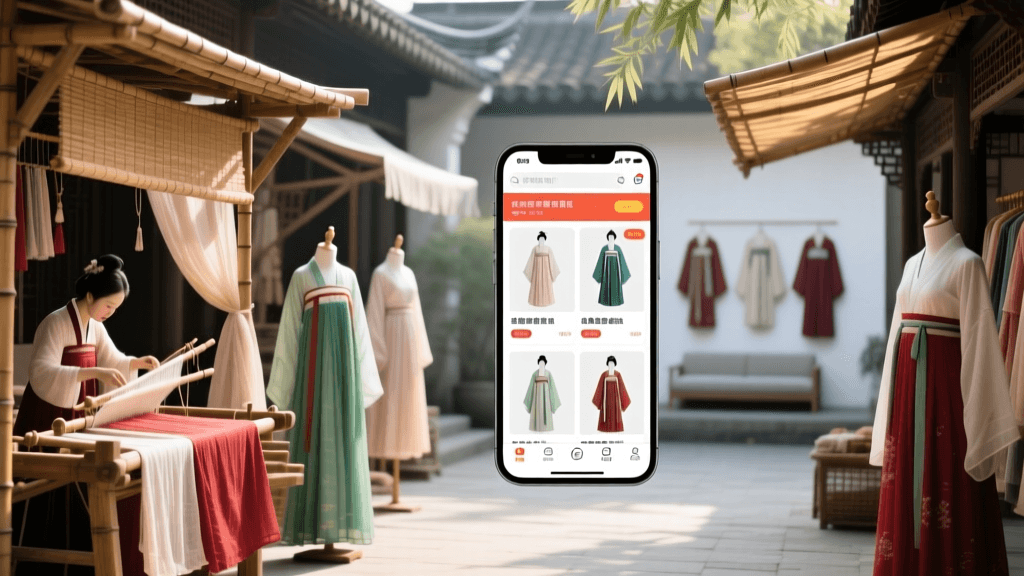
The acquisition of traditional Chinese clothing has undergone a radical transformation over the centuries. What was once a localized, labor-intensive process of visiting silk markets and commissioning bespoke tailors has evolved into a multi-billion-dollar digital industry. Today, the Hanfu market is a booming e-commerce ecosystem that connects historical artisans with a global audience. Understanding this evolution is not just a lesson in economic history; it is essential for modern enthusiasts looking to navigate the complexities of buying authentic traditional garments online.
The Historical Roots: Silk Markets and Bespoke Tailoring
For centuries, obtaining high-quality traditional Chinese garments was an inherently local and tactile experience. During the Tang and Song dynasties, bustling marketplaces in cities like Chang'an and Hangzhou served as the epicenters of textile commerce. The acquisition of fine textiles was deeply tied to the Silk Road, where merchants traded raw silk, intricate brocades, and dyes across vast distances. Consumers did not buy ready-to-wear clothing off a rack. Instead, they purchased raw fabric by the bolt and took it to local tailors or relied on family members to cut, sew, and embroider the garments at home.
This bespoke nature meant that clothing was highly personalized but also expensive and time-consuming to produce. A single high-quality silk robe could take months to weave and sew. The measurement process was intimate and required a skilled tailor who understood the drape of the fabric, the structural layering of undergarments, and the strict sumptuary laws that dictated which colors and motifs were permitted for different social classes.
The Digital Renaissance: From Niche Forums to E-Commerce Giants
The modern revival of traditional dress, widely documented as the Hanfu Movement, began in the early 2000s. Initially, early adopters relied on niche internet forums like Hanwang to share historical research, debate the accuracy of tomb murals, and organize small-scale, community-led group buys. These early transactions were fraught with logistical challenges, relying on direct bank transfers and informal tailoring networks.
The true commercial explosion occurred when these grassroots efforts migrated to massive digital marketplaces like Taobao. Taobao revolutionized the Hanfu industry by providing a centralized platform where independent designers, historical researchers, and manufacturing workshops could converge. Storefronts could now showcase high-resolution photos, detailed historical citations, and customer reviews. This digital shift transformed Hanfu from a niche hobby into a mainstream fashion subculture, creating an industry valued at billions of yuan and supporting thousands of specialized e-commerce boutiques.
Actionable Guide: Navigating Modern Hanfu E-Commerce
Buying Hanfu online today requires a specific set of skills, particularly for international buyers or those new to the community. The terminology, sizing conventions, and sales models differ vastly from Western fast-fashion e-commerce. Here is a practical guide to securing authentic, high-quality garments.
1. Mastering the Measurements
Unlike Western clothing that relies on standardized S/M/L sizing or body-conforming cuts, traditional Chinese garments are structured around flat-pattern cutting and generous draping. When shopping online, you must ignore your usual size and focus on precise centimeter measurements.
- Pingpu (Flat Lay) vs. Body Measurements: Most Taobao sellers list the 'pingpu' measurements of the garment laid flat. To find your fit, measure your body and add 10-15 cm for the bust and waist to allow for the traditional overlapping cross-collar (jiaoling) and comfortable movement.
- Skirt Length (Qun Chang): For popular styles like the Mamianqun (horse-face skirt), measure from your natural waist down to your ankle bone. Most sellers offer standard lengths (e.g., 100cm, 105cm, 110cm). The skirt should graze the top of your foot without dragging on the floor.
- Sleeve Length (Xiu Chang): Traditional sleeves range from narrow to floor-sweeping. Measure from the center back of your neck, across your shoulder, and down to your wrist or fingertips, depending on the historical era you are emulating.
2. Decoding Fabrics and Price Tiers
The price of a Hanfu set is directly tied to its material and weaving technique. Understanding these tiers prevents overpaying for synthetic fabrics masquerading as traditional textiles.
- Budget Tier ($20 - $45 USD): Typically made from polyester chiffon, jacquard, or cotton-poly blends. These are excellent for beginners, casual wear, and hot weather, but they lack the historical drape and breathability of natural fibers.
- Mid-Range Tier ($50 - $120 USD): Features natural fibers like linen, ramie, and cotton, or high-quality synthetic silks (like copper ammonia). This tier often includes accurate historical patterns and better structural interfacing in collars and cuffs.
- Premium and Restoration Tier ($150 - $500+ USD): Utilizes genuine mulberry silk, traditional Luo (gauze) weaves, and Zhuanghua (brocade). These garments are often produced in limited runs by heritage workshops and are meant for formal occasions, collectors, and strict historical reenactors.
3. Understanding the Pre-Order (Yu Shou) System
One of the most confusing aspects of Hanfu e-commerce for newcomers is the prevalence of the pre-order system, known as 'Yu Shou'. Because high-quality Hanfu requires specialized weaving and meticulous embroidery, boutiques rarely hold large inventories. Instead, they release digital renderings or prototype photos and open a pre-order window for 7 to 15 days. Production and shipping can then take anywhere from 30 to 90 days. If you need a garment for a specific festival or event, you must look for listings marked 'Xianhuo' (in-stock) or plan your purchases several months in advance.
Comparative Analysis: Purchasing Channels Through Time
The table below illustrates how the methods of acquiring traditional Chinese garments have shifted from historical marketplaces to modern digital ecosystems.
| Era / Channel | Primary Method | Pros | Cons | Average Cost (Adjusted) |
|---|---|---|---|---|
| Ancient / Imperial | Local Silk Markets & Bespoke Tailors | Custom fit, high-quality local materials, direct artisan relationship. | Extremely time-consuming, restricted by sumptuary laws, geographically limited. | High (Months of labor) |
| Early 2000s (Forums) | Community Group Buys (Hanwang) | Passionate community, rigorous historical debate, low profit margins. | High risk of scams, poor quality control, long wait times, no buyer protection. | $30 - $80 USD |
| 2010s - Present (Taobao) | Specialized E-Commerce Boutiques | Massive variety, buyer protection, detailed reviews, historical accuracy tiers. | Overwhelming choices, language barrier for international buyers, complex sizing. | $40 - $300+ USD |
| Modern Global (Agents) | Shopping Agents (Superbuy, CSSBuy) | Access to domestic Chinese market, consolidated shipping, quality check photos. | High shipping costs, agent service fees, complex return processes. | Item Cost + 20% Fees |
Global Access: Buying Hanfu Outside of China
For international enthusiasts, accessing the deepest and most authentic tiers of the Hanfu market requires navigating cross-border e-commerce. While platforms like AliExpress offer direct shipping, they mostly cater to the budget tier and often feature inaccurate, costume-like designs rather than historically grounded garments.
To access premium Taobao boutiques, international buyers typically use shopping agents such as Superbuy, CSSBuy, or Sugargoo. The process is highly actionable:
- Find the Product: Copy the Taobao product URL from a boutique's listing.
- Paste into Agent: Paste the URL into the agent's search bar. The agent will translate the page and allow you to select specific sizes and colors.
- Warehouse QC: Once the item arrives at the agent's domestic Chinese warehouse, they will take Quality Control (QC) photos. You can verify the fabric weave, embroidery density, and measurements before committing to international shipping.
- Consolidated Shipping: You can buy multiple items from different boutiques, have them stored in the warehouse, and ship them together in one parcel via DHL, EMS, or specialized e-commerce air lines to save on international freight costs.
Conclusion
The evolution of Hanfu shopping from the tactile, localized silk markets of antiquity to the hyper-connected, algorithm-driven storefronts of modern e-commerce is a testament to the enduring appeal of traditional Chinese culture. While the medium of exchange has shifted from silver taels and physical fabric bolts to digital wallets and pre-order algorithms, the core desire remains the same: to wear garments that reflect a deep, artistic, and historical heritage. By understanding the mechanics of modern Hanfu e-commerce—from mastering flat-lay measurements to navigating the pre-order system—enthusiasts worldwide can confidently curate wardrobes that honor the past while embracing the digital future.