Inclusive Kimono Styling: A Guide for Every Body and Gender
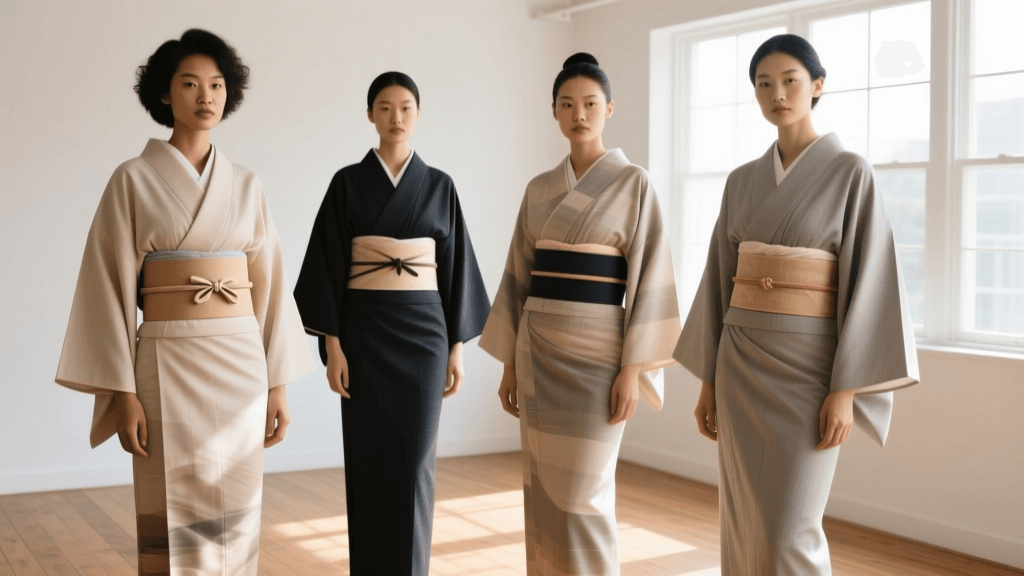
The traditional Japanese kimono is often perceived through a rigid lens of strict proportions, historical binaries, and exacting standards of beauty. However, the foundational truth of the kimono is its remarkable versatility. Unlike Western tailored garments that are cut to fit a specific three-dimensional silhouette, the kimono is a two-dimensional, wrap-style garment. This means the fabric adapts to the wearer, not the other way around. Today, the global appreciation for traditional Japanese clothing has sparked a much-needed evolution in kitsuke (the art of dressing), making the kimono accessible, comfortable, and deeply expressive for diverse body types and gender identities.
The Core Measurements: Yuki, Mitake, and Kurikoshi
Before diving into styling adjustments, it is essential to understand how kimonos are measured. According to cultural guides from Japan Experience, kimono sizing relies on a few critical dimensions rather than standard S, M, L sizing:
- Yuki (Arm Length): Measured from the center of the back of the neck, across the shoulder, and down to the wrist. This determines the sleeve length.
- Mitake (Back Length): The total length of the garment from the base of the neck to the hem.
- Kurikoshi (Back Tuck): A structural fold sewn into the back of the garment that allows the hemline to be adjusted and the collar to lay flat against the neck.
Understanding these three measurements is the key to manipulating the garment for any body type.
Dressing Diverse Body Types
Petite Frames
For individuals under 5'2" (157 cm), a standard vintage kimono will often be too long, causing the hem to drag and the waist fold to become bulky. The traditional solution is the ohashori, a horizontal fold of fabric tucked under the obi at the waist. While a standard ohashori is about 2-3 inches, petite wearers may need to fold up to 6-8 inches of excess fabric. To prevent a bulky silhouette, modern kitsuke stylists recommend using a corin belt or a specialized elastic clip to secure the deep fold flat against the body before tying the obi. Additionally, wearing the kimono slightly higher on the waist creates the illusion of a longer lower body.
Plus-Size and Curvy Figures
The kimono is designed to create a cylindrical silhouette (hitoe-gata), which can be challenging for those with pronounced busts, waists, or hips. The secret to a comfortable, flattering fit lies in strategic padding and wrapping. Wrapping a lightweight cotton towel around the waist and hips smooths the transition between the torso and the lower body, preventing the obi from digging in or slipping down. Furthermore, when wrapping the front panels, the left side should be pulled further around the back to ensure adequate overlap and prevent the hem from splitting open when walking. For plus-size individuals seeking custom garments, expect to pay between $400 and $800 for a tailored silk kimono, though inclusive rental shops in Kyoto, such as Yumeyakata, offer sizes up to 4L (accommodating busts up to 45 inches and waists up to 40 inches) for around $40 to $60 per day.
Tall and Broad-Shouldered Silhouettes
Most vintage kimonos were made for women averaging 4'10" to 5'2". For wearers over 5'7" (170 cm), the hemline and the yuki (sleeve length) often fall short. The traditional rule dictates that the hem should touch the ankle bone, and the sleeve should reach the wrist. However, modern inclusive styling embraces the high-water hemline. By letting out the kurikoshi (the back tuck) entirely and tying the obi slightly higher, tall wearers can comfortably expose the ankle, pairing the kimono with modern footwear like lace-up boots or platform sandals. For broad shoulders, choosing a kimono with a smaller, more delicate collar width helps balance the upper body proportions without pulling the back of the neck too tightly.
Gender-Fluid and Non-Binary Kimono Styling
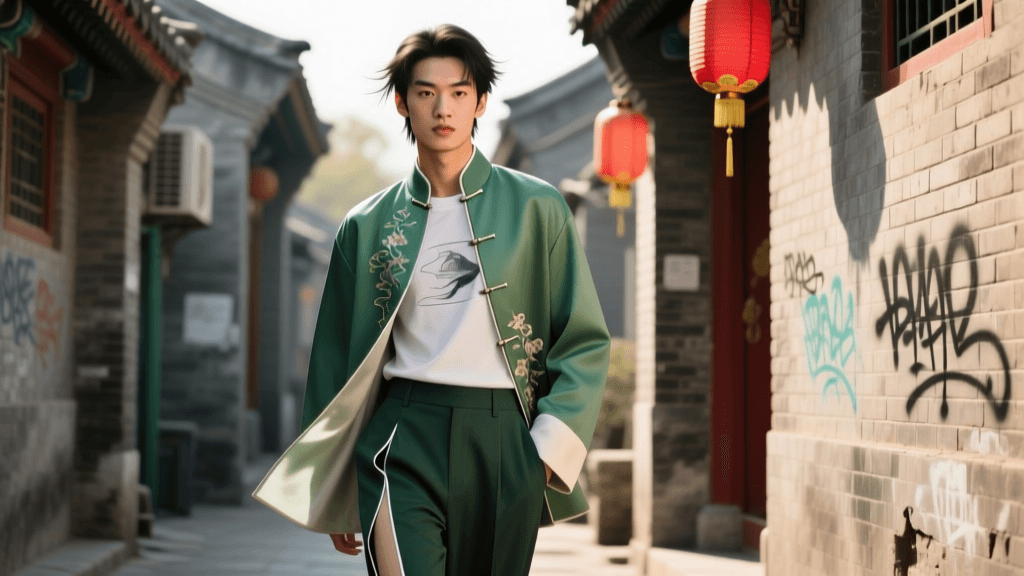
Historically, during the Edo period, the base garment (the kosode) was largely unisex, with gender expressed through color, motif, and obi tying styles. Today, the rigid binary of men's and women's kimonos is being actively deconstructed by the Genderless Kei movement in Tokyo. As noted by TimeOut Tokyo, this fashion subculture deliberately blurs traditional gender lines, and this philosophy has naturally extended into traditional wear.
Deconstructing the Binary in Kitsuke
Traditional women's kitsuke requires an ohashori (waist fold), vibrant patterns, and a wide, elaborate obi. Traditional men's kitsuke features a straight drop (no waist fold), muted geometric or solid colors, and a narrow, stiff kaku obi. Gender-fluid styling beautifully mixes these elements:
- The Base: A non-binary wearer might choose a men's solid-colored kimono for its straight, structural drop, but pair it with a women's vibrant, silk haori (jacket) draped loosely over the shoulders.
- The Obi: Instead of the highly gendered wide fukuro obi or the rigid men's kaku obi, many gender-nonconforming wearers opt for the hanhaba obi (half-width obi). It is softer, easier to tie into asymmetric, avant-garde knots, and sits comfortably on any body type.
- Hakama Pairings: The hakama (pleated trousers) is traditionally worn by men or women during graduation ceremonies. Today, it is a staple of gender-neutral street style, worn high on the natural waist over a simple, modern kimono base.
Comparison Chart: Traditional vs. Inclusive Kitsuke
| Element | Traditional Rule | Inclusive Approach | Best For |
|---|---|---|---|
| Obi Width | Fukuro Obi (wide, stiff) | Hanhaba Obi (half-width, soft) | Plus-size, beginners, gender-neutral |
| Hemline | Touching the ankle bone | Mid-calf or high-ankle | Tall frames, modern street style |
| Waist Fold | Ohashori (mandatory for women) | Hidden ohashori or straight drop | Petite, non-binary, masculine styling |
| Undergarments | Susoyoke and Nagajuban (silk/cotton) | Cycle shorts, camisoles, sports bras | Curvy figures, hot weather comfort |
Sourcing, Rentals, and Costs for Inclusive Kimonos
Finding a kimono that fits outside the standard Japanese sizing can be challenging, but the market is rapidly adapting. For tourists visiting Japan, rental shops in Kyoto and Asakusa are the most accessible entry points. Standard rentals cost between $30 and $50 USD, but plus-size or tall-specific rentals may carry a small surcharge of $10 to $20. Shops like Yumeyakata in Kyoto are pioneers in this space, offering extensive size charts and staff trained in inclusive body-padding techniques.
For those looking to purchase, the secondary vintage market is a goldmine, though it requires patience to find longer mitake measurements. Modern, custom-tailored kimono brands based in Tokyo and online are also offering gender-neutral collections, utilizing washable polyester blends and denim that cater to active, modern lifestyles. These custom pieces generally range from $250 to $600 USD.
The kimono is not a rigid mold you must fit into; it is a canvas that wraps around the unique architecture of your body. True elegance in kitsuke comes from confidence, not conformity.
— Modern Kitsuke Philosophy
Conclusion
The beauty of the kimono lies in its ability to transcend time, geography, and physical boundaries. Whether you are adjusting the hemline for a taller frame, utilizing strategic padding for a curvier silhouette, or blending masculine and feminine elements to express a non-binary identity, the kimono accommodates all. By understanding the core mechanics of yuki, mitake, and kurikoshi, anyone can master the art of inclusive kitsuke, ensuring that this magnificent Asian tradition continues to evolve and thrive in the modern world.