Japanese Festival Costumes: Yukata And Happi For Matsuri
The Heartbeat of Matsuri: Understanding Festival Attire
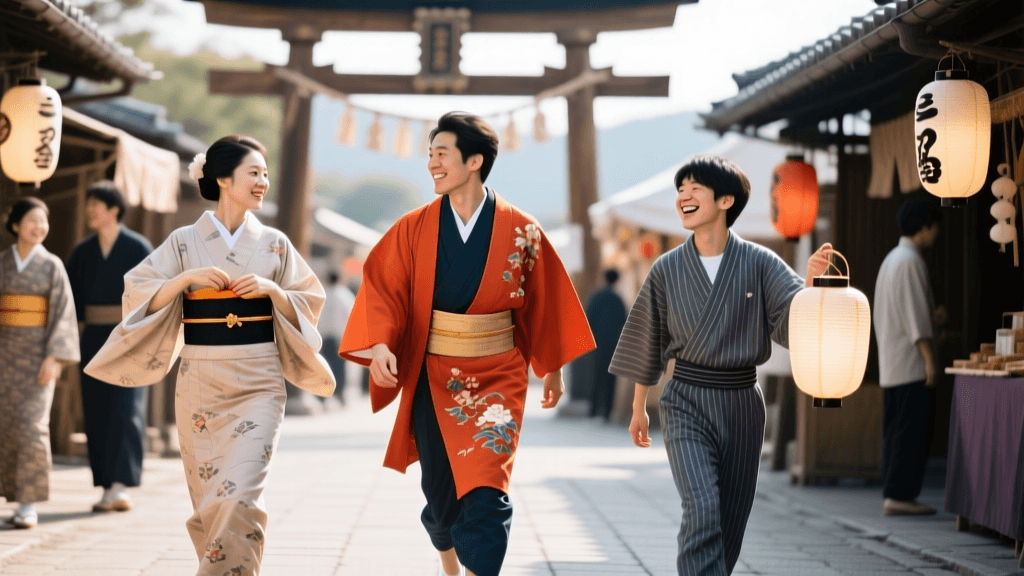
When summer arrives in Japan, the humid evenings come alive with the sounds of taiko drums, shamisen melodies, and the chanting of locals participating in Matsuri (traditional festivals). At the core of these vibrant celebrations is the festival attire. Unlike the highly formal, multi-layered silk kimono reserved for tea ceremonies or coming-of-age ceremonies, festival costumes prioritize breathability, mobility, and communal identity. Whether you are dancing in a Bon Odori circle, carrying a massive Mikoshi (portable shrine), or simply navigating the crowded yatai (food stalls), understanding the functional design of Japanese festival wear is essential for any performer or cultural enthusiast.
The evolution of these garments is deeply tied to Japan's textile history. As noted by the Metropolitan Museum of Art's Heilbrunn Timeline of Art History, the widespread cultivation of cotton during the Edo period (1615–1868) allowed commoners to adopt lightweight, washable garments, directly giving rise to the modern yukata and the worker's happi coat. Today, these garments remain the undisputed uniform of the Japanese summer festival.
Yukata vs. Happi vs. Jinbei: Choosing Your Festival Costume
Selecting the right garment depends entirely on your role in the festival. Are you a dancer in the Bon Odori circle? Are you a shrine parishioner (ujiko) carrying the Mikoshi? Or are you an attendee enjoying the evening? According to the Japan National Tourism Organization (JNTO), festivals like Kyoto's Gion Matsuri feature specific dress codes for participants based on their neighborhood guilds and duties.
| Garment | Material & Design | Best Used For | Mobility | Avg. Cost (USD) |
|---|---|---|---|---|
| Yukata | Unlined cotton or hemp. Full-length robe with wide sleeves. | Bon Odori dancing, evening strolls, fireworks viewing. | Moderate (requires hem management) | $30 - $80 |
| Happi Coat | Short, open-front cotton coat. Often dyed with kanji and a back crest (mon). | Mikoshi carrying, taiko drumming, guild performances. | High (allows full leg and arm movement) | $25 - $60 |
| Jinbei | Two-piece set (short-sleeve top and shorts). Woven cotton with slub texture. | Casual festival attendance, children's wear, extreme heat. | Very High (no fabric dragging) | $20 - $50 |
Practical Guide: Sizing, Measurements, and Fitting
Unlike Western clothing, traditional Japanese garments are not sized by chest or waist measurements. Instead, they rely on vertical and horizontal spans. If you are purchasing a yukata for a Bon Odori performance, improper sizing can lead to tripping hazards during synchronized dances.
Key Measurements
- Mitake (Back Length): Measured from the base of the neck to the desired hemline. For festival dancing, the hem should hit exactly at the ankle bone. This allows for the o-hashori (the waist fold) to be tied securely without the fabric dragging on the ground.
- Yuki (Sleeve Span): Measured from the center back of the neck, across the shoulder, and down to the wrist. A standard women's yukata has a yuki of about 64-68 cm. For active performances, ensure the sleeves do not extend past the fingertips, or they will interfere with holding fans or clappers.
- Haba (Width): The width of the fabric panels. Standard panels are about 38 cm wide. Larger individuals may require custom hiroi-haba (wide-panel) yukatas to ensure the front lapels overlap sufficiently at the waist.
Footwear and Accessories for Active Performances
The costume is incomplete without the correct footwear, which dramatically alters your performance capabilities.
Geta and Zori
Yukata are traditionally paired with geta (wooden clogs) or zori (flat sandals). For dancers, lightweight paulownia wood (kiri) geta are preferred. However, if you are performing a tap-dance style folk dance like Kokiriko-bushi, you will need tetsu-iri (iron-reinforced) geta to withstand the percussive striking against the pavement.
Jika-tabi and Hachimaki
If you are wearing a happi coat to carry a Mikoshi, geta are strictly forbidden due to the crushing weight of the shrine (which can exceed 1,000 kg). Participants must wear jika-tabi—split-toe rubber-soled boots that provide arch support and grip on asphalt. This is paired with a hachimaki (headband) to absorb sweat and a towel wrapped around the neck for protection against the heavy wooden beams of the shrine.
Sourcing and Costs: Where to Buy Authentic Festival Wear
Timing is everything when sourcing festival wear. The Japanese retail market shifts to summer inventory in late April. To get the best selection of authentic, high-quality cotton weaves like kori-chijimi (a crepe cotton that doesn't cling to sweaty skin), shop between May and mid-June.
- Budget/Entry-Level: Stores like UNIQLO and Ion Mall offer pre-tied yukata sets (including the obi and geta) for around 3,000 to 5,000 JPY ($20–$35 USD). These are made of polyester-cotton blends, which are easy to wash but less breathable.
- Mid-Range/Performance: Specialized kimono shops in Tokyo's Asakusa district or Kyoto's Shijo-dori offer 100% cotton yukatas and traditional happi coats for 8,000 to 15,000 JPY ($55–$100 USD).
- Custom/Guild: Authentic happi coats for specific Matsuri guilds are not sold to the general public. They are commissioned from traditional dye houses using chusen (resist-dyeing) techniques, costing upwards of 25,000 JPY ($170 USD) per coat.
Performance Dynamics: Dancing in Festival Garments
Dancing in a yukata requires specific adjustments to the obi (sash) and undergarments. The Agency for Cultural Affairs, Japan, frequently highlights the importance of preserving these intangible cultural practices, which include the physical mechanics of wearing the garments during folk arts.
The Obi Knot for Mobility
For formal events, women wear a stiff, drum-shaped taiko musubi obi knot. However, for Bon Odori dancing, this bulky knot will collide with other dancers in tight circles. Performers must use a heko obi (a soft, sash-like fabric) or tie a flat, secure bunko musubi (bow knot) using a hanhaba obi (half-width sash). This keeps the center of gravity low and prevents the knot from unraveling during vigorous arm movements.
Undergarments (Shitagi)
Because yukata cotton can become translucent when wet from sweat or summer rain, proper undergarments are mandatory. Women should wear a koshimaki (a thin cotton half-slip) or a modern cupra slip. Men should wear suteteko (lightweight, breathable long johns) to prevent the yukata from clinging to the legs during wide dance stances.
The Festival Performer's Checklist
Before stepping into the festival grounds or onto the performance stage, ensure you have the following items prepared:
- Main Garment: Yukata, Happi, or Jinbei (pressed and free of wrinkles).
- Undergarments: Koshimaki/Suteteko, and a supportive sports bra or hadajuban.
- Sashes: Hanhaba obi or Heko obi, plus an obi-jime (decorative cord) if required.
- Footwear: Geta with spare hanao (thongs) in case they snap, or clean Jika-tabi.
- Accessories: Uchiwa (round paper fan), kinchaku (drawstring bag for valuables), and a tenugui (multi-purpose cotton hand towel).
- Emergency Kit: Safety pins, a spare hair stick (kanzashi), and blister plasters for new geta.
By respecting the functional design and historical context of these garments, performers not only ensure their own safety and comfort but also contribute to the living, breathing tapestry of Japan's summer traditions.