The Hanfu E-Commerce Boom: Sourcing Authentic Chinese Garments
The Evolution of Chinese Garment Commerce
The acquisition of traditional Chinese clothing has undergone a radical transformation over the last two decades. Historically, sourcing high-quality Hanfu and traditional silk garments required physical presence in specialized textile hubs. Cities like Hangzhou and Suzhou were the undisputed epicenters of the silk trade, where buyers would navigate sprawling, labyrinthine wholesale markets to inspect brocades, damasks, and linens in person. The tactile experience of feeling the weight of a Mamianqun (horse-face skirt) or inspecting the weave of a Ruqun (blouse and skirt ensemble) was once a mandatory part of the purchasing process.
Today, the landscape has shifted dramatically. The Hanfu movement, which began as a niche cultural revival in the early 2000s, has exploded into a multi-billion-dollar e-commerce industry. According to industry analyses, the Hanfu market in China has seen exponential year-over-year growth, driven largely by Gen Z consumers and digital storefronts on platforms like Taobao and Tmall. This digital shift has democratized access to traditional garments, allowing global enthusiasts to source museum-quality replicas and daily-wear Hanfu without ever stepping foot in a Chinese silk market.
From Silk Street to Digital Storefronts
The transition from brick-and-mortar markets to e-commerce was catalyzed by advancements in digital textile photography, detailed sizing algorithms, and the rise of specialized shopping agents. In the past, international buyers relied on scattered export shops or expensive bespoke tailors. Now, heritage brands and independent artisans operate sophisticated digital storefronts that offer exhaustive details on fabric composition, historical accuracy, and garment construction.
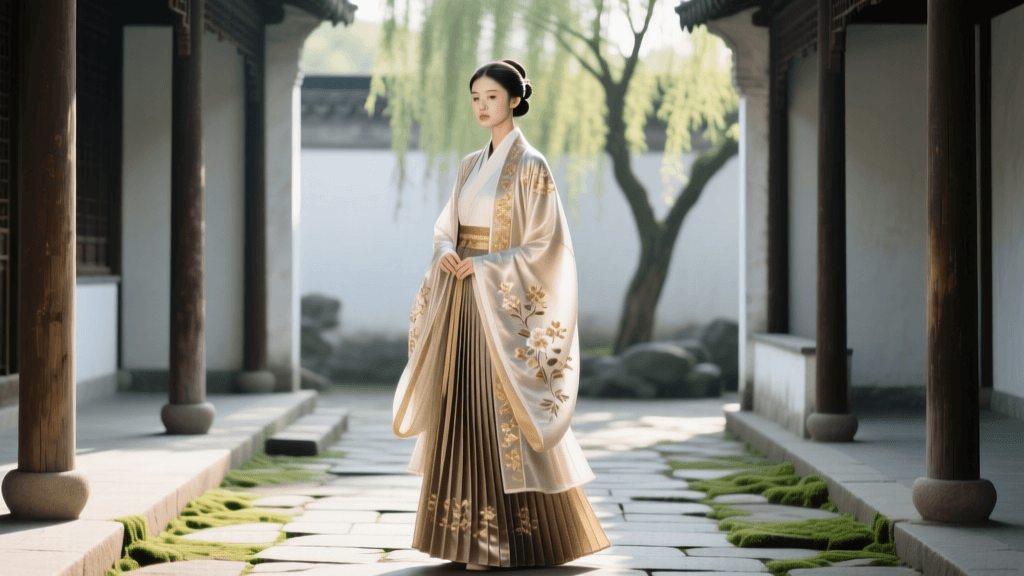
As noted by the Metropolitan Museum of Art, the Ming dynasty (1368–1644) established many of the sartorial silhouettes that define modern Hanfu revivals, particularly the use of pleated skirts and structured jackets. Modern e-commerce brands leverage this historical data, often collaborating with historians to recreate authentic patterns. However, the sheer volume of online sellers means buyers must navigate a complex ecosystem ranging from high-end heritage artisans to fast-fashion manufacturers producing historically inaccurate 'costume' wear.
Navigating the Modern Hanfu E-Commerce Landscape
When shopping for Hanfu online, understanding the market tiers is crucial for balancing budget, historical accuracy, and fabric quality. The e-commerce ecosystem is generally divided into three distinct categories:
- Budget / Fast Fashion: Mass-produced garments using synthetic blends. Best for casual wear, photography props, or beginners testing their style.
- Mid-Tier / Daily Wear: Reliable brands using cotton, linen, and basic jacquard weaves. These offer a balance of historical silhouette and modern comfort.
- High-End / Heritage Artisans: Small-batch or made-to-order pieces utilizing authentic silk brocade, intangible heritage weaving techniques, and meticulous historical patterning.
Brand Tier Comparison and Sourcing Guide
| Brand Tier | Notable Examples | Price Range (USD) | Best Use Case | Production Lead Time |
|---|---|---|---|---|
| Budget | Shisanyu, Qiankuo | $30 - $80 | Festivals, beginners, daily casual | 3 - 7 Days (In Stock) |
| Mid-Tier | Zhongzheng, Tingyue | $90 - $200 | Cultural events, premium daily wear | 15 - 30 Days (Pre-order) |
| High-End | Minghuatang, Jingling | $250 - $800+ | Collectors, formal rites, museum-grade | 3 - 6 Months (Made-to-order) |
Practical Guide to Buying Hanfu Online
Purchasing traditional Chinese garments online requires a different approach than buying modern Western clothing. Follow these actionable steps to ensure a proper fit and smooth transaction.
1. Master the Measurements
Hanfu sizing rarely uses standard S/M/L designations. Instead, brands rely on precise centimeter measurements. You will need a soft measuring tape to record:
- Chest/Bust: Measure around the fullest part. For cross-collar Ruqun, add 5-10cm to your actual measurement to allow for the overlapping fabric.
- Waist: Measure at your natural waistline (usually above the navel), as traditional skirts sit higher than modern low-rise trousers.
- Skirt Length: This is critical for a Mamianqun. Measure from your natural waist down to your ankle bone. For example, a person who is 160cm tall typically requires a skirt length of 100cm to 105cm to avoid tripping while maintaining the elegant drape.
2. Timing Your Purchases
E-commerce in China revolves around massive shopping festivals. To secure the best prices on mid-tier and budget Hanfu, time your purchases around these key dates:
- 618 Festival (June 18): Originally a JD.com anniversary sale, now a platform-wide event offering 15% to 30% discounts and bundled gift sets.
- Double 11 (November 11): Singles' Day is the largest e-commerce event globally. High-end brands often release exclusive pre-order batches with significant deposit discounts.
- Spring Festival (January/February): The best time to purchase winter-weight Hanfu, such as velvet-lined Aoqun (jacket and skirt sets) and faux-fur trimmed cloaks (Doupeng).
3. Utilizing Shopping Agents for International Shipping
Most authentic Hanfu Taobao stores do not ship directly overseas. International buyers must use a shopping agent (e.g., Superbuy, Sugargoo, or CSSBuy). The process involves:
- Pasting the Taobao product link into the agent's search bar.
- Purchasing the item through the agent, who receives it at their domestic Chinese warehouse.
- Requesting Quality Check (QC) photos. Actionable tip: Always ask the agent to photograph the inner seams and the pleat setting of skirts to ensure structural integrity before international shipping.
- Selecting an international shipping line. Expect to pay roughly $18-$25 USD for the first 500g via standard e-packet or specialized Asian lines, with delivery taking 12-20 days.
Verifying Authenticity in the Digital Age
As the market has grown, so has the proliferation of 'Hanfu elements'—garments that borrow traditional aesthetics but incorporate modern zippers, elastic waistbands, and historically inaccurate cuts. For purists and cultural enthusiasts, verifying authenticity is paramount.
When evaluating a digital storefront, look for the term Zhengtong Hanfu (Orthodox Hanfu). Authentic sellers will provide a 'pattern breakdown' in their product descriptions, citing historical artifacts or tomb murals as their reference points. The Victoria and Albert Museum's Asian collections serve as an excellent digital benchmark for comparing the drape, collar structures, and sleeve shapes of historical garments against modern e-commerce offerings.
Furthermore, scrutinize the fabric descriptions. While modern polyester jacquards are common in budget wear, authentic high-end pieces will specify the use of mulberry silk, real metallic thread weaving (Zhijin), or traditional plant-dyed linens. As detailed in historical textile records documented by Encyclopædia Britannica, the production of genuine silk involves complex sericulture processes that inherently dictate a higher price point; if a '100% silk brocade' Mamianqun is listed for $40, it is almost certainly a synthetic blend.
Pro-Tip for Collectors: When buying from high-end heritage brands on Taobao, join their official fan groups or WeChat communities. These brands often release limited-edition fabrics in 'drops' that sell out in seconds. Being in the community ensures you get the pre-order link before it hits the public storefront.
Conclusion
The journey of the Chinese garment market from the bustling, fragrant silk alleys of Suzhou to the hyper-optimized digital storefronts of today is a testament to the enduring appeal of traditional culture. E-commerce has not erased the heritage of Hanfu; rather, it has provided the infrastructure for its global renaissance. By understanding brand tiers, mastering traditional measurements, and leveraging international shopping agents, anyone can curate a historically respectful and beautifully crafted wardrobe. Whether you are sourcing a daily-wear linen Ruqun or investing in a museum-grade silk Mamianqun, the digital silk road is open for business.