Silk Road Hanfu: Central Asian Influences on Tang Dynasty Fashion
The Silk Road and the Cosmopolitan Tang Dynasty
The Tang Dynasty (618–907 CE) is widely considered the golden age of Chinese arts, culture, and cosmopolitan exchange. At the heart of this flourishing era was the Silk Road, a vast network of trade routes that connected the Chinese capital of Chang'an (modern-day Xi'an) to Central Asia, the Middle East, and Europe. This unprecedented mobility of goods, ideas, and people profoundly impacted traditional Chinese clothing, giving birth to unique Hanfu silhouettes that blended indigenous aesthetics with foreign practicality. According to the UNESCO Silk Roads Programme, these routes were not merely conduits for commerce but vibrant corridors of cultural synthesis. The sartorial legacy of this era remains a cornerstone of the modern Hanfu revival movement, offering enthusiasts a fascinating glimpse into a time when Chinese fashion was inherently global.
Key Garments Born from Cross-Cultural Exchange
The Yuanlingpao (Round-Collar Robe)
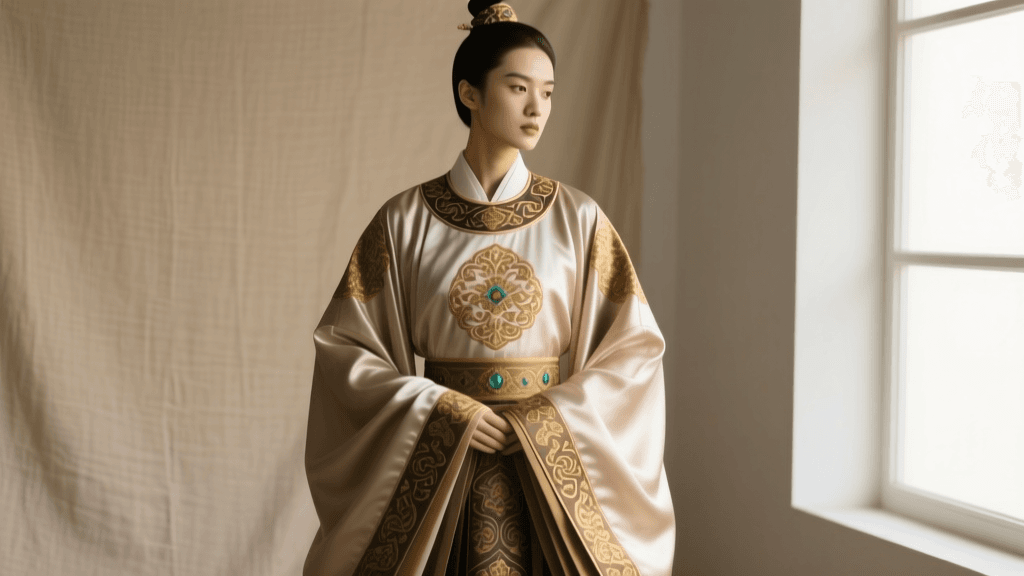
The most iconic garment to emerge from this cross-cultural exchange is the Yuanlingpao, or round-collar robe. Prior to the Tang Dynasty, traditional Han Chinese clothing predominantly featured cross-collars (jiaoling) that tied on the right. However, the influx of Sogdian, Turkic, and Persian merchants and diplomats introduced round-collared, button-fastened tunics designed for horseback riding and harsh steppe climates. The Tang court adopted and adapted this silhouette, transforming it into the official uniform for scholars and officials. Unlike its Central Asian counterparts, which were often tailored close to the body and made of wool or leather, the Tang Yuanlingpao was crafted from flowing, luxurious silks. The robe featured a round neckline, side slits for mobility, and was often worn with a distinctive leather belt. Today, the Yuanlingpao is a staple in the Hanfu community, prized for its gender-neutral appeal and historical grandeur.
The Banbi and Foreign Motifs
Another significant cross-cultural addition was the Banbi, or 'half-sleeve' jacket. Originally a practical garment worn by laborers and soldiers to allow freedom of movement, it was elevated to high fashion during the Tang era, often worn over long-sleeved inner robes by aristocratic women. Furthermore, the integration of foreign elements extended to layering techniques. Women of the Tang court would often layer a sheer, wide-sleeved silk dahu or banbi over their primary garments, creating a mesmerizing play of textures and colors that mimicked the layered rugs and tapestries found in Central Asian yurts and Persian palaces. This layering not only provided warmth during the cooler months in northern China but also allowed the wearer to display multiple expensive textiles simultaneously, a clear indicator of immense wealth and access to the lucrative Silk Road trade networks.
The textiles themselves also told a story of global trade. The Metropolitan Museum of Art's Heilbrunn Timeline of Art History notes that Chinese weavers began incorporating Sasanian Persian motifs, such as the lian-zhu (pearl roundels) enclosing facing animals, into their silk brocades. These exotic patterns were highly sought after by the Tang elite, who used them to signal worldly sophistication and wealth.
Textile Trade: What Traveled Along the Routes
The exchange of materials and motifs fundamentally altered the Chinese textile industry. Below is a comparison of how foreign elements were adapted into the Tang wardrobe and how they manifest in today's Hanfu market.
| Textile / Motif | Origin | Adaptation in Tang China | Modern Hanfu Equivalent |
|---|---|---|---|
| Lianzhu (Pearl Roundel) | Sasanian Persia | Woven into silk brocades for royal robes | Jacquard woven Yuanlingpao fabrics |
| Banbi (Half-Sleeve) | Central Asian Steppe | Layered over long-sleeved inner robes by nobility | Summer linen or silk half-jackets |
| Diejie Belt | Nomadic Equestrian | Decorative leather belts with metal plaques | Leather Hanfu accessories with brass rings |
| Kumo (Brocade) | Persian / Sogdian | Heavy, patterned silks for winter court wear | Winter damask and brocade outer robes |
Practical Guide: Sourcing and Styling Tang-Style Hanfu Today
For modern enthusiasts looking to incorporate Tang Dynasty and Silk Road-inspired Hanfu into their wardrobe, navigating the market requires an understanding of historical accuracy, fabric choices, and pricing. The modern Hanfu market is vast, but garments specifically inspired by the cosmopolitan Tang era require specialized weaving techniques, particularly for brocade and damask.
- Cost Expectations: Entry-level, mass-produced Yuanlingpao robes made from polyester blends typically range from $40 to $80 USD. However, for historically accurate reproductions featuring real silk, linen, or intricate jacquard weaves with traditional pearl roundel motifs, expect to invest between $150 and $400 USD. Custom-tailored pieces from renowned historical reproduction brands can exceed $600.
- Timing Your Purchase: The Hanfu industry operates heavily on pre-orders. If you are planning to wear a Tang-style robe for major cultural events like the Hua Zhao Jie (Flower Festival) in spring or the Mid-Autumn Festival, you must place your orders 2 to 3 months in advance. Artisan workshops producing authentic jacquard silks have strict production queues and limited fabric runs.
Measurements and Fit
Tang Dynasty clothing is renowned for its relaxed, voluminous drape, but achieving the correct historical silhouette requires precise measurements. Unlike modern Western tailoring, which emphasizes the natural waist and bust, Tang robes are cut with generous ease.
- Chest and Shoulder: When ordering a Yuanlingpao, your garment's chest circumference should be at least 15 to 20 cm (6 to 8 inches) larger than your actual body measurement. This ensures the robe drapes elegantly over the inner layers without pulling at the round collar.
- Sleeve Length: Tang sleeves can vary from narrow (influenced by nomadic riding gear) to immensely wide (the traditional Han aesthetic). For the classic wide sleeve, measure from the nape of your neck, over the shoulder, down to your wrist, and add 10 to 15 cm for the historical drape that pools slightly at the hands.
- Length: The robe should graze the top of your footwear. Measure from the base of your neck (the C7 vertebra) down to your ankle bone. Standard off-the-rack lengths are usually 125 cm to 135 cm, but custom sizing is highly recommended for the Yuanlingpao to maintain the correct proportion of the side slits.
Styling, Accessories, and Fabric Care
To complete the Silk Road aesthetic, styling is just as crucial as the garment itself. The Tang Dynasty saw the widespread adoption of the diejie belt, a functional leather belt with metal plaques and hanging rings originally used by nomadic horsemen to carry weapons and tools. In the Tang court, these rings became purely decorative, holding items like embroidered pouches, jade pendants, and folding fans. Pair your Yuanlingpao with a sturdy leather diejie belt and leather riding boots—a direct nod to the equestrian cultures of the Central Asian steppes. For women, the 'Hu' (foreign) influence extended to makeup and hairstyles, including the application of vibrant rouge and the adoption of high, elaborate topknots adorned with gold combs.
Caring for Silk Road-inspired textiles requires specific attention. Authentic jacquard silks and brocades should never be machine washed. Instead, opt for professional dry cleaning or gentle spot cleaning with a pH-neutral silk detergent. When storing your Yuanlingpao, avoid wire hangers, which can distort the shoulder seams; use padded wooden hangers to maintain the structural integrity of the round collar and heavy sleeves.
Conclusion
The clothing of the Tang Dynasty stands as a testament to an era when China's doors were wide open to the world. The Silk Road did not merely bring spices and jade into Chang'an; it brought new silhouettes, weaving techniques, and a cosmopolitan spirit that forever altered the trajectory of Asian traditional garments. By understanding the cross-cultural roots of the Yuanlingpao and the Banbi, modern wearers do more than just put on historical clothing; they participate in a centuries-old tradition of cultural exchange, adaptation, and global artistry.