2026 Silk Road Textile Finds: Archaeology & Modern Fashion
Unearthing the Threads of Antiquity: 2026 Silk Road Discoveries
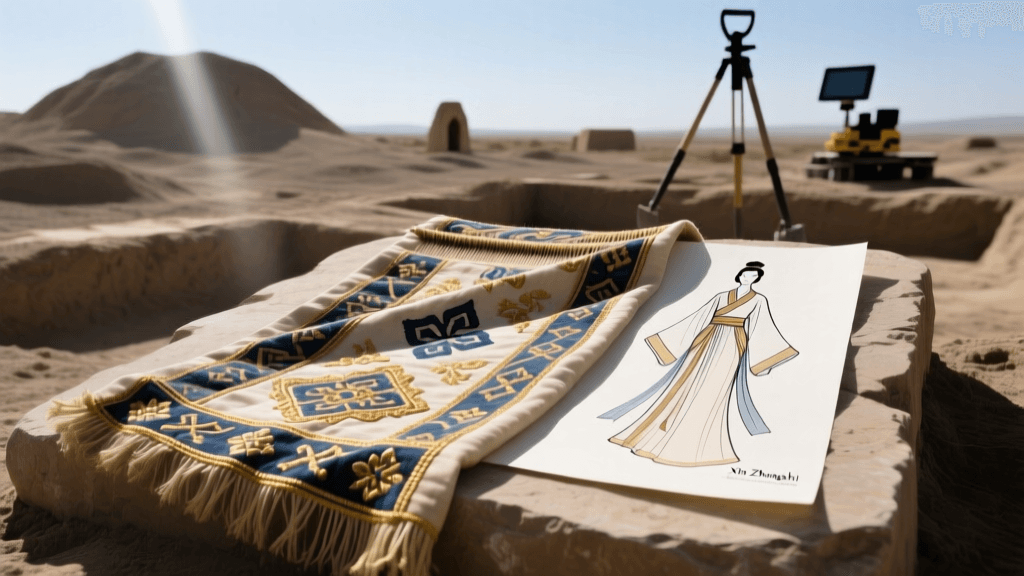
The ancient Silk Road was never merely a conduit for spices and precious metals; it was the world's first great superhighway of sartorial exchange. In 2026, the intersection of archaeology and fashion has reached an unprecedented zenith, driven by groundbreaking textile excavations and advanced conservation technologies. Across the arid expanses of the Tarim Basin and the Turpan Depression, archaeologists are unearthing impeccably preserved garments that are fundamentally rewriting our understanding of ancient Eurasian fashion.
This year, the global heritage community has focused intensely on the Astana cemetery complex and the broader network of oasis towns that once facilitated the vibrant exchange of Han, Sogdian, and Persian textile traditions. Thanks to the hyper-arid climate of the Taklamakan Desert, organic materials that would have decomposed elsewhere have survived for millennia. According to the UNESCO Silk Roads Programme, these cross-cultural interactions birthed hybrid weaving techniques and motifs that traveled from Chang'an to Constantinople. Today, these very motifs are experiencing a massive renaissance on international runways, proving that the ancient world still holds the keys to tomorrow's fashion trends.
Decoding Ancient Weaves: A Technical Analysis
The textiles recovered in 2026 showcase a staggering level of technical sophistication. Archaeologists and textile historians are utilizing non-invasive multispectral imaging and micro-CT scanning to analyze the structural integrity of these ancient fabrics without causing physical damage. This has allowed researchers to identify specific loom setups and dye recipes used over a thousand years ago.
One of the most significant revelations this year involves the transition from warp-faced to weft-faced compound weaves, a technological leap facilitated by the introduction of the drawloom from the West. This innovation allowed for the creation of complex, large-scale patterns that were previously impossible on traditional Chinese backstrap or treadle looms.
| Weaving Technique | Historical Era | Primary Archaeological Site | 2026 Modern Application |
|---|---|---|---|
| Jin (Warp-faced Brocade) | Han to Early Tang | Niya, Loulan | High-end structural outerwear and heritage accessories |
| Latun (Weft-faced Compound Twill) | Mid-Tang Dynasty | Astana Cemetery, Turpan | Draped evening wear and avant-garde layering pieces |
| Kesi (Silk Tapestry) | Song Dynasty (Roots in Tang) | Dunhuang Mogao Caves | Bespoke couture panels and artisanal home textiles |
| Ling (Twill Damask) | Tang Dynasty | Famen Temple Crypt | Lightweight everyday Xin Zhongshi shirting and linings |
From Tomb to Runway: The 2026 Xin Zhongshi Revival
The 'Xin Zhongshi' (New Chinese Style) movement has dominated global fashion weeks in 2026, moving far beyond the superficial application of mandarin collars and frog buttons. Today's leading designers are looking directly to archaeological reports for authentic inspiration. The Sogdian pearl roundel motif—featuring confronting animals, mythical birds, and floral medallions encircled by pearls—has become a defining aesthetic of the year.
Historically, these roundels were a hallmark of Sasanian Persian and Sogdian silks, heavily imported and eventually imitated by Chinese weavers during the Tang Dynasty. As detailed in the Metropolitan Museum of Art's Heilbrunn Timeline of Art History, the integration of these foreign motifs into Chinese silk production represents one of the most successful examples of ancient cultural appropriation and adaptation. In 2026, contemporary design houses are utilizing digital jacquard looms to recreate these exact roundel patterns, scaling them up for dramatic overcoats or scaling them down for subtle, tonal embroidery on minimalist silk blouses.
Furthermore, the color palettes extracted from the Astana finds—characterized by madder root reds, indigo blues, and weld yellows—are dictating the seasonal color forecasts for traditional garment enthusiasts. Designers are partnering with botanical dye masters in Yunnan and Guizhou to replicate these ancient, colorfast shades, offering consumers garments that are not only visually striking but historically resonant and environmentally sustainable.
Museum-Grade Storage: Preserving Your Silk Garments at Home
As collectors and fashion enthusiasts invest heavily in authentic, historically inspired silk garments, the need for proper storage and maintenance has never been more critical. Silk is a protein fiber, highly susceptible to environmental degradation, light damage, and pest infestation. In 2026, museum conservation standards have become more accessible to the public, allowing you to preserve your investment using archival-quality methods.
1. Climate Control and Humidity Management
Silk fibers become brittle when too dry and are prone to mold when too damp. The ideal storage environment for your traditional garments requires a stable relative humidity (RH) of 50%, with a strict tolerance of ± 5%. Temperature should be maintained between 65°F and 70°F (18°C - 21°C). Avoid storing garments in attics, basements, or exterior-facing closets where temperature fluctuations are common. Invest in a digital hygrometer to monitor your storage space continuously.
2. Archival Packaging Materials
Never store silk in plastic dry-cleaning bags or PVC containers, which off-gas harmful chemicals that cause yellowing and fiber degradation. Instead, adopt the following archival standards:
- Acid-Free Tissue Paper: Use unbuffered, acid-free tissue paper to stuff the sleeves and bodice of garments. This prevents hard creases from forming, which can eventually lead to fiber fracture along the fold lines.
- Tyvek or Cotton Muslin Bags: Wrap garments in breathable, unbleached cotton muslin or Tyvek envelopes before placing them in storage boxes. This protects against dust while allowing the fibers to breathe.
- Archival Boxes: Store folded items in acid-free, lignin-free corrugated board boxes. For heavily embroidered or structured garments like a traditional 'mang' robe or a heavily beaded jacket, flat storage is mandatory to prevent gravity-induced stress on the threads.
3. Pest Prevention Without Chemicals
Traditional mothballs contain naphthalene or paradichlorobenzene, both of which are highly toxic and can permanently damage silk dyes. In 2026, the standard for pest prevention relies on integrated pest management (IPM). Use pheromone traps to monitor for webbing clothes moths and carpet beetles. For active deterrence, utilize sealed silica gel cassettes to control moisture and natural cedar blocks, ensuring the cedar never directly touches the silk fabric to prevent oil transfer.
4. The 'Rest and Rotate' Protocol
Museums never display fragile textiles indefinitely. Apply the 'rest and rotate' protocol to your own wardrobe. After wearing a silk garment, allow it to rest on a padded hanger in a dark, well-ventilated room for 48 hours before returning it to long-term storage. This allows the fibers to recover from the mechanical stress of wear and any ambient moisture to evaporate naturally.
The Future of Textile Archaeology and Fashion
The year 2026 marks a pivotal moment where the past and future of Asian traditional garments seamlessly intertwine. The meticulous archaeological work being conducted along the Silk Road is not just preserving history; it is actively supplying the blueprint for the next generation of sustainable, culturally rich fashion. As we continue to decode the complex weaves and vibrant dyes of our ancestors, the 'Xin Zhongshi' movement will only grow more sophisticated, grounded in historical truth rather than mere pastiche.
Whether you are a historian studying the evolution of the drawloom, a designer seeking authentic Sogdian motifs, or a collector preserving a modern silk masterpiece, the legacy of the Silk Road remains a living, breathing force in the world of textiles. By understanding the profound journey these fabrics have taken—from ancient oasis looms to modern archaeological labs and finally to our contemporary wardrobes—we honor the enduring power of human creativity and cultural exchange.