Awa Odori Festival Costumes: Yukata, Tabi, and Amigasa Guide
The Dynamic Art of Awa Odori Performance Wear
The Awa Odori, held annually in Tokushima during the mid-August Obon season, is one of Japan's most famous and energetic traditional dance festivals. Often referred to as the 'Fool's Dance,' this vibrant spectacle draws over a million spectators and tens of thousands of dancers, known as ren. Unlike the restrained, formal elegance of a tea ceremony kimono, the Awa Odori costume is engineered for high-impact performance, extreme mobility, and breathability under the sweltering Japanese summer sun. Understanding the nuances of these festival garments is essential for performers, cultural enthusiasts, and costume designers alike.
According to the Awa Odori Kaikan, the festival's official museum and cultural hall, the dance traces its roots back over 400 years. The costumes worn today are a direct evolution of Edo-period summer wear, adapted specifically for the acrobatic leaping, rhythmic stomping, and synchronized parading that define the performance. When selecting or designing an Awa Odori costume, one must prioritize sweat-wicking fabrics, secure fastenings, and specialized footwear that can withstand hours of continuous movement on asphalt and wooden stages.
Anatomy of the Performance Costume
The Yukata: Engineered for Movement
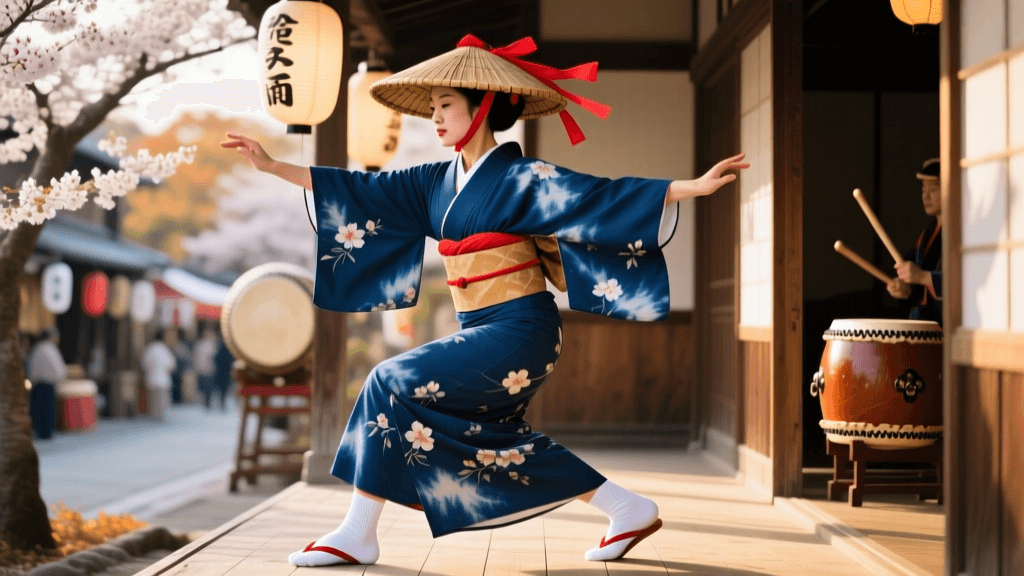
While a standard summer yukata is worn with the hem grazing the ankle, the Awa Odori yukata is intentionally styled much shorter to allow for the dance's signature high-knee lifts and leaping steps. For women, the hem is typically tied at the mid-calf using a series of hidden ties, creating a voluminous, bloused effect at the waist known as ohashori. For men, the yukata is often worn even shorter, resembling a jinbei or tucked into hakama-style trousers, though many male dancers opt for a simple, knee-length yukata paired with a happi coat.
Fabric choice is critical. While synthetic blends are cheap and vibrant, serious performers invest in Tokushima Shijira-ori, a traditional locally woven cotton characterized by its distinct seersucker-like texture. This weaving technique creates tiny ridges that prevent the fabric from clinging to sweaty skin, allowing for maximum airflow. A high-quality, authentic Shijira-ori yukata can cost between $150 and $300 USD, but its durability and breathability make it indispensable for professional ren members.
Footwear: The Necessity of Jikatabi
The most crucial deviation from standard traditional Japanese dress in the Awa Odori is the footwear. While women in formal settings wear zori sandals with white tabi socks, the vigorous stomping of the Awa Odori requires the protective grip and shock absorption of jikatabi (split-toe rubber-soled boots). Brands like Marugo and Rikio manufacture specialized festival jikatabi featuring reinforced rubber soles, breathable canvas uppers, and padded insoles. Men almost exclusively wear black jikatabi, while women may wear white or red tabi socks with flexible rubber soles, or specialized soft-soled jikatabi designed for female dancers. Purchasing these should be done at least two months before the August festival, as popular sizes and performance-grade models frequently sell out by early summer.
Headwear: Amigasa and Tenugui
Headwear serves both a practical and aesthetic purpose, shielding dancers from the sun while adding dramatic flair to the choreography. Men frequently wear the amigasa, a conical hat woven from sedge or bamboo, which obscures the face and adds a mysterious, unified look to large dance troupes. Alternatively, both men and women utilize the tenugui (a rectangular cotton towel). In the Awa Odori, the tenugui is not merely draped; it is tightly knotted around the forehead or styled into the kinryu-han wrap to absorb sweat and keep hair out of the dancer's eyes during rapid head movements.
Sizing, Sourcing, and Cost Breakdown
Building a complete Awa Odori performance wardrobe requires careful budgeting and precise measurements. Below is a structured comparison of the essential garments, their performance-specific modifications, and estimated costs for authentic, dance-grade equipment.
| Garment Element | Men's Performance Specification | Women's Performance Specification | Est. Cost (USD) |
|---|---|---|---|
| Yukata | Knee-length, bold geometric or indigo patterns, lightweight cotton | Calf-length (tied), Shijira-ori cotton, vibrant floral or traditional motifs | $60 - $250 |
| Footwear | Black rubber-soled Jikatabi (split-toe boots) with padded insoles | White rubber-soled Tabi or soft-sole dance Jikatabi | $30 - $80 |
| Headwear | Amigasa (woven sedge hat) or Tenugui headband | Kanzashi (hair ornaments) and Tenugui for sweat absorption | $15 - $50 |
| Obi & Ties | Heko Obi (soft sash) or Kaku Obi, plus silicone koshihimo | Hanhaba Obi, datejime, and magic-tape koshihimo for security | $40 - $120 |
| Undergarments | Suteteko (cotton leggings) to prevent chafing and protect the yukata | Hadajuban (camisole) and Susoyoke (slip skirt) in moisture-wicking mesh | $25 - $60 |
For sourcing authentic gear outside of Japan, specialized online retailers focusing on Matsuri (festival) supplies are your best option. The Japan National Tourism Organization frequently highlights Tokushima's local indigo dyers and weavers, many of whom now ship internationally. When ordering jikatabi, always measure your foot in centimeters from heel to the tip of the big toe, as Japanese sizing is strictly metric and does not account for the split-toe width in standard Western shoe conversions.
Step-by-Step: Dressing for Vigorous Movement
Dressing for a festival performance is vastly different from dressing for a static photo shoot. The primary goal is to ensure the garment remains completely secure during jumps, squats, and rapid directional changes. Here is a practical guide to securing your Awa Odori yukata:
- Prep the Base Layer: Put on your moisture-wicking hadajuban and suteteko. This layer absorbs sweat, preventing the outer cotton yukata from becoming heavy, translucent, and prone to tearing.
- Adjust the Hem (Mitake): Wrap the yukata around your body. For women, pull the hem up to the mid-calf. For men, pull it to just above the knee. The excess fabric must be folded neatly at the waist.
- Secure with Silicone Koshihimo: Traditional silk or cotton waist ties (koshihimo) will slip when soaked in sweat. Invest in modern silicone-coated or velcro (magic tape) koshihimo. Tie the first one tightly around the hips to lock the hem length in place.
- Create the Ohashori: Fold the excess fabric down over the hip tie to create the traditional bloused look. Secure this fold with a second tie or a wide, elastic datejime belt. This ensures that even if the outer obi shifts, the hem length will not drop and trip you during a dance routine.
- Tie the Obi: Women typically use a hanhaba obi tied in a secure, flat knot (like the bunko musubi) that will not bounce against the spine. Men use a heko obi or a stiff kaku obi tied in a simple knot at the front or side, allowing for deep bending at the waist.
Pro-Tip for Performers: Always carry a spare tenugui and a small bottle of water in a concealed waist pouch. The August humidity in Tokushima is intense, and hydration is just as critical as the choreography. For more tips on attending and participating in Japanese summer festivals, consult Japan Guide's comprehensive Matsuri directory.
Post-Performance Care and Maintenance
The rigorous nature of the Awa Odori takes a toll on traditional garments. A single night of performing can leave a cotton yukata completely saturated with sweat, which, if left untreated, will cause permanent yellowing and fabric degradation. Immediately after the performance, separate the yukata from the obi and undergarments. Hand-wash the cotton yukata in cold water using a mild, bleach-free detergent specifically formulated for delicate Japanese textiles, such as Ecover or specialized kimono washes. Never wring the fabric; instead, roll it in a dry towel to press out the moisture, then hang it in a shaded, well-ventilated area. Direct sunlight will rapidly fade the indigo and vibrant summer dyes.
Jikatabi must be air-dried completely to prevent the rubber soles from separating and the canvas from developing mildew. Stuff the toe and ankle with crumpled newspaper to absorb internal moisture and maintain the shoe's shape. By treating these garments as high-performance athletic wear rather than fragile museum pieces, you ensure they remain resilient, comfortable, and visually striking for many Obon seasons to come.