Decoding Kimono Motifs: Colors and Symbols Explained
The Language of Silk: Understanding Kimono Symbolism
The Japanese kimono is far more than a mere garment; it is a canvas of cultural expression, where every thread, color, and motif carries profound symbolic weight. Rooted in centuries of tradition, the symbolism woven into Japanese clothing reflects a deep reverence for nature, the changing of the seasons, and societal values. According to the Metropolitan Museum of Art, the evolution of the kimono during the Edo period (1615–1868) transformed it into a highly codified system of visual communication, where the ruling samurai class and the wealthy merchant class used textiles to signal status, taste, and seasonal awareness.
Understanding this visual language is essential for anyone looking to appreciate, collect, or wear traditional Japanese garments. Unlike Western fashion, which often prioritizes individualistic trends, traditional Japanese dress operates on a framework of shared cultural aesthetics. Wearing a motif out of season or choosing an inappropriate color for a specific ceremony can be seen as a breach of etiquette. This guide will decode the intricate symbolism of kimono patterns and provide actionable advice for selecting, sizing, and acquiring these magnificent garments.
Seasonal Motifs: Timing is Everything
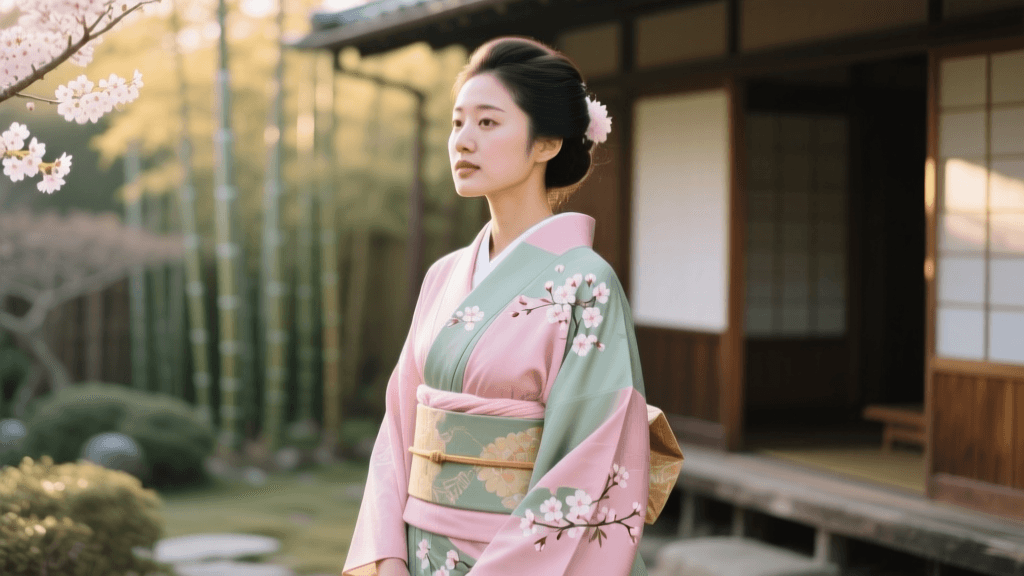
In Japanese culture, the anticipation of a season is often celebrated more than its peak. This concept, deeply tied to the aesthetic of mono no aware (the ephemeral nature of things), dictates that seasonal motifs should be worn slightly before the season actually arrives. Wearing cherry blossoms while they are in full bloom is considered slightly late; the height of elegance is to wear them in early spring, just as the buds are forming, to express anticipation.
The Victoria and Albert Museum highlights how the Edo period saw an explosion of nature-based motifs, driven by a growing urban culture that sought to bring the beauty of the natural world into the bustling cityscape. Below is a structured guide to seasonal motifs and their corresponding color palettes.
| Season | Primary Motifs | Traditional Color Palette | Wearing Window |
|---|---|---|---|
| Spring | Cherry Blossom (Sakura), Wisteria (Fuji), Plum (Ume), Butterflies | Pastel pinks, soft greens, pale yellows, white | February to Early April |
| Summer | Water streams, Morning Glory (Asagao), Fireflies, Bamboo, Goldfish | Indigo, cool blues, crisp whites, translucent fabrics (Ro/Sha) | May to Early August |
| Autumn | Maple Leaves (Momiji), Chrysanthemum (Kiku), Full Moon, Susuki Grass | Crimson, burnt orange, deep browns, gold accents | August to Early November |
| Winter | Pine (Matsu), Snowflakes (Yukiwa), Camellia (Tsubaki), Plum Blossom | Deep greens, stark whites, rich purples, black | November to Early February |
Auspicious Colors and Motifs for Formal Occasions
Formal occasions, particularly weddings and coming-of-age ceremonies, require garments laden with auspicious symbolism. The most formal kimono for married women is the Kurotomesode (black kimono with patterns only below the waist), while unmarried women wear the Furisode (long-sleeved kimono). The motifs chosen for these garments are designed to invoke blessings, longevity, and prosperity.
The Shochikubai Triad
One of the most common and powerful auspicious motifs is Shochikubai, which combines pine, bamboo, and plum. This triad is frequently used in wedding textiles and New Year celebrations.
- Pine (Matsu): Represents longevity and steadfastness, as it remains green throughout the harsh winter.
- Bamboo (Take): Symbolizes resilience and flexibility, bending in the wind but never breaking, as well as rapid growth and prosperity.
- Plum (Ume): Signifies perseverance and hope, as it is the first flower to bloom in late winter, pushing through the snow.
Cranes and Turtles
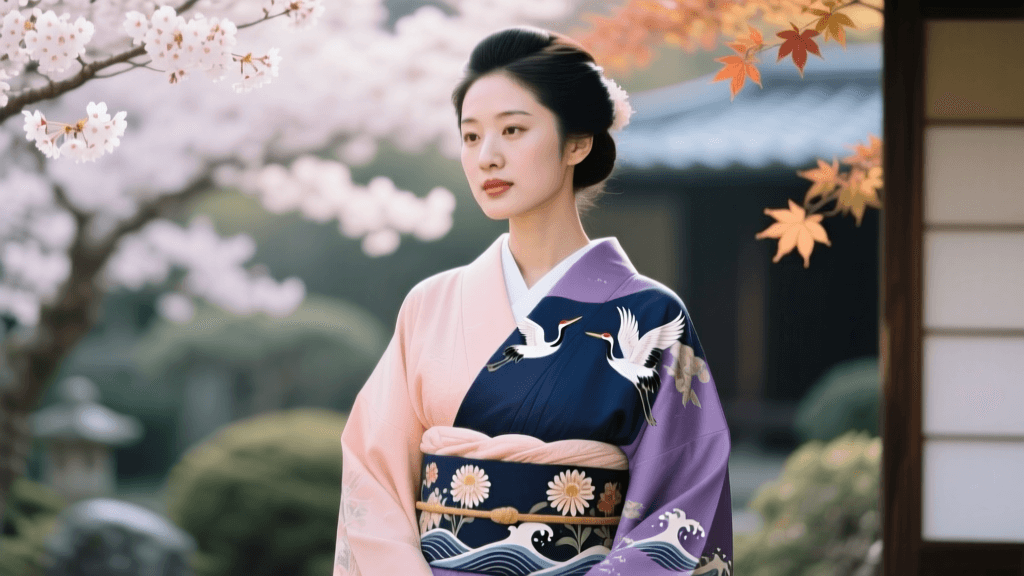
The Tsuru (crane) and Kame (turtle) are iconic symbols of longevity. Japanese folklore dictates that the crane lives for a thousand years and the turtle for ten thousand years. A crane motif, especially depicted in flight with spread wings across the shoulders of a Furisode or Houmongi, is highly prized for formal wear.
Color Symbolism in Traditional Dyeing
Before the introduction of synthetic aniline dyes in the late 19th century, Japanese textile artisans relied on complex, labor-intensive natural dyeing processes. The colors produced were not just aesthetic choices but carried spiritual and social significance. The Metropolitan Museum of Art's archive on Edo period textiles notes that sumptuary laws often restricted commoners from wearing certain bright colors, leading to the development of sophisticated, subtle dyeing techniques like Yuzen and Edo Komon.
- Indigo (Ai): Known as 'Japan Blue', indigo was prized for its durability, insect-repelling properties, and deep, calming hue. It represents stability and the working class.
- Safflower (Benibana): Produces a vibrant, fleeting pink-red. Because the dye is highly sensitive to sunlight and water, garments dyed with benibana were considered luxury items, symbolizing passion and fleeting beauty.
- Madder (Akane): Yields a deep, rich red. Red is traditionally associated with warding off evil spirits and is heavily featured in undergarments (nagajuban) and children's celebratory wear.
When caring for naturally dyed vintage silk, avoid direct sunlight and harsh chemical dry cleaning. Natural dyes like benibana and akane are highly photosensitive and will fade irreversibly if exposed to UV light. Always store vintage kimono in acid-free tissue paper within a dark, climate-controlled environment.
Practical Guide: Selecting and Sizing Your Formal Kimono
Acquiring a kimono, whether for a one-time event or a lifelong collection, requires an understanding of traditional sizing, market costs, and timing. Unlike Western clothing, kimono are not sold in standard S, M, L sizes. They are tailored based on specific body measurements, though modern buyers often rely on adjustable wearing techniques (kitsuke) to accommodate slight discrepancies.
Essential Measurements
To find a kimono that fits correctly, you must know two critical measurements:
- Mitake (Back Length): This is the length of the kimono from the base of the neck to the hem. Calculation: Multiply your total height by 0.55. For example, a person who is 160 cm tall requires a Mitake of approximately 88 cm. The hem should ideally fall right at the ankle bone.
- Yuki (Sleeve Length): This measures from the center of the back of the neck, across the shoulder, and down to the wrist. Calculation: Measure your total arm span from wrist to wrist, divide by two, and add 2 cm. A proper Yuki ensures the sleeve covers the wrist bone when the arm is relaxed at the side.
Costs and Acquisition Strategies
The cost of a kimono varies wildly based on material, craftsmanship, and whether it is new, vintage, or rented.
- Rental (For Events): Renting a formal silk kimono (such as a Houmongi or Furisode) in Japan typically costs between 10,000 and 30,000 JPY ($70 to $200 USD). This usually includes the kimono, obi, undergarments, and professional dressing services. Actionable Tip: Book rentals at least 2 to 3 months in advance if your event falls during peak seasons like November (autumn foliage) or April (cherry blossoms), as popular motifs and colors sell out quickly.
- Vintage / Second-hand: Antique silk kimono can be found in Kyoto's thrift markets or online auction sites for 5,000 to 30,000 JPY ($35 to $200 USD). However, buyers must carefully inspect the collar and hem for stains, and check the silk for 'shattering' (dry rot).
- New / Custom Tailored: A brand new, custom-dyed silk Kurotomesode or Furisode from a reputable Kyoto artisan will start around 300,000 JPY ($2,000 USD) and can easily exceed 1,000,000 JPY ($6,700 USD) for intricate hand-painted Yuzen and gold leaf detailing.
Timing Your Purchase
If you are purchasing vintage textiles to study or collect, the best time to buy is during the off-season. Purchasing heavy winter silks in July or lightweight summer ro and sha silks in January will often yield significant discounts from specialized dealers looking to clear seasonal inventory.
Conclusion
The Japanese kimono is a masterclass in wearable art, where color and motif converge to tell stories of nature, society, and the human experience. By understanding the strict seasonal rules, the profound meaning behind auspicious symbols like the Shochikubai triad, and the chemistry of traditional dyes, one can fully appreciate the genius of Japanese textile artisans. Whether you are renting a Furisode for a coming-of-age ceremony, collecting vintage Edo-period textiles, or simply admiring the craftsmanship, recognizing these symbols transforms the garment from a beautiful piece of clothing into a living, breathing piece of Asian cultural heritage.