Miao Traditional Dress: Guizhou Indigo and Silver Craftsmanship
The Wearable Archives of the Miao People
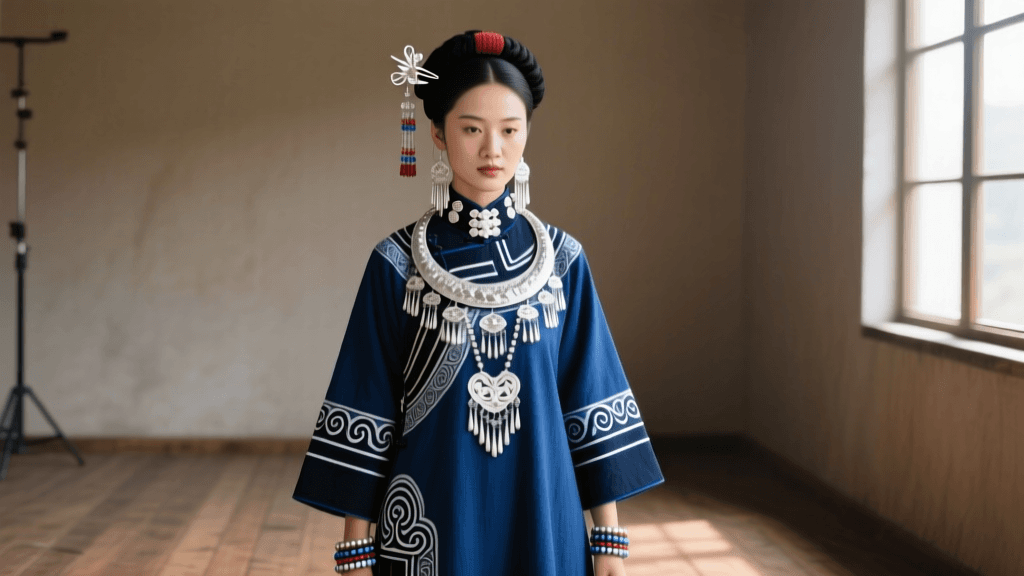
Deep within the mountainous terrain of Guizhou province in southwestern China, the Miao people (closely related to the Hmong diaspora) have cultivated one of the most visually stunning and culturally significant sartorial traditions in Asia. For centuries, the Miao lacked a formal written language. Instead, they encoded their history, mythology, and clan identities into the intricate embroidery, indigo dyeing, and silverwork of their traditional garments. According to the Metropolitan Museum of Art, Hmong and Miao textiles serve as crucial markers of identity, functioning as wearable archives that document migration routes, ancestral legends, and spiritual beliefs.
Today, the provincial dress of the Guizhou Miao is not merely a relic of the past; it is a living, breathing craft that requires immense technical skill and months of painstaking labor. For collectors, cultural enthusiasts, and sustainable fashion advocates, understanding the nuances of Miao regional folk dress offers a profound appreciation for indigenous craftsmanship. This guide explores the alchemy of Guizhou indigo, the weight of ancestral silver, and provides actionable advice on sourcing and caring for these extraordinary garments.
The Alchemy of Guizhou Indigo and Batik
The foundation of traditional Miao clothing is liangbu, a luminous, deep-blue indigo cloth that serves as the canvas for embroidery and appliqué. The creation of liangbu is an arduous, multi-generational process that begins with cultivating the indigo plant (Strobilanthes cusia) and harvesting hemp or cotton.
The Fermentation Vat
Unlike synthetic chemical dyes, traditional Guizhou indigo relies on a living fermentation vat. Artisans mix indigo paste with wood ash, rice wine, and spring water, allowing the mixture to ferment for weeks. The cloth is dipped into the vat, oxidized in the air, and dipped again. This cycle is repeated up to thirty times over several weeks to achieve the signature dark, almost black-blue hue.
Calendering: The Secret to the Shine
What sets Miao indigo apart from Japanese shibori or West African adire is the finishing process. Once dyed, the cloth is coated with a mixture of ox blood, egg white, or plum tree resin. It is then placed on a stone anvil and beaten rhythmically with heavy wooden mallets for days. This calendering process compresses the fibers, resulting in a stiff, glossy, and water-resistant fabric that shimmers in the sunlight.
'To wear the dark cloth is to wear the night sky; to stitch the threads is to map the stars of our ancestors.' — Guizhou Miao artisan proverb.
Batik (Dianlan): Drawing with Beeswax
Before the indigo dyeing begins, many Miao artisans employ a resist-dyeing technique known as dianlan or batik. Using a specialized brass-tipped bamboo tool called a lada, women draw intricate geometric patterns, stylized flora, and mythological creatures onto raw cotton or hemp using melted beeswax. The Victoria and Albert Museum notes that Chinese minority textiles often feature complex resist-dyeing techniques that require an extraordinary steadiness of hand, as the artisan draws freehand without the use of stencils or preliminary sketches.
When the wax-coated fabric is submerged in the indigo vat, the wax resists the dye. The fabric is then boiled to remove the wax, revealing crisp white patterns against the deep blue background. The characteristic 'ice crackle' effect—fine blue lines bleeding through the cracked wax—is highly prized and considered the hallmark of authentic, hand-drawn Miao batik.
Silversmithing: The Weight of Ancestral Blessings
No Miao festival garment is complete without elaborate silver ornamentation. In Miao cosmology, silver represents light, purity, and protection against evil spirits. Silversmithing is traditionally a male-dominated craft, passed down from father to son, requiring mastery of filigree, repoussé, and engraving.
A full festival set for a Miao woman can include a massive horned headdress, neck torcs, chest plates, bracelets, and hairpins. The motifs are deeply symbolic: the 'Butterfly Mother' (Mais Bangx Mais Lief) represents the creator of humanity, while buffalo horns symbolize agricultural prosperity and strength. The sheer weight of these pieces is staggering; a complete silver headdress and bodice can weigh between 1.5 to 3 kilograms (3.3 to 6.6 lbs), requiring the wearer to possess immense physical endurance during festival dances.
Regional Variations: A Comparative Guide
The Miao are not a monolith; they are divided into numerous sub-groups, often categorized by the dominant colors or styles of their regional dress. Below is a comparison of three prominent Guizhou Miao regional styles:
| Region / Sub-group | Skirt Style | Dominant Craft | Silver Aesthetic |
|---|---|---|---|
| Leishan (Xijiang) Long Skirt Miao | Mid-calf length, heavily embroidered with silk thread and metallic foil. | Complex 3D embroidery (Shui family influence) and pleating. | Massive, towering silver horn crowns; heavy chest lockets. |
| Danzhai Batik Miao | Short, pleated skirts often worn with woven sashes and leggings. | Masterful beeswax batik (dianlan) with intricate geometric motifs. | Delicate hairpins, silver combs, and lighter neck torcs. |
| Huangping Short Skirt Miao | Extremely short, stiffly pleated skirts resembling tutus, layered over trousers. | Bright cross-stitch embroidery; use of vibrant pinks and greens. | Layered silver neck rings and wide, flat silver bracelets. |
Practical Guide: Sourcing and Commissioning Authentic Pieces
For collectors and cultural institutions looking to acquire authentic Miao garments, navigating the market requires a discerning eye. The rise of cultural tourism in Guizhou has led to an influx of mass-produced, chemically dyed imitations. Here is how to source genuine provincial dress.
Identifying Authentic Liangbu Cloth
- The Smell Test: Authentic fermented indigo retains a faint, earthy, slightly woody scent. Chemical indigo smells sharply of synthetic ammonia or bleach.
- The Rub Test: Rub a damp white cloth against the dark fabric. Natural indigo will leave a slight blue residue (crocking) that washes out easily. Chemical dyes often bleed heavily or not at all.
- The Texture: Genuine calendered liangbu feels stiff, dense, and slightly waxy to the touch, with a natural sheen that synthetic fabrics cannot replicate.
Commissioning Custom Silverwork
If you are commissioning a piece directly from a Guizhou silversmith (such as those in Kaili or Xijiang), be prepared for a significant investment of time and capital.
- Measurements & Weight: Specify the desired weight. A standard tourist bangle is 30-50 grams. A traditional ceremonial neck torc is 200-500 grams.
- Purity: Traditional Miao silver is often an alloy mixed with copper for durability, but high-end commissions use 990 or 999 pure silver. Request a stamped hallmark.
- Timing: Hand-forging a complex filigree headdress takes 4 to 8 weeks of continuous labor.
- Costs: Expect to pay between $150 and $400 USD for an authentic, hand-dyed indigo jacket with vintage-style embroidery. Commissioned silverwork is priced by weight plus labor, typically ranging from $800 to $3,000+ USD for a full festival set.
Care and Maintenance for Provincial Textiles
Preserving the integrity of Miao indigo and silver requires specialized care, as standard laundry and jewelry cleaning methods will destroy these artifacts.
Caring for Indigo and Batik
- Washing: Never use hot water or harsh alkaline detergents, which will strip the natural indigo. Hand wash gently in cold water using a pH-neutral soap or traditional soapnut liquid.
- Drying: Dry flat in the shade. Direct sunlight will cause the natural indigo to fade unevenly and degrade the hemp/cotton fibers.
- Storage: Store in a cool, dry place. Wrap the garments in unbleached cotton muslin to allow the fibers to breathe while protecting them from dust and moths.
Polishing and Preserving Silver
- Avoid Chemical Dips: Commercial silver cleaning solutions will strip the intentional oxidized (blackened) accents that give Miao silver its three-dimensional depth and antique appearance.
- Manual Polishing: Use a soft, untreated microfiber cloth or a specialized silver polishing cloth to gently buff only the raised, high-relief areas of the filigree.
- Tarnish Prevention: Store silver pieces in anti-tarnish bags with silica gel packets to prevent moisture-induced corrosion, especially in humid environments.
Conclusion
The regional folk dress of the Guizhou Miao is a testament to human resilience and artistic ingenuity. From the fermented vats of living indigo to the rhythmic striking of the silversmith's hammer, every thread and motif carries the weight of history. As noted by researchers at the Smithsonian National Museum of Asian Art, the preservation of these minority textile traditions is vital not only for the cultural continuity of the Miao people but for the global heritage of sustainable, slow fashion. By understanding the mechanics of these crafts and supporting authentic artisans, we ensure that the wearable archives of the Miao continue to shimmer for generations to come.