Peking Opera Costumes: Guide to Mang Robes & Water Sleeves
The Architecture of Jingju Fuzhuang
Peking Opera, known in Chinese as Jingju, is a spectacular synthesis of music, vocal performance, mime, dance, and acrobatics. Recognized by UNESCO as an Intangible Cultural Heritage of Humanity, the art form relies heavily on its visual vocabulary. At the heart of this visual storytelling is the traditional wardrobe, or fuzhuang. Unlike Western theatrical costuming, which often strives for historical accuracy, Peking Opera costumes prioritize symbolism, character archetypes, and kinetic movement. The wardrobe is traditionally divided into the "Wardrobe of the Upper" (clothing for nobles and officials) and the "Wardrobe of the Lower" (clothing for commoners, soldiers, and martial characters).
For modern cultural troupes, festival organizers, and independent performers, sourcing and maintaining these garments requires a deep understanding of traditional craftsmanship, fabric behavior, and precise sizing. Whether you are outfitting a touring festival act or preserving heritage garments for a local cultural society, this guide provides actionable, practical advice on navigating the world of Jingju performance wear.
The Mang Robe: Sourcing and Sizing for Performers
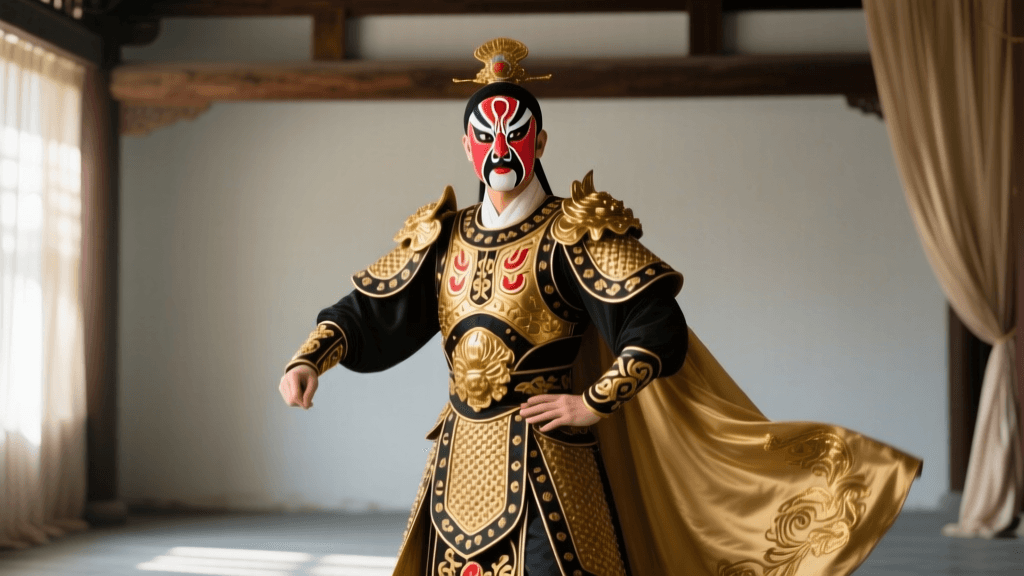
The Mang (蟒袍), or python robe, is the most prestigious garment in the Peking Opera wardrobe. Worn by emperors, high-ranking officials, and generals, the Mang is characterized by its sweeping A-line silhouette, side slits, and elaborate embroidery featuring python or dragon motifs, ocean waves, and auspicious clouds. According to Britannica's comprehensive guide on Peking Opera, the color of the Mang robe immediately communicates the wearer's status and personality to the audience: yellow is reserved for royalty, red denotes high nobility and loyalty, while black suggests a rough, fierce, or impartial character.
Sizing and Measurements
Unlike Western tailoring, which fits closely to the body, the Mang robe is designed to drape. However, improper sizing will ruin the visual line of the performance and restrict the actor's movements. When commissioning or purchasing a Mang robe, you must provide the following measurements to the atelier:
- Shoulder Width (Jian Kuan): Measured from the edge of one shoulder bone to the other. Standard sizes range from 45cm to 55cm.
- Sleeve Length (Xiu Chang): Measured from the shoulder seam to the wrist bone. This is crucial as it dictates the attachment point of the water sleeves.
- Chest Circumference (Xiong Wei): Measured loosely. The robe must allow for the thick inner padding (kao) worn by martial characters underneath.
- Hem Circumference (Xia Bai): The bottom edge of the robe. A standard Mang has a hem circumference of roughly 250cm to 300cm to allow for the dramatic "sweeping" steps required of high officials.
Fabric Choices and Budgeting
Authentic Mang robes are crafted from heavy silk satin (duan) and feature hand-embroidered gold and silver metallic threads (panjin). A fully hand-embroidered silk Mang from a master atelier in Suzhou can cost between $3,000 and $8,000 USD, with a lead time of 4 to 8 months. For amateur troupes, school festivals, or touring acts where garments are subjected to heavy sweat and rapid transport, high-grade synthetic brocades with machine embroidery are the industry standard. These cost between $250 and $600 USD and can be sourced within 3 to 4 weeks. Always ensure the synthetic lining is breathable cotton or a cotton-poly blend to prevent heat exhaustion during vigorous summer festival performances.
Mastering the Shuixiu (Water Sleeves)
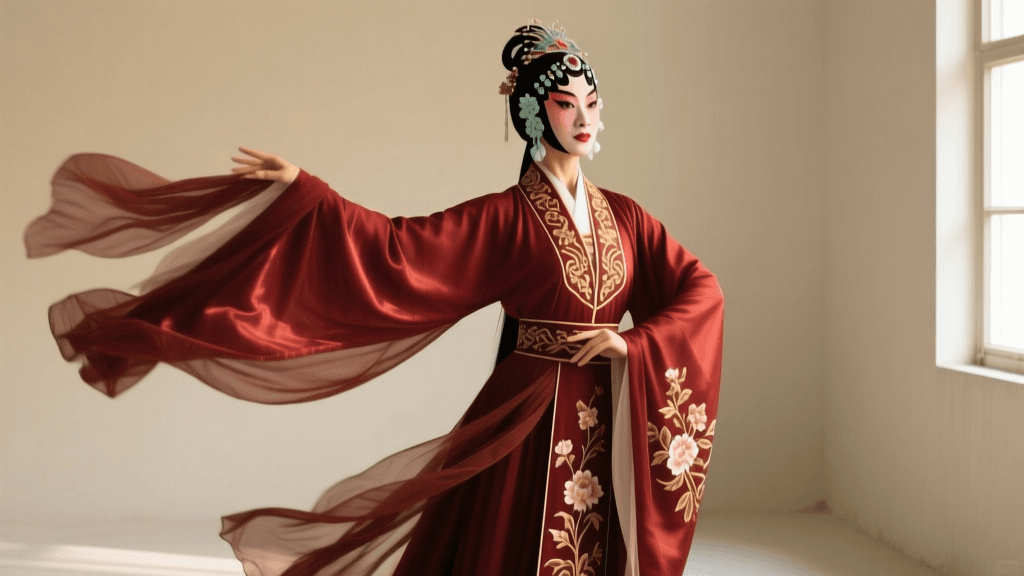
Attached to the cuffs of the Mang robe (and many other garments like the pei and xuezi) are the Shuixiu, or water sleeves. These elongated cuffs of white silk are not merely decorative; they are an extension of the actor's emotional vocabulary. A flick of the wrist can convey anger, while a gentle folding of the silk over the face denotes weeping or shyness.
Water Sleeve Sizing Chart
Selecting the correct length for water sleeves is highly dependent on the performer's height, arm length, and specific role type (Hangdang). A sleeve that is too long will tangle and trip the performer; a sleeve that is too short will look comical and limit the repertoire of sleeve techniques (Shuixiu Gong).
| Role Type (Hangdang) | Performer Height | Recommended Sleeve Length | Fabric Weight |
|---|---|---|---|
| Qingyi (Dignified Female) | 160cm - 170cm | 60cm - 70cm | Heavy Silk (Crepe de Chine) |
| Huadan (Lively Female) | 155cm - 165cm | 45cm - 55cm | Medium Silk (Habotai) |
| Xiaosheng (Young Male) | 170cm - 180cm | 50cm - 60cm | Medium Silk / Synthetic |
| Laosheng (Older Male) | 170cm - 180cm | 40cm - 50cm | Stiff Cotton / Synthetic |
| Martial Roles (Wusheng) | Varies | None or 30cm max | N/A (Tightly bound cuffs) |
Note: Sleeve length is measured from the wrist bone to the tip of the extended silk.
Attachment and Maintenance
Water sleeves should be attached via a hidden drawstring or a series of small, flat hook-and-eye closures inside the main cuff. Never sew them permanently if the garment is shared among troupe members. After every performance, water sleeves must be detached, hand-washed in cool water with a pH-neutral detergent, and hung to dry. They must be ironed on a low-heat silk setting with a pressing cloth to maintain the crisp, fluid lines required for stage visibility.
Headdresses and Footwear: The Hidden Challenges
The visual impact of a Peking Opera costume is incomplete without the appropriate headdress and footwear. However, these items present unique logistical challenges for festival performers.
The Phoenix Crown (Fengguan)
Worn by high-ranking female characters, the Fengguan is a masterpiece of kingfisher feather art (or modern synthetic equivalents), pearls, and trembling wire ornaments (diancui). A full-sized stage Fengguan can weigh between 1.5kg and 3kg. Performers must undergo specific neck-strengthening exercises to wear these for multi-hour festival showcases without injury. When transporting Fengguans, they must be packed in rigid, custom-molded EVA foam cases. Never stack other items on top of the case, as the wire armatures will bend and the delicate ornaments will shatter.
Thick-Soled Boots (Houdi)
Male officials and generals wear Houdi, boots with thick, multi-layered cotton soles that can add 5cm to 10cm of height. The soles are painted white and feature a curved toe. Sourcing these requires precise foot measurements, as they are typically slip-on and rely on thick cotton socks for a snug fit. For outdoor festival stages, which may be uneven or slick, troupe managers must apply a layer of clear, textured rosin or grip tape to the bottom of the cotton soles to prevent catastrophic slips during acrobatic sequences.
Festival Maintenance and Storage Protocols
Traditional Chinese theatrical garments are significant financial investments. Proper maintenance ensures they survive the rigors of touring, changing climates, and frequent use.
"The golden rule of the Jingju wardrobe is respect for the thread. You never fold the garment where the embroidery lies, for the metallic threads will crack and the silk will permanently crease."
— Master Wardrobe Keeper, Beijing Jingju Yuan
The Art of Folding
Never fold a Mang robe or a heavily embroidered Kao (armor) in half. Garments must be folded along the unembroidered seams. The standard method involves laying the garment flat, folding the sleeves inward over the plain silk panels, and rolling the garment loosely around a padded, acid-free cardboard tube. This prevents hard creases and protects the three-dimensional relief of the goldwork embroidery.
Climate Control and Pest Prevention
Silk and metallic threads are highly susceptible to humidity and pests. When storing garments between festival seasons:
- Desiccants: Place silica gel packets in the storage bins, but ensure they do not directly touch the silk, as they can cause localized drying and fiber brittleness.
- Moth Deterrents: Use natural camphor wood blocks rather than chemical mothballs. Chemical naphthalene can react with metallic gold threads, causing them to tarnish and turn black.
- Ventilation: Air out the garments in a shaded, well-ventilated room twice a year. Direct sunlight will rapidly fade the vibrant aniline and natural dyes used in traditional opera silks.
Sourcing Authentic Theatrical Garments
For troupes looking to commission authentic pieces, the city of Suzhou remains the undisputed capital of Chinese theatrical embroidery. The Suzhou Embroidery Research Institute and surrounding ateliers in the Zhenhu district produce the majority of high-end opera costumes used by professional companies globally. When communicating with these ateliers, it is highly recommended to hire a local sourcing agent or translator familiar with theatrical terminology, as the vocabulary for opera costumes (e.g., distinguishing between a mang and a guanyi) is highly specialized.
For immediate needs or lower budgets, Beijing's Liulichang cultural street and the wholesale markets near the Beijing Opera supply stores offer ready-made garments. While the machine embroidery lacks the soul and depth of hand-stitched Suzhou silk, these garments are durable, vibrant under stage lighting, and perfectly adequate for community festivals, educational outreach, and amateur performances.
Ultimately, the costumes of Peking Opera are not merely clothes; they are the armor, the skin, and the spirit of the characters they represent. By understanding the precise measurements, material choices, and rigorous maintenance required, modern performers and cultural custodians can ensure that this magnificent visual tradition continues to captivate audiences for generations to come.