Traditional Kimono Tanmono Zero-Waste Sewing Guide 2026
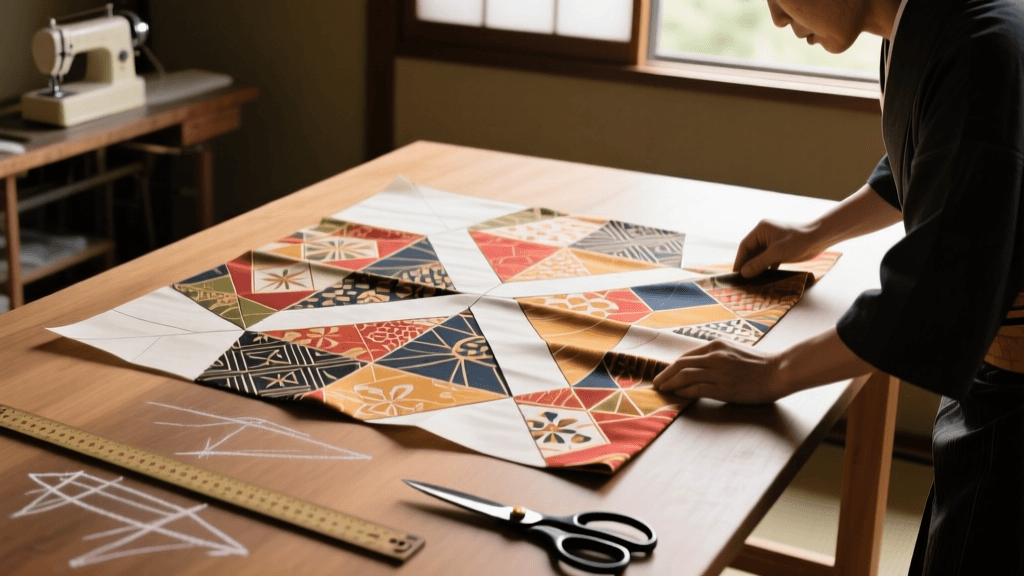
The traditional Japanese kimono is a masterclass in sustainable, zero-waste garment construction. Unlike Western tailoring, which relies on curved seams, darts, and significant fabric waste, the kimono is born from the Tanmono—a standardized, narrow bolt of fabric. As the global fashion industry pivots toward circular design in 2026, the ancient mathematics and construction techniques of the Tanmono system offer profound lessons for modern makers, tailors, and sustainable designers. This comprehensive guide explores the structural genius of kimono construction, detailing the precise measurements, specialized sewing techniques, and 2026 sourcing strategies you need to master this timeless craft.
The Philosophy of Tanmono: Zero-Waste Engineering
At the heart of kimono construction is the principle of absolute fabric preservation. A standard Tanmono bolt is woven to exact dimensions, ensuring that when the garment is disassembled, cleaned, or resized, the fabric returns to its original, uncut rectangular state. According to the Victoria and Albert Museum, this modular approach to dress allowed historical garments to be passed down, re-dyed, and resized across generations without generating textile waste. In 2026, as zero-waste pattern drafting becomes a critical metric for sustainable fashion certifications, the Tanmono system remains the gold standard for holistic textile utilization.
Anatomy of the Bolt: Measurements and Mathematics
Western fabric bolts typically measure 54 to 60 inches in width, encouraging curved pattern pieces that leave behind irregular scraps. The Tanmono, conversely, is woven to a narrow width based on the traditional Japanese measurement system (shaku). A standard adult female Tanmono measures approximately 37.8 centimeters (about 15 inches) in width and 11.5 meters (about 12.5 yards) in length. This specific width is designed to accommodate the maximum hip width of the wearer when the front panels overlap, while the length provides exactly enough yardage for the body, sleeves, and neckbands.
| Feature | Traditional Tanmono Bolt | Standard Western Fabric Bolt |
|---|---|---|
| Width | 37.8 cm (15 inches) | 114 - 152 cm (45 - 60 inches) |
| Length | 11.5 meters (12.5 yards) | 9 - 14 meters (10 - 15 yards) |
| Pattern Cutting | Straight lines only; zero waste | Curved lines; 15-20% fabric waste |
| Seam Allowance | Folded inside (Kise) for resizing | Cut away and serged/overlocked |
| End-of-Life | Unpicked and rewoven/reused | Discarded or downcycled |
Core Construction Techniques: Beyond the Straight Line
Constructing a kimono requires a departure from Western sewing logic. There are no shoulder seams, no curved armholes, and no darts. The garment is composed entirely of rectangular panels: two main body panels (migoro), two sleeve panels (sode), two front overlap panels (okumi), and the collar (eri). However, the true genius lies in the finishing techniques.
The Kise Fold: Engineering for Longevity
The most critical construction technique in kimono making is the Kise. In Western sewing, seam allowances are pressed flat or serged. In kimono construction, the seam allowance is folded under itself and hidden inside the garment. This technique, known as Kise wo kakeru, serves three vital purposes: it protects the delicate silk edges from fraying without the use of synthetic threads or chemical sealants; it creates a soft, padded edge that drapes beautifully; and it preserves the structural integrity of the fabric so that the panels can be entirely unpicked and re-sewn to fit a different person decades later. When sewing your own garments in 2026, adopting the Kise fold for straight-seam projects like robes, wraps, and modular outerwear will instantly elevate the durability and finish of your work.
Sleeve Construction and the Furi
The kimono sleeve is a simple rectangle attached to the body panel, but the Furi—the unsewn, open vertical slit at the bottom of the sleeve attachment—requires meticulous finishing. The edges of the Furi are folded inward using the Kise technique and secured with invisible slip stitches. This opening allows for ventilation and provides the necessary slack for the wearer to cross their arms and adjust the overlapping front panels without pulling the fabric taut across the back.
Sourcing and Pricing in 2026
For makers looking to practice authentic Tanmono construction, sourcing the correct fabric is essential. The Metropolitan Museum of Art notes that the weaving of Tanmono requires specialized looms that maintain consistent tension across the narrow width. In 2026, authentic silk chirimen (crepe) Tanmono bolts sourced directly from the Nishijin weaving district in Kyoto typically range from $800 to $1,500 USD, reflecting the artisanal labor and premium raw silk costs. For practice and summer garments (yukata), cotton Tanmono bolts are widely available through online Japanese textile cooperatives and sustainable fabric marketplaces, averaging between $90 and $160 USD. When purchasing, ensure the bolt includes the tomoe (the extra fabric piece used for the collar and patches), which is standard in authentic bolts.
Step-by-Step: Drafting and Sewing a Basic Yukata
To begin your journey into zero-waste Asian garment construction, start with a cotton yukata. The cotton fabric is easier to manipulate than silk, and the construction relies on the exact same geometric principles.
- Preparation and Marking: Do not use chalk or disappearing ink, which can stain natural fibers. Instead, use a traditional Jyogi (bamboo ruler) and thread-basting (Shitsuke) to mark your cutting lines. In 2026, magnetic silk weights and laser-guided straight edges are highly recommended to keep the narrow bolt perfectly aligned on your cutting table.
- Cutting the Panels: Unroll the bolt and cut the panels using only straight lines. You will cut two body panels (approx. 150cm long), two sleeve panels (approx. 105cm long), and two overlap panels. The remaining fabric is used for the collar and the underlap. Because the fabric is woven to the exact width needed, you will not cut away any side seams.
- Basting (Shitsuke): Before any permanent stitching, the entire garment is basted together using long, easily removable cotton stitches. This allows the maker to check the drape, the alignment of the woven patterns (if applicable), and the exact placement of the hip overlap.
- Executing the Seams: Using a fine, sharp needle (such as a modern micro-tex size 70/10) and high-quality silk or long-staple cotton thread, sew the straight seams. Remember to leave a 1.5cm seam allowance to execute the Kise fold. Fold the allowance inward, press lightly with a low-heat dry iron, and slip-stitch the fold down to the main fabric.
- Attaching the Collar (Eri): The collar is a long, narrow strip folded in half. It is attached to the back neck and brought down the front edges. The intersection at the center back neck must be perfectly aligned to ensure the garment hangs symmetrically.
Modern Applications for the 2026 Maker
You do not need to be making a traditional kimono to benefit from Tanmono construction techniques. Modern sustainable designers in 2026 are adapting the narrow-bolt, straight-line methodology to create modular trench coats, wrap dresses, and zero-waste loungewear. By restricting your pattern drafting to the width of a standard fabric and utilizing the Kise fold for internal finishing, you eliminate the need for overlockers, reduce microplastic shedding from serged synthetic edges, and create garments that are inherently designed for disassembly and recycling.
Conclusion
The construction techniques of the Asian dress tradition, specifically the Japanese Tanmono system, represent a perfect harmony between mathematics, aesthetics, and environmental stewardship. By understanding the geometry of the bolt, mastering the Kise fold, and embracing straight-line construction, modern sewists and designers can create garments that honor the past while securing a sustainable future. Whether you are sourcing a premium silk bolt from Kyoto or adapting the zero-waste principles to your own modern designs, the lessons of the kimono remain as relevant in 2026 as they were centuries ago.