Best Silk Momme Weights for Custom Cheongsam & Sari in 2026
Understanding Silk Momme in 2026
When commissioning a bespoke Asian traditional garment, the foundation of the piece lies entirely in its textile. Whether you are designing a form-fitting cheongsam (qipao) or an elegantly draped sari, understanding fabric weight is non-negotiable. In the silk industry, this weight is measured in momme (abbreviated as mm). Unlike thread count, which measures the number of threads in a square inch, momme measures the actual weight and density of the silk fabric. One momme is equivalent to 3.75 grams per square meter. As we navigate the luxury textile market in 2026, selecting the precise momme weight dictates not only the drape and silhouette of your garment but also its longevity, breathability, and structural integrity.
According to historical textile archives at the Metropolitan Museum of Art, silk has been the cornerstone of Asian ceremonial and everyday wear for millennia. However, modern tailoring requires a nuanced approach to silk weights. A fabric that is too light will cling uncomfortably and tear at the seams, while a fabric that is too heavy will stiffen the garment, ruining the fluid movement essential to traditional Asian silhouettes.
The Momme Scale Explained: From 8mm to 30mm
To make informed decisions for your bespoke tailoring, it is crucial to understand the commercial momme scale available from premium mills in 2026:
- Lightweight (8mm - 12mm): Includes silk chiffon, habotai, and light georgette. These are sheer, ethereal, and highly breathable, but lack the structural integrity for fitted garments without heavy lining.
- Medium Weight (16mm - 19mm): Includes crepe de chine and medium charmeuse. This is the versatile sweet spot for everyday luxury wear, offering a beautiful drape with enough opacity for unlined garments.
- Heavyweight (22mm - 30mm+): Includes heavy charmeuse, silk satin, and brocades. These fabrics are opulent, highly durable, and provide the sculptural structure required for bridal wear and winter garments.
Ideal Momme Weights for the Cheongsam (Qipao)
The cheongsam is renowned for its tailored, body-conscious silhouette, featuring a high mandarin collar, asymmetrical closures, and side slits. The fabric must possess enough weight to skim the body gracefully without revealing undergarments, yet enough fluidity to allow for movement.
Everyday and Summer Cheongsam (16mm - 19mm)
For a knee-length, short-sleeved summer cheongsam, 16mm to 19mm silk crepe de chine is the gold standard in 2026. Crepe de chine has a subtle pebbled texture and a matte finish, which makes it incredibly forgiving and less prone to showing water spots or sweat marks during humid weather. You will need approximately 4.5 to 5.5 yards (assuming a standard fabric width of 44 inches) to account for the bias-cut panels and the intricate frog button (pankou) construction. At 19mm, the fabric is completely opaque, eliminating the need for a full slip, which keeps the garment breathable.
Bridal and Ceremonial Qipao (22mm - 30mm)
For a traditional bridal gua or a floor-length winter cheongsam, tailors heavily recommend 22mm to 30mm silk charmeuse or silk brocade. The heavier weight provides the necessary stiffness to support dense metallic embroidery (such as gold and silver thread work depicting dragons or phoenixes) without puckering. The 2026 market has seen a surge in 25mm silk-blend brocades woven with climate-responsive threads, offering the opulent structure of traditional brocade with improved thermal regulation.
Draping the Sari: Momme Requirements for the Pallu and Pleats
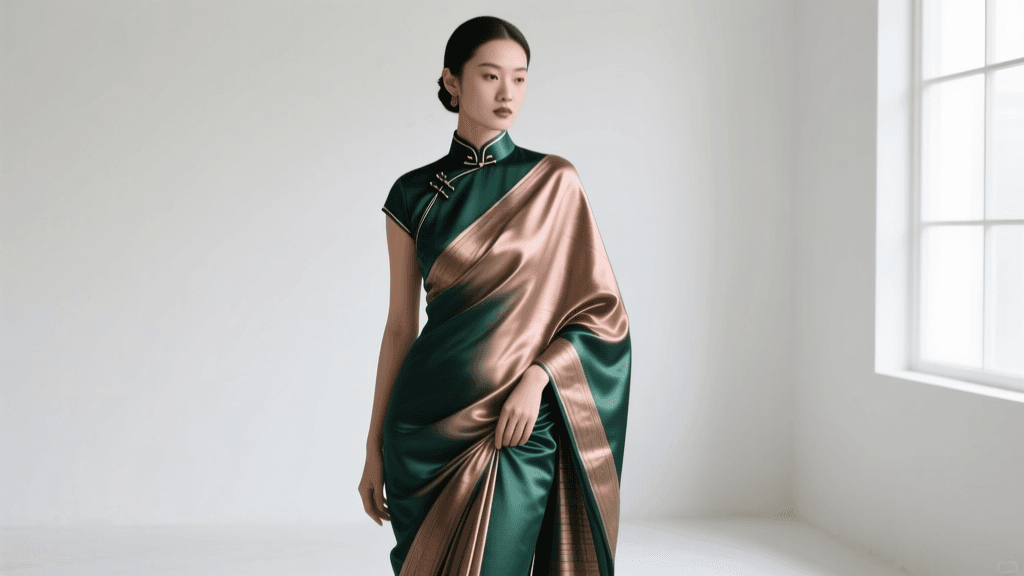
The sari presents a completely different set of textile challenges. A standard sari requires 6 to 9 yards of continuous fabric. The textile must be heavy enough to anchor the pleats at the waist and create a dramatic "fall" at the bottom hem, yet light enough to allow the pallu (the decorative end draped over the shoulder) to flow elegantly without pulling the blouse off the shoulder.
Modern Fluid Saris (12mm - 16mm)
For contemporary, fluid drapes—often favored for cocktail parties and daytime weddings—12mm to 16mm silk georgette or lightweight crepe is ideal. These weights allow for the popular "butterfly drape" or thin, crisp pleats. Because these fabrics are lighter, master tailors in 2026 often add a hidden, weighted cotton or silk-candy border to the bottom hem to ensure the sari hangs correctly and doesn't fly up in the wind.
Traditional Kanjeevaram and Banarasi Equivalents (19mm - 28mm)
When replicating the heavy, opulent feel of a traditional South Indian Kanjeevaram or a North Indian Banarasi silk sari using pure mulberry silk, you must look to the 19mm to 28mm range. A 22mm silk satin provides a luxurious, glossy sheen that mimics traditional zari-woven silks. The heavier momme weight ensures that the intricate pleats at the waist hold their shape throughout a 12-hour wedding ceremony without slipping or unraveling.
2026 Silk Weight, Cost & Sourcing Comparison Table
The table below outlines the current market standards for silk weights, their best applications in Asian traditional garments, and the average 2026 retail costs for premium, ethically sourced mulberry silk.
| Silk Type | Momme (mm) | Best Garment Use | 2026 Avg. Cost/Yard | Drape Quality |
|---|---|---|---|---|
| Silk Chiffon | 8 - 10 | Sari overlays, sheer scarves | $25 - $40 | Ethereal, sheer, floating |
| Crepe de Chine | 12 - 16 | Everyday cheongsam, modern sari | $45 - $65 | Fluid, matte, breathable |
| Silk Charmeuse | 19 - 22 | Bridal cheongsam, luxury sari | $70 - $110 | Heavy, glossy, structured |
| Silk Brocade | 25 - 30 | Ceremonial Gua, winter sari | $120 - $180 | Stiff, sculptural, opulent |
Sustainable Sourcing: The 2026 Peace Silk Revolution
In 2026, sustainability is no longer a niche concern; it is a baseline expectation for luxury traditional wear. The traditional sericulture process, which involves boiling the cocoon with the silkworm inside, is increasingly being replaced by Ahimsa (Peace) Silk. According to agricultural initiatives tracked by the Food and Agriculture Organization (FAO), ethical sericulture practices have expanded significantly across Assam and Tamil Nadu. Ahimsa silk allows the moth to emerge naturally from the cocoon before the silk is spun. While historically Ahimsa silk was limited to rougher, lower-momme spun silks, 2026 textile innovations have yielded 19mm continuous-filament peace silk charmeuse, offering the same glossy drape as traditional mulberry silk without the ethical compromise. When sourcing fabric, always look for blockchain-verified QR codes on the selvedge, a standard adopted by premium mills this year to guarantee ethical labor and cruelty-free harvesting.
Tailoring Techniques for High-Momme Silks
Working with 19mm to 30mm silks requires specialized tailoring techniques to prevent fraying and seam slippage, which is a common issue with heavy, glossy fabrics.
- French Seams: For unlined cheongsams or sari blouses, French seams enclose the raw edges entirely, providing a clean, luxurious finish that prevents the heavy silk from unraveling over time.
- Hong Kong Seams: For heavily structured bridal qipaos, tailors use Hong Kong seams, binding the raw edges with a lightweight (8mm) silk bias tape. This reduces bulk while providing immense structural support to the garment's seams.
- Interfacing: Never use standard fusible interfacing on 22mm+ silk, as the heat and adhesive will ruin the fabric's natural drape. Instead, use hand-basted silk organza as a sew-in interfacing for mandarin collars and button plackets.
Archival Care for Traditional Silks
Investing in high-momme silk requires a commitment to proper archival care. The Victoria and Albert Museum (V&A) provides authoritative guidelines on preserving historical and luxury silks. High-momme silks should never be machine washed or aggressively wrung out, as this breaks the continuous protein fibers, leading to permanent "frosting" or whitening at the crease lines.
For everyday maintenance, steam your cheongsam or sari using a standing garment steamer on a low-heat setting, keeping the nozzle at least two inches away from the fabric to prevent water spotting. When storing your garments for the off-season, never use wire hangers or plastic dry-cleaning bags. Plastic traps moisture and off-gasses chemicals that will yellow 19mm+ white or ivory silks within months. Instead, pad the shoulders with acid-free tissue paper, fold the garment loosely along its natural seam lines, and store it in a breathable, unbleached cotton garment bag in a climate-controlled environment.
Conclusion
Choosing the correct silk momme weight is the most critical decision you will make when creating a custom cheongsam or sari in 2026. By matching the 16mm-19mm range for fluid, everyday elegance, and reserving the 22mm-30mm weights for structured, ceremonial grandeur, you ensure that your traditional garment not only looks breathtaking but also withstands the test of time. Always prioritize ethically sourced, high-grade mulberry or peace silk, and partner with a tailor who respects the unique structural demands of these magnificent Asian textiles.