Best Silk Momme Weights for Custom Hanbok and Kimono 2026
The Resurgence of Bespoke Silk in 2026
As we move through 2026, the global appreciation for Asian traditional garments has shifted dramatically from mass-produced, synthetic blends back to authentic, bespoke textiles. Discerning collectors, modern brides, and cultural enthusiasts are increasingly commissioning custom kimono and hanbok, demanding pure mulberry silk that honors historical construction while offering contemporary comfort. However, navigating the world of silk can be daunting. Unlike cotton or linen, silk is not measured by thread count. Instead, the defining metric for quality, drape, and durability is 'momme' (mm). Understanding how to select the correct momme weight for specific garment components is essential for achieving the perfect silhouette, whether you are crafting a flowing Korean chima or a structured Japanese obi.
Decoding Momme: The Metric That Matters
Originating from the traditional Japanese unit of measurement, momme (pronounced 'moe-mee') measures the weight and density of silk fabric. One momme is equivalent to 4.340 grams per square meter. Essentially, the higher the momme weight, the heavier, more durable, and more opaque the silk will be. According to historical textile archives documented by the Metropolitan Museum of Art, the cultivation and weaving of silk have always relied on precise weight classifications to determine a fabric's end use, from delicate undergarments to heavy ceremonial outerwear.
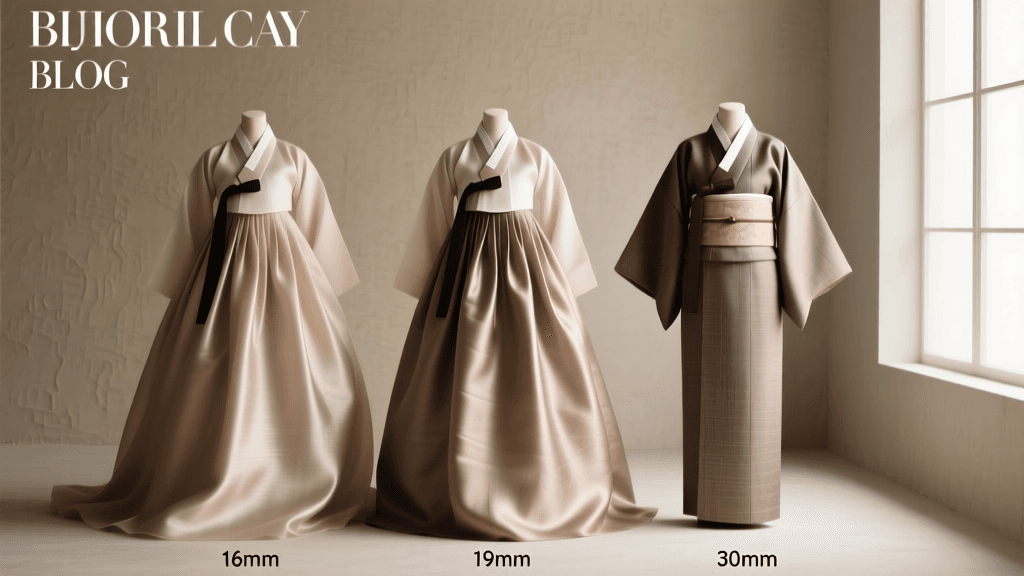
In 2026, the market generally categorizes silk into three tiers: lightweight (under 16mm), medium-weight (16mm to 22mm), and heavyweight (25mm to 30mm+). Choosing the wrong weight can result in a hanbok skirt that lacks volume or a kimono jacket that feels uncomfortably stiff. Below, we break down the optimal momme weights for specific traditional garments.
Optimal Silk Weights for Traditional Kimono
12mm to 16mm: Juban and Summer Wear
Lightweight silks in the 12mm to 16mm range are highly breathable and feature a fluid, delicate drape. In 2026, these weights are predominantly used for juban (undergarments worn beneath the main kimono) and ro or sha (sheer, woven summer silks). Because these garments sit close to the skin or are designed for high humidity, a lower momme ensures maximum comfort and airflow. However, 12mm silk is fragile and prone to tearing under tension, making it unsuitable for outer layers.
19mm to 22mm: Everyday Kimono and Haori
The 19mm to 22mm range is the gold standard for standard, everyday kimono and haori (jackets). A 19mm silk crepe (chirimen) or satin damask (rinzu) provides the perfect balance of structure and fluidity. It is heavy enough to hold the complex folds of the ohashori (the waist fold) without bulking, yet light enough to allow the sleeves to flow gracefully. In 2026, a high-quality 19mm pure mulberry silk yardage typically costs between $65 and $90, reflecting the global rise in organic sericulture costs.
30mm and Above: Formal Obi and Winter Wear
Heavyweight silks, particularly those at 30mm and above, are exceptionally dense, lustrous, and opaque. This weight is mandatory for crafting formal obi (sashes), specifically the fukuro obi and maru obi. The stiffness of 30mm silk allows the obi to hold intricate knots, such as the taiko musubi, without collapsing. It is also utilized for winter outer coats (haori and uchikake), providing necessary insulation and a regal, sweeping drape that commands attention during formal ceremonies.
Optimal Silk Weights for Modern and Traditional Hanbok
12mm to 16mm: Flowing Chima (Skirts)
The traditional Korean chima requires significant yardage to achieve its iconic, voluminous bell shape. Using heavyweight silk for a chima would result in a garment that is exhausting to wear and visually bottom-heavy. Therefore, 12mm to 16mm silk is preferred. In 2026, modern hanbok designers frequently utilize 16mm silk organza or lightweight silk satin for the chima. This weight catches the wind beautifully, allowing the skirt to billow and glide with the wearer's movements while maintaining a comfortable overall garment weight.
19mm: Structured Jeogori (Jackets)
The jeogori is the upper garment of the hanbok, characterized by its sharp, geometric lines, particularly around the dongjeong (the stiff white collar) and the goreum (the long, flowing bow). To maintain these crisp architectural lines, a 19mm silk is ideal. It provides enough body to prevent the jacket from wrinkling excessively at the waist and arms, while remaining supple enough to allow the wearer to move their arms freely. For winter hanbok, designers may line a 19mm outer shell with a 12mm silk batting for warmth without sacrificing the jacket's silhouette.
2026 Sustainability and Ethical Sericulture
A major trend shaping textile choices in 2026 is the demand for ethical sericulture. The Food and Agriculture Organization (FAO) has noted a significant global pivot toward sustainable mulberry farming and 'peace silk' (Ahimsa silk) production. Peace silk allows the silkworm to emerge from the cocoon naturally before the silk is harvested, resulting in a slightly shorter staple fiber but a vastly superior ethical footprint. While traditional mulberry silk remains the standard for ultra-fine, continuous-thread weaves like 30mm obi silk, 16mm and 19mm peace silk blends have become highly sought after for everyday hanbok and kimono, offering a slightly more textured, matte finish that appeals to modern, eco-conscious consumers.
Comparison Chart: Silk Momme Weights by Garment Component
| Garment Component | Recommended Momme | Ideal Silk Weave | Drape & Structure | Est. 2026 Cost/Yard |
|---|---|---|---|---|
| Kimono Juban (Undergarment) | 12mm - 14mm | Habotai, Ro (Sheer) | Fluid, breathable, delicate | $35 - $50 |
| Hanbok Chima (Skirt) | 14mm - 16mm | Satin, Organza, Gapsa | Voluminous, lightweight, flowing | $55 - $75 |
| Everyday Kimono / Haori | 19mm - 22mm | Chirimen (Crepe), Rinzu | Structured drape, opaque, durable | $65 - $95 |
| Hanbok Jeogori (Jacket) | 19mm | Myeongju, Twill | Crisp lines, holds collar shape | $65 - $85 |
| Formal Obi / Winter Coat | 30mm+ | Heavy Satin, Brocade | Stiff, highly structured, regal | $120 - $180+ |
Artisan Dyeing Techniques for Heavyweight Silks
The momme weight of your silk will also dictate which traditional dyeing methods are viable. For lightweight 12mm silks, immersion dyeing and simple resist techniques work best, as the fabric easily absorbs liquid dyes without warping. However, for 19mm to 30mm silks, artisan techniques like Japanese Yuzen and Korean natural fermentation dyeing are preferred.
Yuzen dyeing involves applying a rice-paste resist to the silk before painting intricate, multi-colored designs directly onto the fabric. A 19mm or 22mm crepe silk is the traditional canvas for Yuzen, as the slight texture of the crepe grips the rice paste, preventing the dyes from bleeding. In 2026, master dyers in Kyoto and Kanazawa are increasingly utilizing eco-friendly, plant-based pigments for Yuzen, catering to a market that values both historical accuracy and environmental responsibility. As noted by textile historians at Britannica, the interplay between the silk's physical weight and its capacity to hold complex dyes is what elevates these garments from mere clothing to wearable art.
Verifying Authenticity and Caring for High-Momme Silk
With the premium pricing of high-momme silk in 2026, verifying authenticity is crucial. The most reliable at-home method remains the burn test: a genuine silk thread will burn slowly, self-extinguish when removed from the flame, and smell like burning hair, leaving behind a crushable, dark ash. Synthetic imitations will melt, burn rapidly, and smell like sweet plastic.
Caring for high-momme silk requires strict adherence to gentle practices. While 30mm obi silk should almost exclusively be spot-cleaned or professionally dry-cleaned due to its dense weave and complex internal structures, 16mm and 19mm garments can be gently hand-washed. Use cold water and a pH-neutral, enzyme-free detergent specifically formulated for protein fibers. Never wring or twist the silk; instead, roll it in a clean, dry towel to press out excess moisture, and lay it flat away from direct sunlight to dry. Direct UV exposure in 2026's increasingly intense summer months can rapidly degrade the protein structure of mulberry silk, leading to yellowing and fiber brittleness.
Conclusion
Selecting the correct silk momme weight is the foundational step in creating a beautiful, historically respectful, and comfortable traditional garment. Whether you are commissioning a breezy 16mm hanbok chima for a summer festival or investing in a 30mm silk fukuro obi for a formal tea ceremony, understanding these textile metrics ensures your garment will drape, move, and endure exactly as intended. As the 2026 market continues to embrace sustainable sericulture and bespoke craftsmanship, your knowledge of silk weights will empower you to make informed, exquisite choices for your traditional wardrobe.