2026 Hanfu Storage Rotation & Seasonal Maintenance Guide
Introduction to Hanfu Preservation in 2026
As the global appreciation for traditional Chinese garments continues to surge in 2026, the modern Hanfu wardrobe has evolved from a niche collection into a robust, year-round sartorial rotation. Whether you are an avid collector of Ming Dynasty-style Aoqun, a fan of lightweight Tang Dynasty Ruqun, or an enthusiast of the contemporary Xin Zhongshi (new Chinese style) movement, preserving these intricate textiles requires specialized care. Hanfu garments are often constructed from delicate natural fibers like mulberry silk, raw linen, and intricate silk brocades. These materials are highly susceptible to environmental fluctuations, making proper storage rotation and seasonal maintenance absolutely critical.
Unlike modern fast fashion, traditional Hanfu represents a significant financial and cultural investment. A high-quality, hand-embroidered Mamianqun (horse-face skirt) or a heavy winter velvet-lined cloak can cost anywhere from $150 to over $800 in 2026. Therefore, treating your collection with museum-level preservation techniques is not just recommended; it is essential. In this comprehensive guide, we will explore the latest 2026 methodologies for seasonal rotation, climate control, folding techniques, and pest prevention, drawing upon established textile conservation principles to ensure your garments remain pristine for generations.
The Seasonal Rotation Schedule
The concept of seasonal rotation is deeply rooted in traditional Chinese household management, but modern collectors must adapt these practices to contemporary living spaces. Rotating your Hanfu wardrobe not only protects the fabrics from inappropriate seasonal wear but also gives you the opportunity to inspect, air out, and clean your garments before long-term storage.
Transitioning to Warm Weather (Spring and Summer)
As temperatures rise between March and May, it is time to transition your heavy winter layers into storage and bring out your breathable summer garments. Summer Hanfu typically features lightweight materials such as raw linen, ramie, and sheer silk gauze (Luo and Sha). Before storing your winter garments, ensure they are impeccably clean. Body oils, sweat, and environmental pollutants left on heavy brocades or velvet linings will oxidize over the summer months, causing permanent yellowing and attracting fabric-eating pests.
For summer garments coming out of storage, allow them to breathe. Unpack your linen and silk gauze pieces and hang them in a well-ventilated, shaded area for 24 hours. Never expose delicate silk gauze to direct sunlight, as UV radiation will rapidly degrade the protein fibers, leading to brittleness and color fading.
Preparing for Cold Months (Autumn and Winter)
Between September and November, the rotation shifts back to heavier textiles. Autumn and winter Hanfu often utilize thick silk brocades, velvet, wool blends, and heavily lined jackets. When pulling these from storage, inspect the metallic threads (often used in traditional embroidery and weaving) for any signs of tarnishing or fraying. Store your summer linens and sheer silks in dark, climate-controlled environments to prevent the sun from bleaching their vibrant, often plant-based, dyes.
Essential Storage Materials and Climate Control
The cornerstone of textile preservation is environmental stability. According to the Canadian Conservation Institute, fluctuations in relative humidity (RH) and temperature are the primary catalysts for textile degradation. In 2026, smart home technology makes it easier than ever to maintain a micro-climate within your closet or storage room.
Ideal storage conditions for most Hanfu textiles require a stable temperature of around 65°F to 70°F (18°C to 21°C) and a relative humidity level between 45% and 55%. To achieve this, invest in a Wi-Fi-enabled smart hygrometer, such as the SensorPush Hx, which will send alerts to your smartphone if your closet's humidity drifts outside the safe zone. For active moisture control, compact Peltier-based dehumidifiers like the 2026 Yaufey Smart Closet Dryer (retailing around $85) are perfect for enclosed wardrobe spaces, silently pulling excess moisture from the air without generating damaging heat.
| Fabric Type | Ideal RH Level | Storage Container | Folding vs. Hanging |
|---|---|---|---|
| Mulberry Silk & Satin | 45% - 55% | Acid-free archival boxes | Flat fold with tissue or padded hanger |
| Raw Linen & Ramie | 40% - 50% | Breathable unbleached cotton bags | Hanging (prevents deep, stubborn creasing) |
| Silk Brocade & Jacquard | 45% - 55% | Cedar-lined wooden chests | Flat fold, never hang (prevents warp distortion) |
| Velvet & Plush Blends | 35% - 45% | Cotton garment bags | Wide, heavily padded hangers |
Folding vs. Hanging: Best Practices for Traditional Cuts
One of the most debated topics among Hanfu collectors is whether to fold or hang. The correct answer depends entirely on the garment's cut, weight, and fabric composition. The Victoria and Albert Museum's textile conservation guidelines emphasize that gravity is the enemy of heavy, woven textiles over long periods.
The Art of Flat-Folding (Pingpu)
Heavy garments, such as winter Ao (jackets) and intricate silk brocade Mamianqun, should always be flat-folded. Hanging heavy brocade will cause the warp threads to stretch and distort under the garment's own weight, permanently ruining the drape and silhouette. When folding, use acid-free, unbuffered tissue paper to cushion the folds. This prevents hard creases that can eventually snap delicate silk fibers. Place a layer of tissue paper between every fold, and store the garment in an acid-free archival storage box, such as those manufactured by Gaylord Archival (typically $45 to $60 per box in 2026).
Hanging Lightweight Garments and Skirts
Lightweight summer Ruqun, Shan (shirts), and linen skirts can be hung, provided you use the correct hardware. Never use wire or thin plastic hangers, as they will create shoulder dimples and stress tears. Instead, use wide, padded hangers covered in unbleached cotton or muslin. For Mamianqun and Baiqun (pleated skirts), hanging is often preferred to maintain the crispness of the pleats. Use specialized skirt hangers with wide, felt-padded stainless steel clips to grip the waistband without crushing the fabric. In 2026, many collectors use customized cardboard pleat-inserts to keep the knife pleats of a Mamianqun perfectly aligned while hanging in the closet.
Pest Prevention and Natural Deterrents
Silverfish, carpet beetles, and clothes moths are notorious for feasting on natural protein fibers like silk and wool, as well as the starches often used in traditional garment sizing. The Smithsonian Museum Conservation Institute strongly advises against the use of traditional naphthalene mothballs or paradichlorobenzene crystals. These chemical pesticides not only pose severe health risks to humans but also react with the moisture in the air to create acidic byproducts that will permanently yellow and degrade delicate silk fibers.
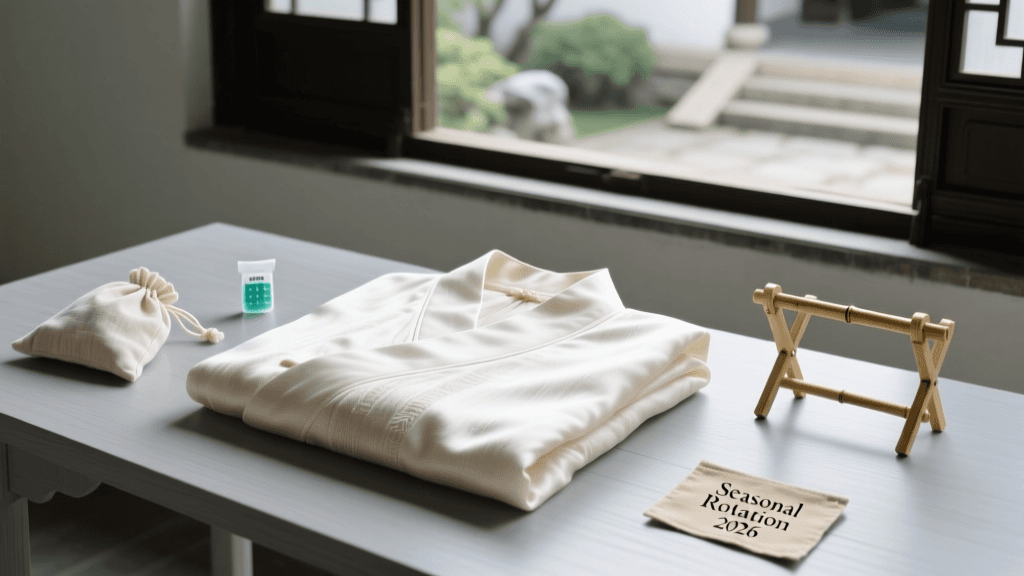
Instead, rely on natural, non-toxic deterrents. Cedarwood blocks and rings are excellent for repelling moths while imparting a pleasant, traditional woody aroma to your storage chests. However, cedarwood loses its aromatic oils over time. To maintain their efficacy, lightly sand the surface of your cedar blocks every six months and apply a few drops of pure cedarwood essential oil. Lavender sachets are another historically appropriate and highly effective alternative. Ensure that any botanical deterrents are wrapped in small cotton pouches so they never come into direct contact with your Hanfu, as essential oils can stain raw silk and linen.
Cleaning Protocols Before Storage
Never store a Hanfu garment that has been worn without cleaning it first, even if it appears pristine to the naked eye. Invisible perspiration and skin cells are a magnet for pests and will cause localized fabric rot over time. For heavily structured garments, metallic-thread embroidery, or lined winter coats, professional dry cleaning by a specialist who understands traditional Asian garments is mandatory. Communicate clearly with your cleaner about the presence of delicate water-soluble dyes or fragile metallic threads.
For everyday summer silks, linens, and cotton blends, gentle hand-washing is preferred. In 2026, specialized eco-friendly textile washes, such as the SinoSilk Wash formula or Eucalan Fine Fabric Wash, are highly recommended. These no-rinse, lanolin-enriched formulas clean the fibers without stripping them of their natural luster or requiring aggressive agitation. Always air-dry your Hanfu flat on a mesh drying rack, reshaping the garment and smoothing out the pleats while it is still damp.
Conclusion
Maintaining a Hanfu wardrobe is a rewarding practice that connects you deeply to the material culture and sartorial elegance of Asian traditions. By implementing a strict seasonal rotation schedule, investing in modern climate-control technology, and adhering to museum-standard folding and pest-prevention techniques, you ensure that your collection remains vibrant and structurally sound. Whether you are preserving a family heirloom or a newly commissioned 2026 Xin Zhongshi masterpiece, treating your garments with the respect they deserve guarantees they will continue to flow, drape, and inspire for decades to come.