Japanese Traditional Garments 2026: Kimono, Yukata & Hakama Guide
The Enduring Legacy of Japanese Garments in 2026
In 2026, the global fashion landscape continues to embrace the rich, structured silhouettes of Japanese traditional garments. Far from being relegated to museum archives or strict ceremonial use, pieces like the kimono, yukata, and hakama have experienced a massive renaissance. Driven by the sustainable fashion movement and a renewed appreciation for heritage craftsmanship, modern wearers are blending centuries-old textile arts with contemporary wardrobes. According to the Japanese Ministry of Economy, Trade and Industry (METI), the demand for upcycled vintage silk and modernized washable textiles has reached an all-time high this year, bridging the gap between ancient tradition and modern practicality.
Whether you are planning to attend a summer matsuri (festival), participating in a traditional tea ceremony, or simply looking to integrate a vintage haori into your daily streetwear, understanding the distinct types of Japanese garments is essential. This comprehensive guide breaks down the anatomy, styling, and 2026 market realities of Japan's most iconic traditional wear.
Kimono: The Pinnacle of Japanese Textile Art
The word "kimono" literally translates to "thing to wear" (ki = wear, mono = thing). While it serves as a catch-all term for traditional Japanese clothing, it specifically refers to the formal, T-shaped, straight-lined robes worn with an obi (sash). As detailed by the Metropolitan Museum of Art's Heilbrunn Timeline of Art History, the kimono's evolution from the kosode of the Edo period to the modern garment is a masterclass in textile engineering and social signaling.
Types of Kimono
- Furisode: The most formal kimono for unmarried women, characterized by dramatic, floor-sweeping sleeves that can reach up to 114 cm in length. In 2026, contemporary furisode designs frequently feature bold, asymmetrical Yuzen dyeing and metallic leaf accents.
- Tomesode: The highest formality for married women. These feature shorter sleeves and intricate patterns located exclusively below the waistline. Kuro-tomesode (black) is strictly for weddings, while Iro-tomesode (colored) is worn for other auspicious events.
- Komon: Casual, everyday kimono featuring repeating patterns across the entire garment. These are the most popular choices for vintage collectors and modern street-style enthusiasts.
- Houmongi: "Visiting wear" for both married and unmarried women. The pattern flows continuously across the seams when the garment is laid flat, making it suitable for tea ceremonies and elegant dinners.
Anatomy and Layering
Wearing a kimono is an architectural endeavor. It requires a nagajuban (undergarment) to protect the delicate silk from body oils, and a hadajuban (undershirt) beneath that. The collar of the nagajuban is often fitted with a han-eri (decorative half-collar), which in 2026 is frequently swapped out for seasonal motifs or modern embroidered lace. The ensemble is secured with an obi, which can range from the casual, pre-tied Nagoya obi to the highly formal, heavily brocaded Maru obi.
Yukata: The Modern Wardrobe Staple
Originally designed as a lightweight bathrobe for the nobility during the Heian period, the yukata has evolved into the ultimate casual summer garment. Unlike the kimono, a yukata is made of unlined cotton, linen, or modern synthetic blends, and is worn directly over standard undergarments. According to Japan Guide's comprehensive overview of traditional Japanese clothing, the yukata is the standard attire for summer fireworks displays, bon odori dances, and onsen (hot spring) resort towns.
2026 Fabric Innovations
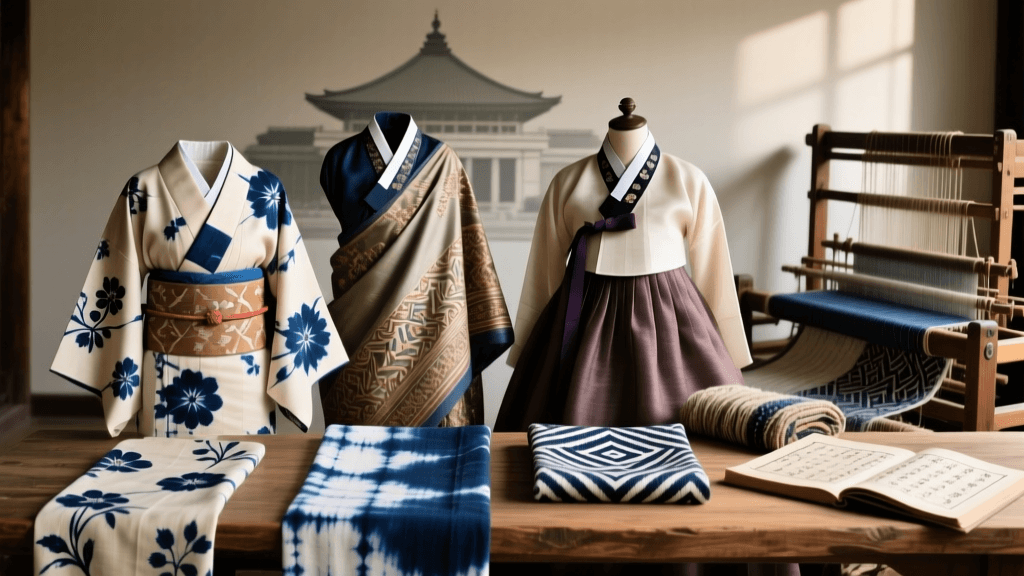
While traditional indigo-dyed cotton remains a classic, 2026 has seen a surge in "tech-yukata." These garments utilize advanced cooling fibers and moisture-wicking linen blends designed to combat increasingly hot Japanese summers. Furthermore, digital textile printing has allowed independent designers to create hyper-customized, small-batch yukata featuring everything from traditional ukiyo-e waves to modern geometric pop-art, all at highly accessible price points.
Yukata Styling and Accessories
Because the yukata is casual, the accessories are simplified. The obi is typically a thin, flexible hanhaba obi (half-width sash), tied in simple bows like the bunko musubi (library knot). Footwear consists of bare feet slipped into geta (wooden clogs), making a distinct clacking sound that is synonymous with Japanese summer evenings.
Hakama and Haori: Structure and Silhouette
While the kimono and yukata focus on wrapping the body in a seamless column, the hakama and haori introduce structure, volume, and outerwear dynamics to traditional Japanese dress.
Hakama: The Pleated Trousers
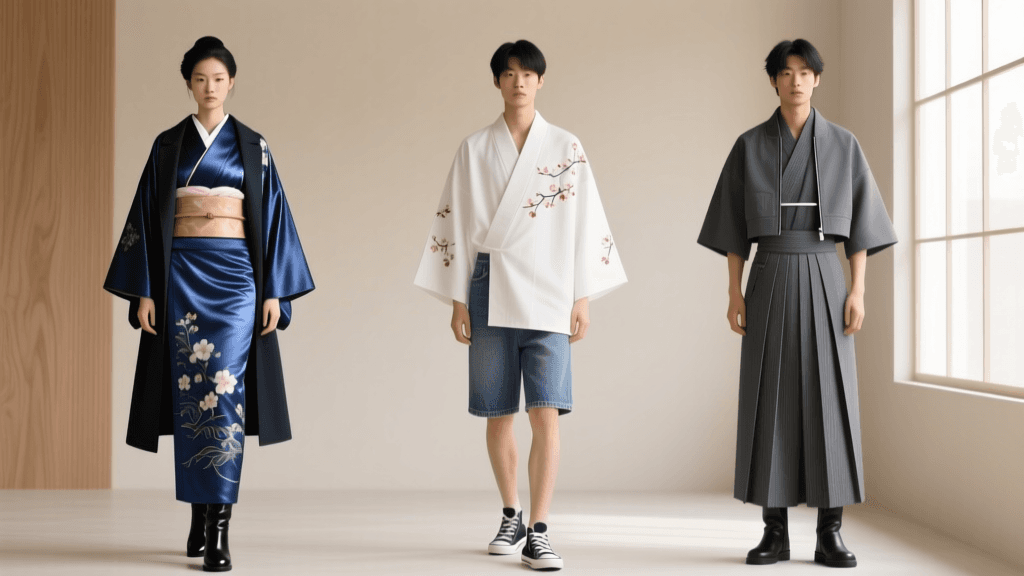
Hakama are wide, pleated trousers or skirt-like garments worn over a kimono. They feature seven deep pleats, traditionally said to represent the seven virtues of Bushido (the way of the samurai): courage, justice, benevolence, respect, sincerity, honor, and loyalty. In 2026, hakama are most commonly seen on university graduation days, Shinto priests, and practitioners of martial arts like kendo and aikido. However, a modern fashion subculture has begun pairing shortened, denim or canvas hakama with casual blouses and sneakers.
Haori: The Kimono Jacket
The haori is a hip- or thigh-length jacket worn over the kimono. Historically worn by men and later adopted by women, the haori is left open at the front, secured only by two short braided cords called haori himo. The interior lining of a vintage haori is often where the true artistry lies, featuring hidden, hand-painted silk murals. In 2026 global streetwear, the haori is frequently styled over turtlenecks, tailored trousers, or even denim, acting as a luxurious, unstructured duster coat.
Comprehensive Comparison Chart (2026 Market Data)
Understanding the differences in formality, fabric, and cost is crucial for anyone looking to purchase or rent traditional garments. Below is a comparative breakdown based on 2026 retail and vintage market averages.
| Garment Type | Primary Fabric | Formality Level | Typical Footwear | 2026 Avg. Price (USD) |
|---|---|---|---|---|
| Kuro-Tomesode | Heavy Silk Crepe | Ultra-Formal (Weddings) | Zori (Brocade) & Tabi | $2,500 - $6,000+ |
| Furisode | Silk Rinzu (Satin) | Formal (Unmarried) | Zori & Tabi | $1,800 - $4,500 |
| Komon | Silk or Washable Poly | Casual / Everyday | Zori or Geta & Tabi | $50 (Vintage) - $800 (New) |
| Yukata | Cotton / Linen Blend | Casual (Summer/Festivals) | Geta (Barefoot) | $40 - $150 |
| Hakama | Polyester / Silk Blend | Ceremonial / Martial Arts | Zori or Tabi Boots | $90 - $350 |
| Haori | Silk / Tsumugi (Pongee) | Outerwear (Versatile) | N/A | $60 (Vintage) - $900 (New) |
Sourcing Authentic Garments: 2026 Buyer's Guide
The market for Japanese traditional garments in 2026 is bifurcated into two main streams: heritage new-make and the booming vintage (recycle) market.
The Vintage (Recycle) Market
Japan's "recycle" shops are treasure troves for authentic, high-quality silk. Due to the aging population and the westernization of daily wardrobes, millions of pristine, hand-painted silk kimono are circulating in the secondhand market. In Kyoto's Nishijin district and Tokyo's Shimokitazawa, buyers can find vintage Komon and Haori for as little as $30 to $80 USD. When shopping vintage, always check the eri (collar) for sweat stains and inspect the hem for fraying. The 2026 trend of "Kimono Remake" (Rimeiku) also allows buyers to purchase damaged silk that has been expertly tailored into modern bomber jackets, tote bags, and skirts.
Commissioning New Garments
Purchasing a brand-new, custom-fitted silk kimono is a luxury investment. It involves selecting the bolt of fabric (tanmono), choosing the dyeing technique (such as Kyo-Yuzen or Kaga-Yuzen), and commissioning a professional tailor. This process can take anywhere from three to six months. For modern convenience, many buyers in 2026 opt for high-grade washable polyester kimono, which mimic the matte texture of silk chirimen (crepe) but can be safely machine-washed at home, drastically reducing maintenance costs.
Garment Care and Preservation
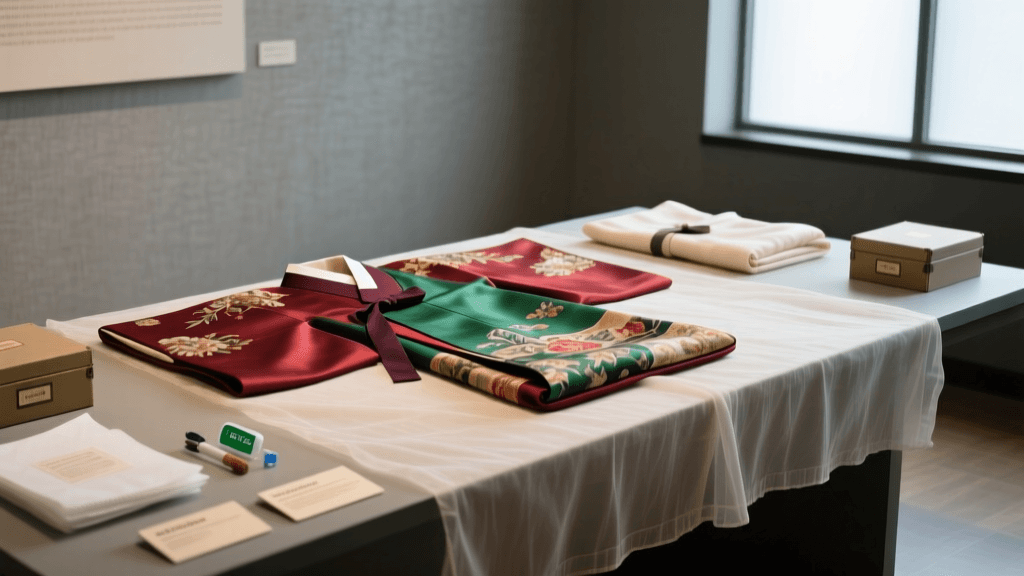
Proper care is essential to ensure these garments survive for future generations. Silk kimono are never washed at home. Instead, they undergo a specialized cleaning process called Maruarai, where the garment is completely taken apart, washed, re-dyed if necessary, and sewn back together. This is typically done every few years or after heavy use.
For storage, garments are folded along their straight seam lines using a specific method called hondatami. They are then wrapped in tatoushi—specialized, acid-free, breathable paper that prevents moisture buildup and yellowing. Storing silk in plastic bags is strictly forbidden, as it traps humidity and leads to mold. Ideally, garments should be kept in a traditional tansu (wooden chest) made of paulownia wood, which naturally regulates humidity and repels insects. For the modern 2026 apartment, cedar-lined storage boxes with silica gel desiccants are the recommended alternative.
Conclusion
The landscape of Japanese traditional garments in 2026 is one of dynamic preservation. Whether you are wrapping yourself in a cooling cotton yukata for a summer festival, investing in a vintage silk haori for contemporary layering, or commissioning a formal furisode for a coming-of-age ceremony, you are participating in a living, breathing textile tradition. By understanding the distinct types, proper styling, and care requirements, you can confidently integrate these masterpieces of Asian heritage into your modern life.