Hanfu Travel Photography: Top Destinations & Social Media Tips
The Rise of Hanfu Tourism and Digital Storytelling
The intersection of traditional Chinese clothing and modern travel has birthed a vibrant and highly visual niche: Hanfu destination tourism. Driven by social media platforms like Douyin, Xiaohongshu, and Instagram, travelers are no longer just visiting historical sites; they are actively stepping into them. The Hanfu movement has transformed ancient capitals and classical gardens into living, breathing film sets. As highlighted in a comprehensive cultural feature by BBC Culture, this revival is not merely a fleeting fashion trend but a profound reconnection with Chinese heritage, allowing younger generations to express their cultural identity through immersive, highly shareable experiences.
For content creators, travel influencers, and cultural enthusiasts alike, planning a Hanfu photoshoot requires a strategic blend of historical accuracy, logistical preparation, and digital storytelling. Whether you are aiming for the ethereal elegance of the Song Dynasty or the opulent grandeur of the Tang Dynasty, understanding the nuances of destination styling is crucial for creating captivating social media content.
Top Destinations for Hanfu Photography
1. Xi'an: The Tang Dynasty Dream
As the ancient capital of Chang'an, Xi'an is the undisputed heavyweight for Tang Dynasty (618–907 AD) aesthetics. The Datang Everbright City and the Xi'an City Wall provide breathtaking backdrops, especially after dusk when thousands of red lanterns are illuminated. The ideal garment here is the Qixiong Ruqun (chest-high skirt), characterized by its flowing silhouettes, vibrant colors, and bold floral embroidery. For social media, night shoots with a glowing paper lantern or a traditional pipa (lute) yield the highest engagement, capturing the cosmopolitan opulence of the Silk Road era.
2. Suzhou: The Elegance of Song and Ming
Suzhou’s classical gardens, such as the Humble Administrator's Garden and the Lingering Garden, demand a more subdued, intellectual aesthetic. This is the perfect setting for Song Dynasty (960–1279 AD) Beizi (long, open-front jackets) paired with pleated skirts, or the Ming Dynasty (1368–1644 AD) Mamianqun (horse-face skirt). The muted, pastel tones and intricate, subtle weaves of these garments complement the misty bamboo groves, moon gates, and koi ponds. Early morning shoots are essential here to capture the soft, diffused light and avoid the heavy foot traffic of midday tour groups.
3. Hangzhou: Wei-Jin Ethereal Vibes
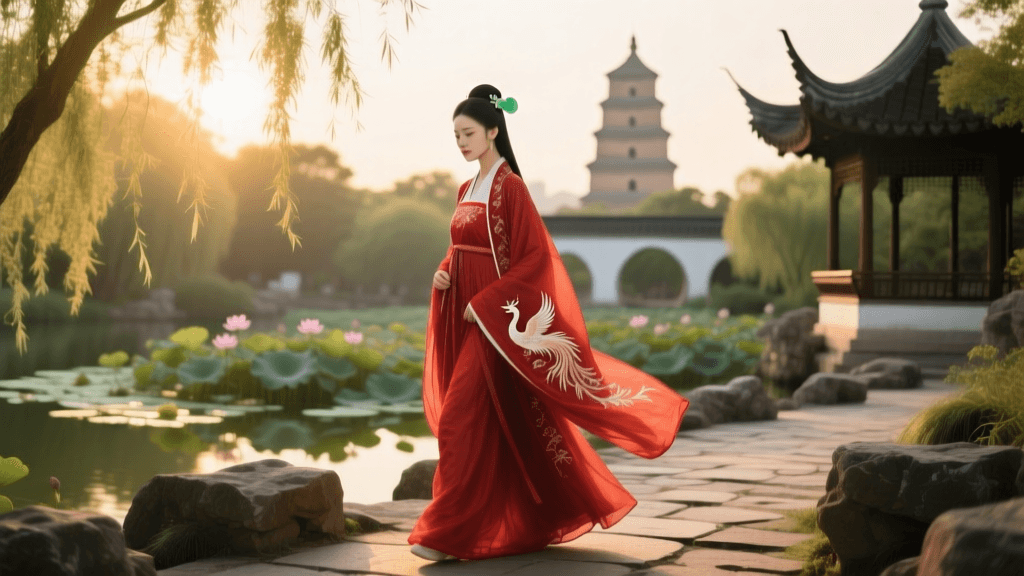
Hangzhou’s West Lake and the surrounding tea plantations offer a lush, natural backdrop that perfectly suits the Wei-Jin period (220–420 AD) aesthetic. Known for its wide sleeves, relaxed fits, and an emphasis on natural beauty and philosophical detachment, the Wei-Jin style looks stunning against the weeping willows and lotus-filled waters of the lake. Flowing, semi-translucent fabrics in earthy or jade-green tones photograph beautifully in the late afternoon sun, creating a dreamy, immortal-like (xianxia) atmosphere that performs exceptionally well on video platforms.
Destination Comparison and Budget Guide
Planning a Hanfu travel itinerary requires balancing historical context with practical logistics. Below is a comparison chart to help you plan your destination shoots, including estimated costs for local rental and professional styling services, which have become a booming micro-industry in these tourist hubs.
| Destination | Ideal Hanfu Style | Best Time to Shoot | Avg. Rental & Makeup Cost |
|---|---|---|---|
| Xi'an | Tang Dynasty Qixiong Ruqun | Dusk to Night (6 PM - 10 PM) | 250 - 400 RMB ($35 - $55) |
| Suzhou | Song/Ming Beizi & Mamianqun | Early Morning (6 AM - 9 AM) | 300 - 500 RMB ($40 - $70) |
| Hangzhou | Wei-Jin Ruqun & Dahu | Late Afternoon (3 PM - 6 PM) | 200 - 350 RMB ($28 - $48) |
Styling and Gear Essentials for the Traveling Enthusiast
Traveling with traditional garments presents unique challenges. While authentic silk is historically accurate for nobility, it wrinkles easily and stains upon contact with water or sweat. For destination travel, modern polyester-crepe blends, high-quality chiffon, and jacquard cotton are highly recommended. These fabrics resist wrinkling during transit, drape beautifully on camera, and withstand the rigors of outdoor exploration.
Layering is another critical component. A proper Hanfu ensemble requires a Dou (traditional undergarment) and a Zhongyi (inner layer) to provide structure and prevent the outer garments from clinging to the body. For footwear, traditional Yuntou (cloud shoes) are visually stunning but lack the arch support needed for navigating ancient cobblestone streets. A practical workaround is to wear traditional embroidered uppers with hidden wedge inserts, or to opt for modern Mary Jane shoes in matching colors, which are largely hidden beneath the hemline of floor-length skirts.
Props are the secret weapon of Hanfu photography. An oil-paper umbrella (Youzhisan), a round silk fan (Tuanshan), a bamboo flute, or a string of jade beads can give your hands something to do, resulting in more natural, dynamic poses. When sourcing props, buy them from specialized online vendors rather than tourist trap shops to ensure they look authentic on high-definition camera sensors.
Social Media Strategies: From Douyin to Instagram
Creating compelling Hanfu content requires tailoring your approach to the specific algorithms and audience expectations of different platforms. On Xiaohongshu (RED), users favor high-aesthetic, editorial-style photo carousels accompanied by detailed guides on where to rent garments, how to pose, and the historical context of the outfit. Utilizing tags like #HanfuTravel, #Guofeng (National Style), and #OOTD is essential for discoverability.
On Douyin and TikTok, the "before-and-after" transition format remains incredibly popular. Creators often start the video in modern, casual airport attire, cover the camera lens with a folding fan, and reveal their full, elaborate Hanfu transformation at the historical site. Pairing these transitions with trending Guofeng audio tracks—featuring traditional instruments like the Guzheng or Erhu mixed with modern beats—maximizes algorithmic push.
For Instagram and YouTube, long-form Reels and vlogs that focus on the intricate details of the garments perform best. Close-up shots highlighting the embroidery of a Mamianqun, the intricate arrangement of hairpins (Zan), and the flowing movement of wide sleeves appeal to global audiences fascinated by couture and craftsmanship. The aesthetic appeal of these garments transcends borders. The global fascination with Chinese aesthetics was famously highlighted in the Metropolitan Museum of Art's landmark exhibition, China: Through the Looking Glass, which extensively documented how Chinese art, textiles, and cinema have continuously shaped international fashion. Today's social media creators are the new ambassadors of this cross-cultural dialogue, translating ancient couture for a global digital audience.
Practical Tips for a Seamless and Respectful Shoot
When engaging in Hanfu tourism, logistical awareness and cultural respect must go hand in hand. Many public gardens and historical sites in China have strict regulations regarding commercial photography. The use of tripods, large reflectors, and multiple outfit changes may require a paid permit or be outright banned to protect the heritage sites and ensure a peaceful experience for regular visitors. Always check local park regulations in advance and opt for handheld gimbals or fast prime lenses (like a 35mm or 50mm f/1.4) that perform well in natural light without bulky gear.
Timing is everything. To capture the iconic misty, empty garden shots in Suzhou, you must arrive right at opening time, usually around 6:00 AM. Conversely, for the illuminated lantern festivals in Xi'an, shooting between 8:00 PM and 10:00 PM provides the best ambient lighting, though you will need to use a wide aperture to manage the low-light conditions and the moving crowds.
Finally, it is vital to approach Hanfu tourism with a mindset of cultural appreciation. Aligning with the principles of UNESCO's Sustainable Tourism Programme, respectful Hanfu tourism encourages travelers to learn about the specific historical eras they are representing, ensuring that the garments are worn correctly (such as the vital rule of crossing the collar left over right, known as Jiaoling Youren). By combining historical mindfulness with modern digital storytelling, content creators can produce stunning visual narratives that honor the rich tapestry of Asian traditions while inspiring a global audience to explore these magnificent destinations.