Kimono Trends on 2026 Global Runways: High Fashion Guide
The Intersection of Heritage and Haute Couture in 2026
The intersection of traditional Japanese garment-making and Western haute couture has reached a fascinating zenith in the 2026 fashion calendar. No longer confined to mere thematic inspiration or superficial costume references, the kimono has been fundamentally deconstructed and respectfully reimagined by the world’s leading fashion houses. From the Spring/Summer 2026 collections in Paris to the Fall/Winter showcases in Milan, designers are moving past the simple "robe" silhouette. Instead, they are engaging with the complex geometry, sustainable textile histories, and structural ingenuity of traditional Japanese dress.
This evolution marks a significant departure from past decades. Today’s top-tier design houses are collaborating directly with master artisans from Kyoto and Kanazawa, integrating centuries-old techniques like Nishijin-ori weaving and Yuzen dyeing into modern, climate-adaptive fabrics. As highlighted by the Victoria and Albert Museum's extensive research on the kimono's global fashion impact, the garment's transition from a strictly traditional cultural artifact to a dynamic pillar of global high fashion represents one of the most important cross-cultural dialogues in modern sartorial history.
The Structural Deconstruction of the Kimono Silhouette
For the 2026 runway season, the defining characteristic of kimono-inspired couture is structural deconstruction. Designers are isolating specific elements of the traditional garment—such as the eri (collar), the sode (sleeves), and the obi (sash)—and exaggerating them to create avant-garde silhouettes that challenge Western tailoring norms.
The Exaggerated Drop-Shoulder and Cape Sleeves
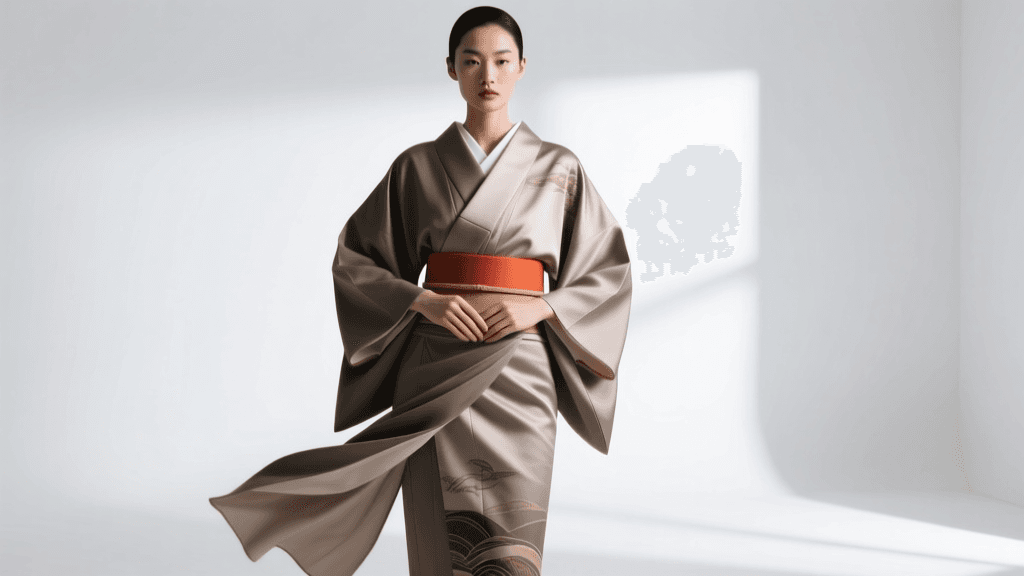
Traditional kimono sleeves, particularly the long, swinging furisode, are designed to hang in elegant, unbroken lines. On the 2026 runways, this concept has been translated into exaggerated drop-shoulders and structured cape sleeves. Unlike the fluid silks of the past, these modern interpretations often utilize stiffened organza, bio-silk jacquards, and wire-framed hems to create architectural volume. The result is a dramatic, sweeping silhouette that mimics the visual weight of a formal kimono while allowing for the mobility required in modern urban environments.
The Corset-Obi Hybrid
The obi is traditionally a wide, rigid sash that acts as the structural anchor of the kimono. In 2026, high-fashion adaptations have merged the obi with Western corsetry. Runway models have been seen wearing wide, 6-to-8-inch structured belts crafted from stiffened brocade and lined with modern flexible boning. This hybrid garment cinches the waist while providing the broad, flat visual plane characteristic of a formal maru obi, effectively bridging the gap to traditional Japanese aesthetics and contemporary hourglass tailoring.
Textile Innovations: Nishijin-Ori Meets 2026 Sustainability
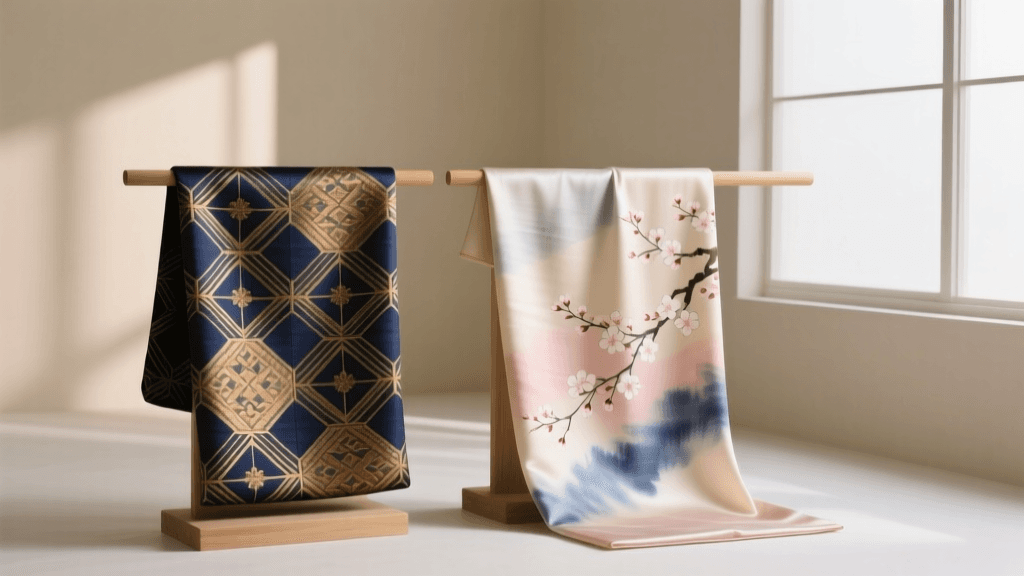
Perhaps the most exciting development on the 2026 global runways is the integration of sustainable technology with heritage textiles. Nishijin-ori, the luxurious, multi-layered jacquard weaving technique native to Kyoto, is notoriously resource-intensive. However, recent collaborations featured in the Kyoto Costume Institute Digital Archives have showcased new bio-silk threads and recycled metallic yarns that replicate the opulent sheen and heavy drape of traditional Nishijin textiles without the environmental toll.
Furthermore, digital Yuzen printing has advanced to a point where it is virtually indistinguishable from hand-painted resist dyeing. Designers are using high-resolution, eco-friendly pigment printing on sustainable cupro and peace silk to recreate the intricate, nature-inspired motifs of the Edo period, updating them with abstract, glitch-art aesthetics that resonate with the 2026 digital-native consumer.
Runway Elements vs. Traditional Counterparts
To truly understand how the kimono is being adapted for the modern runway, it is helpful to compare traditional garment specifications with their 2026 haute couture counterparts.
| Garment Element | Traditional Kimono Specification | 2026 Runway Adaptation |
|---|---|---|
| Sleeves (Sode) | Straight, attached at the shoulder, open underarm vents. | Exaggerated drop-shoulders, wire-framed cape sleeves, closed underarms for structural volume. |
| Collar (Eri) | Thick, folded silk band, worn tightly at the nape of the neck. | Asymmetrical lapels, deep V-necks with stiffened contrast piping, detachable collars. |
| Sash (Obi) | Wide, rigid silk brocade, tied in complex knots at the back. | Structured corset-obis, front-closing metallic clasps, flexible bio-resin boning. |
| Textile | Heavy silk crepe (chirimen) or hand-woven jacquard. | Sustainable bio-silk blends, digital Yuzen prints on cupro, recycled metallic threads. |
| Layering | Multiple inner robes (juban) for warmth and color contrast. | Single-piece slip dresses with illusion mesh layering, detachable sheer Haori overlays. |
Actionable Advice: Integrating Runway Kimono Trends into Your 2026 Wardrobe
While haute couture remains inaccessible to most, the trickle-down effect of the 2026 runway shows has made kimono-inspired styling highly relevant for everyday luxury wardrobes. Here is how you can integrate these trends with precision and respect for the garment's origins.
Proportions and Measurements
The secret to pulling off a kimono-inspired jacket or coat lies in the proportions. When shopping for a modern Haori-style jacket, look for a wingspan (sleeve tip to sleeve tip) of at least 50 to 54 inches. This ensures the garment drapes properly across the shoulders and creates the signature relaxed silhouette. The hem should ideally hit at the mid-thigh or just below the hip, allowing the wide sleeves to frame your underlying outfit without overwhelming your frame.
Layering the Haori for Transitional Weather
The Haori (a traditional hip- or thigh-length kimono-style jacket) is the most versatile piece to emerge from the 2026 trend cycle. For a sophisticated evening look, layer a structured, jacquard Haori over a minimalist silk slip dress and tailored trousers. To achieve the runway look of contrasting textures, pair a heavy, brocade Haori with lightweight, sheer organza blouses. Ensure the inner layers remain streamlined; the volume of the Haori should be the focal point of the ensemble.
Styling the Obi-Inspired Belt
You do not need a full kimono to incorporate the obi trend. Invest in a wide, structured belt (4 to 6 inches in width) crafted from stiffened silk or vegan leather with a subtle brocade pattern. Wear this over a tailored blazer or a high-waisted, wide-leg trouser suit. This technique instantly elevates a standard Western business suit, injecting a sense of avant-garde couture while maintaining professional appropriateness. Position the belt slightly higher than your natural waist to elongate the legs and mimic the traditional kimono silhouette.
Sourcing Authentic and Inspired Pieces
When sourcing kimono-inspired pieces or authentic vintage garments that align with 2026 styling trends, provenance and material quality are paramount. The global market has seen a surge in demand for upcycled vintage kimono fabrics, which are being recut into modern Haori jackets and wide-leg trousers by sustainable fashion labels.
- Authentic Vintage: Platforms specializing in Japanese vintage textiles offer authentic silk Haori jackets ranging from $150 to $400. Look for pieces with intact hakkake (the decorative inner lining), as this dual-layer construction provides the beautiful weight and drape seen on the runways.
- Contemporary Artisan Collaborations: Brands partnering directly with Japanese weaving cooperatives offer modern, ready-to-wear kimono coats. Expect to invest between $800 and $2,500 for these pieces, which feature authentic Nishijin-ori textiles adapted for modern dry-cleaning and wear.
- Accessible Luxury: High-street luxury brands are offering obi-corsets and wide-sleeve blouses in sustainable viscose and cupro blends. These pieces typically range from $250 to $600 and provide an excellent entry point into the trend without the heavy maintenance required by pure silk.
Conclusion
The presence of the kimono on the 2026 global runways is a testament to its timeless architectural brilliance. By understanding the structural nuances of the garment—from the dramatic sweep of the sleeves to the grounding presence of the obi—fashion enthusiasts can respectfully and stylishly integrate these haute couture concepts into their daily lives. As the fashion industry continues to seek out sustainable, historically rich alternatives to fast fashion, the kimono stands not just as a relic of the past, but as a vital, evolving blueprint for the future of global design. For further exploration of traditional Japanese sartorial arts, the Japan Foundation's traditional arts exhibitions remain an invaluable resource for understanding the deep cultural context behind these breathtaking garments.