Nishijin-Ori vs Yuzen Silk: Custom Kimono Fabrics 2026
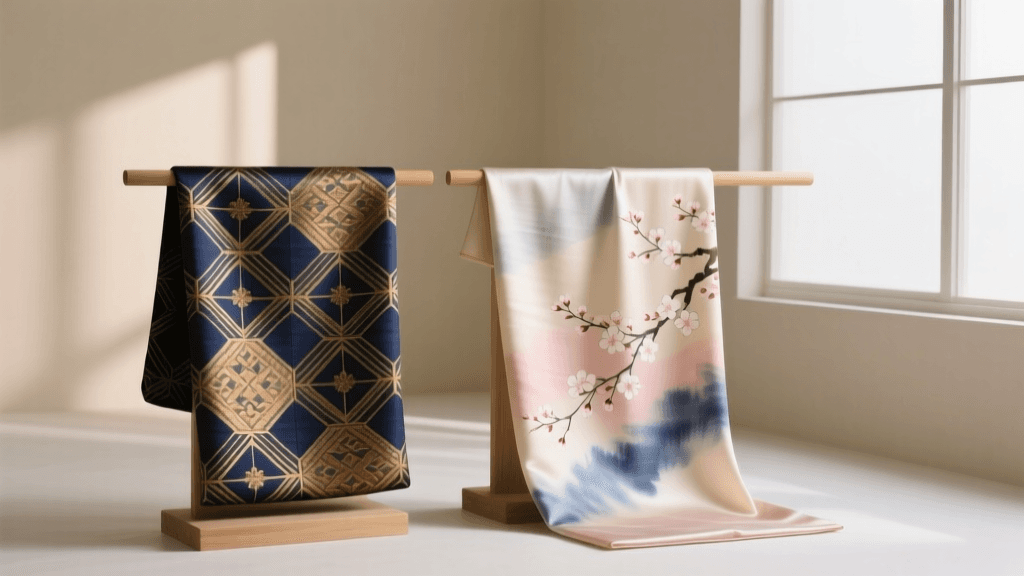
The 2026 Kimono Renaissance: Woven vs. Dyed Silks
The landscape of traditional Japanese garments has evolved significantly by 2026, blending centuries-old heritage with modern wearability and sustainable practices. For collectors, brides, and cultural enthusiasts commissioning custom kimono, the most critical decision lies in the textile. The two undisputed titans of luxury Japanese silk are Nishijin-ori (intricate jacquard weaving) and Yuzen (resist-dyeing). Understanding the structural, aesthetic, and financial differences between these two techniques is essential for anyone investing in high-end Asian traditional garments this year.
While both textiles represent the pinnacle of Japanese craftsmanship, they serve entirely different aesthetic purposes and behave uniquely on the body. As noted by the Victoria and Albert Museum, the structural integrity and visual depth of woven silks offer a sculptural quality, whereas dyed silks provide a fluid, painterly canvas. In this comprehensive guide, we break down everything you need to know about choosing between Nishijin-ori and Yuzen silk for your 2026 custom kimono wardrobe.
Nishijin-Ori: The Architectural Weave
Originating in the Nishijin district of Kyoto, Nishijin-ori is not merely a fabric; it is an architectural marvel of threads. This technique utilizes complex jacquard looms to weave intricate patterns directly into the silk, often incorporating metallic threads, gold leaf (kinkaku), and silver. By 2026, the Nishijin Textile Center has successfully integrated modern, lightweight metallic yarns that retain the opulent luster of traditional gold leaf but reduce the garment's overall weight by 15%, making formal wear far more comfortable for contemporary all-day events.
Characteristics and Drape
Nishijin-ori is renowned for its stiffness, durability, and rich texture. Because the pattern is woven into the fabric, the textile possesses a heavy, structured drape. This makes it the absolute gold standard for obi (the sash worn with kimono) and formal outer garments like the uchikake (bridal over-robe). The fabric holds its shape beautifully, creating the crisp, elegant lines required for formal silhouettes. However, its density means it is generally too warm and heavy for high-humidity summer months, though 2026 innovations in open-weave Nishijin sha (gauze) are beginning to change this.
2026 Pricing and Commissioning
Authentic, hand-loomed Nishijin-ori remains a premium investment. In 2026, a custom-woven Nishijin fukuro obi (formal sash) typically ranges from $3,500 to $8,500 USD, depending on the inclusion of precious metals and the complexity of the weave. Full kimono bolts woven in this style are rarer and can exceed $12,000 USD. Commissioning a bespoke piece requires a lead time of 8 to 14 months, as master weavers in Kyoto are currently experiencing a surge in global demand.
Yuzen Dyeing: The Painter’s Canvas
If Nishijin-ori is architecture, Yuzen is fine art. Developed in the late 17th century, Yuzen is a resist-dyeing technique that allows artisans to paint elaborate, multi-colored designs directly onto the silk canvas. The process involves applying a rice-paste resist (itome-nori) to outline the design, preventing dyes from bleeding into one another. The Smithsonian National Museum of Asian Art highlights that this technique revolutionized garment decoration, allowing for pictorial landscapes, flowing water motifs, and hyper-realistic florals that weaving simply could not achieve.
Kyo-Yuzen vs. Kaga-Yuzen in 2026
When shopping for Yuzen today, you will encounter two primary regional styles. Kyo-Yuzen (from Kyoto) is characterized by its use of vibrant, contrasting colors, gold leaf accents, and stylized, elegant motifs. It is the preferred choice for weddings and coming-of-age ceremonies. Kaga-Yuzen (from Kanazawa) is celebrated for its hyper-realistic, nature-inspired designs, utilizing a specific five-color palette (kaga-gosai) and incorporating subtle 'bug-eaten' leaf effects (mushikui) to reflect the transient beauty of nature. In 2026, Kaga-Yuzen has seen a massive resurgence among younger buyers seeking understated, nature-centric luxury.
Furthermore, the 2026 Yuzen market has heavily embraced eco-friendly practices. Many top-tier ateliers in Kyoto and Kanazawa have transitioned to botanical, non-toxic dyes and closed-loop water filtration systems, appealing to eco-conscious global consumers without sacrificing colorfastness.
2026 Pricing and Commissioning
Yuzen kimono offer a slightly wider price range due to the varying levels of hand-painting versus stencil (kata-yuzen) application. A high-quality, hand-painted Kyo-Yuzen tomesode (formal married women's kimono) will cost between $4,000 and $9,000 USD in 2026. Stencil-assisted Yuzen garments, which are still beautiful but less labor-intensive, can be found in the $1,500 to $3,000 USD range. Lead times for fully hand-painted custom commissions average 6 to 10 months.
The Ultimate 2026 Textile Comparison Chart
| Feature | Nishijin-Ori (Woven) | Yuzen (Dyed) |
|---|---|---|
| Production Method | Jacquard loom weaving; pattern integrated into threads. | Rice-paste resist dyeing; pattern painted on fabric surface. |
| Weight & Drape | Heavy, structured, crisp, and sculptural. | Lightweight, fluid, soft, and highly drapable. |
| Visual Texture | Tactile, raised threads, metallic luster, reversible patterns. | Smooth surface, painterly gradients, pictorial depth. |
| Formality Level | Peak formality (especially for Obi and Uchikake). | High formality (Tomesode, Furisode), but adaptable to casual. |
| 2026 Avg. Price (Kimono) | $8,000 - $15,000+ USD | $2,500 - $9,000 USD |
| Best Climate | Cooler months (Autumn/Winter/Spring). | Year-round (depending on base silk weave like chirimen or rin). |
How to Authenticate and Inspect Your Silk
Whether you are buying from a vintage dealer in Tokyo or commissioning a new piece, knowing how to inspect the textile is crucial. The most reliable method to distinguish between woven and dyed silk is the Reverse Side Test. Turn the fabric over. If the pattern is clearly visible on the back (often with inverted colors or floating threads), it is a woven textile like Nishijin-ori. If the back is mostly blank or white, with only faint shadows of the dye penetrating through, it is a dyed textile like Yuzen.
Additionally, perform the Sound Test. High-quality, pure Japanese silk produces a unique, crisp rustling sound known as kinu-nari (the scroop of silk) when rubbed together. Synthetic blends or heavily sized silks will feel slippery and remain silent. According to the Japan National Tourism Organization, visiting heritage districts like Kyoto's Nishijin or Kanazawa's Higashi Chaya allows buyers to experience these authentic textiles firsthand and consult directly with master artisans.
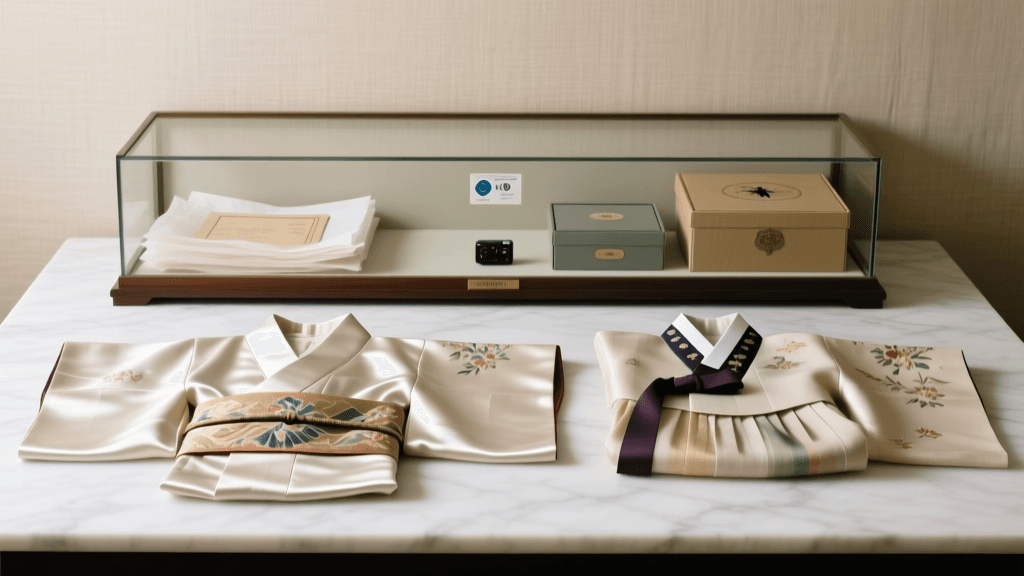
Garment Care and Preservation
The care requirements for these two textiles differ slightly due to their construction. Nishijin-ori, with its metallic threads and complex floats, is highly susceptible to snagging. It should never be folded tightly along the same crease lines repeatedly, as the metallic threads can fracture over time. Yuzen silk, while structurally simpler, is vulnerable to water spots and UV fading, particularly the vibrant reds and purples of Kyo-Yuzen.
For both textiles, 2026 best practices dictate storing them in tansu chests made of Paulownia wood (kiri). Paulownia naturally regulates humidity and repels insects. Avoid plastic garment bags, which trap moisture and encourage mold growth. Have your garments professionally cleaned (arai-hari) only when strictly necessary, and air them out in a shaded, well-ventilated room during the dry, crisp days of late autumn to maintain the silk's structural integrity and luster for generations to come.