Sustainable Japanese Natural Dye Plants: Eco Methods 2026
The Renaissance of Kusaki-zome in 2026
The global textile industry is undergoing a radical transformation in 2026 as designers and artisans increasingly reject the environmental toll of synthetic azo dyes. At the forefront of this sustainable fashion revolution is Kusaki-zome (草木染め), the traditional Japanese art of plant dyeing. Unlike conventional synthetic dyeing, which accounts for nearly 20% of global industrial water pollution, Kusaki-zome relies on indigenous flora, biodegradable mordants, and closed-loop water systems. According to recent circular economy reports by the Ellen MacArthur Foundation, the shift toward regenerative, plant-based colorants is one of the most critical steps in achieving zero-waste textile production by the end of the decade.
For modern dyers, embracing Japanese natural dye plants is not merely a nod to historical aesthetics; it is a highly actionable, eco-friendly methodology. By utilizing agricultural byproducts and cultivating specific dye crops, artisans in 2026 are creating vibrant, colorfast textiles while actively sequestering carbon and preserving local biodiversity. This guide explores the most sustainable Japanese dye plants, modern eco-mordanting techniques, and water-saving extraction methods relevant to today's conscious makers.
Top Eco-Friendly Japanese Dye Plants
The foundation of Kusaki-zome lies in selecting plants that offer high pigment yield, require minimal processing, and can be grown or foraged sustainably. Here are the top three botanical colorants dominating the eco-dye space in 2026.
Ai (Japanese Indigo)
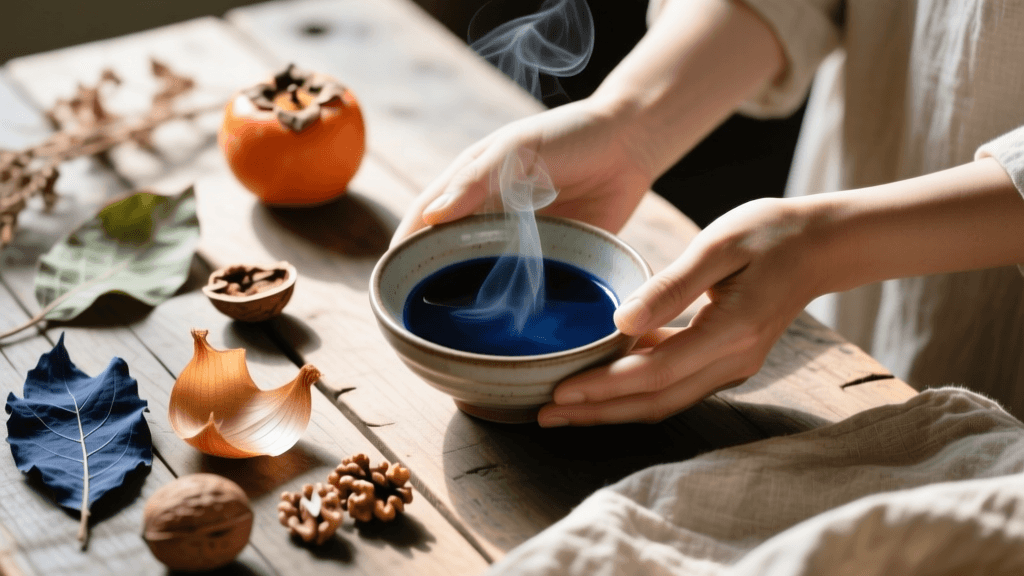
Japanese indigo (Persicaria tinctoria) is distinct from its tropical cousin, Indigofera tinctoria. Historically cultivated in the Tokushima prefecture, Ai is processed into sukumo (fermented dried leaves) rather than a concentrated chemical paste. In 2026, artisanal dyers are utilizing solar-powered temperature controls to maintain the 30°C fermentation vat without relying on fossil fuels. The Metropolitan Museum of Art notes that natural indigo vats act as living ecosystems, where the bacteria naturally reduce the indigotin pigment without the need for toxic synthetic reducing agents like sodium hydrosulfite. A 500g bag of premium, organically farmed Tokushima sukumo currently retails for around $65 USD, yielding enough pigment to dye over 20 meters of heavy linen.
Kurumi (Japanese Walnut)
The Japanese walnut (Juglans ailantifolia) provides a rich, warm brown dye derived from its green husks and bark. Kurumi is exceptionally eco-friendly because it is high in juglone, a natural tannin that acts as a substantive dye. This means it bonds directly to cellulose and protein fibers without the need for any metallic mordant, entirely eliminating heavy metal runoff. Foragers and dyers in 2026 are partnering with local orchards to upcycle fallen green husks in late autumn, turning agricultural waste into a highly sought-after, colorfast botanical pigment.
Tama-ne (Onion Skins)
While not exclusive to Japan, the use of Tama-ne (yellow and red onion skins) is a staple in Japanese household and studio dyeing. Rich in quercetin, onion skins yield brilliant golds, oranges, and rusts. In 2026, zero-waste studios are formalizing supply chains with local restaurants to collect onion skins that would otherwise be composted or sent to landfills. Because the pigment is highly concentrated, only 100 grams of dried skins are needed to dye 100 grams of fiber, making it one of the most resource-efficient dye plants available.
Sustainable Mordanting: Ditching Heavy Metals
Historically, some natural dyeing practices relied on heavy metals like chrome (potassium dichromate) and copper to shift colors and improve lightfastness. Today, these are recognized as severe environmental and health hazards. The modern Kusaki-zome practitioner utilizes bio-mordants and low-toxicity mineral salts. The Victoria and Albert Museum highlights that historical dyers often used plant-based tannins and iron-rich muds, a practice that modern science has refined for safety and consistency.
| Mordant Type | Chemical Composition | Environmental Impact (2026 Standards) | Color Shift Effect |
|---|---|---|---|
| Potassium Alum | Potassium Aluminum Sulfate | Low toxicity; naturally occurring mineral; safe for soil in small quantities. | Brightens and clarifies yellows and reds. |
| Soy Milk (Daizu) | Plant Protein Binder | Zero toxicity; 100% biodegradable; upcycles culinary byproducts. | Builds color depth on cellulose fibers (cotton/linen). |
| Iron Liquor (Kanetsu) | Ferrous Acetate (Rusted nails + vinegar) | Low toxicity; utilizes upcycled scrap metal and food-grade acetic acid. | Saddens, darkens, and grays colors (e.g., turns yellow to olive green). |
| Chrome (Banned) | Potassium Dichromate | Highly toxic; carcinogenic; severe water contaminant. | N/A (Do not use). |
Water-Saving Extraction and Closed-Loop Vats
Water scarcity is a pressing issue in 2026, and traditional dyeing methods that require constant water changes are no longer viable. Eco-conscious Japanese dyers have adopted 'closed-loop' vat systems. In an Ai (indigo) vat, the alkaline liquid is never discarded. Instead, the vat is 'fed' with small amounts of calcium hydroxide (slaked lime) and wheat bran to maintain the bacterial ecosystem. A well-maintained sukumo vat can remain active for years, with only the evaporated water being replaced.
For extraction dyes like Kurumi and Tama-ne, dyers are utilizing 'ice dyeing' and 'solar extraction' methods. By placing plant material and damp, mordanted fabric in a sealed glass jar and leaving it in direct sunlight for 7 to 14 days, the heat slowly extracts the pigment directly into the fiber. This cold-water extraction method uses 90% less water than traditional stovetop simmering and requires zero electricity.
Step-by-Step: Eco-Friendly Ai Vat Setup for 2026
Setting up a natural fermentation indigo vat at home is highly achievable. Here is a precise, eco-friendly method for a 10-liter vat using modern sustainable ingredients.
- Materials Needed: 200g Tokushima Sukumo, 40g Calcium Hydroxide (slaked lime), 60g Wheat Bran, 10 liters of dechlorinated water, a food-grade bucket with a tight lid, and a digital thermometer.
- Step 1: Water Preparation. Fill the bucket with 10 liters of water. If using tap water, let it sit uncovered for 24 hours to allow chlorine to evaporate, as chlorine will kill the indigo-reducing bacteria.
- Step 2: Alkalinity. Stir in the 40g of calcium hydroxide. The pH should reach between 10.5 and 11.5. Use a digital pH meter to verify.
- Step 3: Feeding the Bacteria. Add the 60g of wheat bran. This provides the carbohydrates necessary for the bacteria to thrive and consume oxygen from the water.
- Step 4: Introducing the Indigo. Gently sprinkle the 200g of sukumo onto the surface. Do not stir vigorously, as introducing oxygen will hinder the reduction process.
- Step 5: Incubation. Seal the bucket and place it in a temperature-controlled space (or use a solar-heated water bath) maintained at exactly 30°C to 35°C.
- Step 6: Monitoring. After 4 to 7 days, the surface will develop a metallic, copper-colored scum known as the 'indigo flower' (ai no hana). The liquid beneath should be a clear, amber-yellow. Your eco-friendly vat is now ready for dyeing.
Cultivation and Climate Resilience
As climate patterns shift in 2026, the cultivation of Japanese dye plants requires adaptive agricultural practices. Persicaria tinctoria is highly resilient but requires consistent moisture during its early growth stages in May and June. To combat unpredictable spring droughts, regenerative farms in Japan are intercropping Ai with deep-rooted daikon radishes, which naturally till the soil and improve water retention. By supporting farms that utilize these permaculture techniques, dyers ensure that the revival of Kusaki-zome actively heals the earth rather than depleting it.
Ultimately, the transition to Japanese natural dye plants is a profound commitment to slow fashion. By mastering the chemistry of bio-mordants, respecting the living ecology of the indigo vat, and upcycling agricultural byproducts like walnut husks and onion skins, modern artisans are proving that the most advanced sustainable technologies of 2026 are, in fact, rooted deeply in the ancient wisdom of Kusaki-zome.