Ultimate Kimono Storage Preservation & Collection Guide 2026
The Art and Science of Kimono Preservation in 2026
Preserving vintage silk kimonos is a meticulous endeavor that bridges centuries-old Japanese tradition with modern conservation science. Whether you are managing a family heirloom collection, curating for a museum, or archiving rare Meiji, Taisho, and early Showa era garments, the stakes are incredibly high. Silk is a protein fiber that is highly susceptible to environmental degradation, including photo-oxidation, hydrolysis, and biological attacks from pests. As we navigate through 2026, the integration of advanced climate-monitoring technology with traditional Japanese storage philosophies has created a new gold standard for textile preservation. This comprehensive guide explores the best practices for kimono storage preservation and collection management, ensuring your garments survive for generations to come.
The Foundation: Tatoushi and Archival Washi Paper
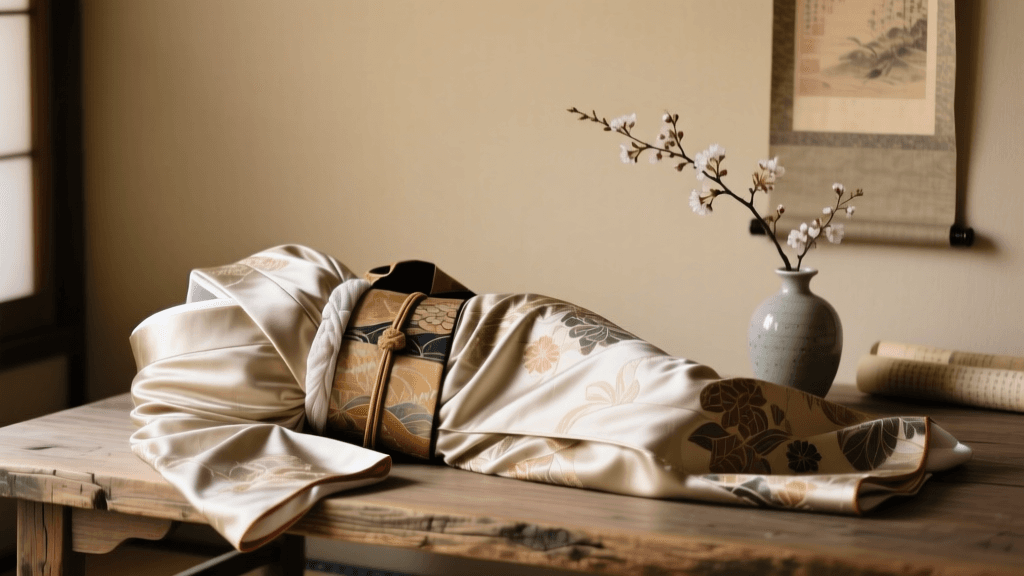
The cornerstone of any kimono storage strategy is tatoushi, the traditional wrapping paper used to encase folded garments. Unlike standard wood-pulp paper, which contains acidic lignins that will yellow and degrade silk over time, authentic tatoushi is crafted from archival-grade washi (Japanese paper) made from the inner bark of the kozo (mulberry) tree. This material is naturally acid-free, highly breathable, and possesses exceptional moisture-buffering properties.
In 2026, leading conservation suppliers offer tatoushi infused with nano-cellulose and natural insect-repellent botanicals, such as camphor and Japanese cedar oil, without the risk of staining the delicate silk. When wrapping a kimono, the tatoushi acts as a microclimate buffer, absorbing excess ambient humidity and releasing it when the air becomes too dry. This passive regulation is critical for preventing the growth of mold spores, which thrive in stagnant, humid environments and can permanently stain silk crepe (chirimen) and satin weaves (rinzu).
The Hon-Datami Folding Technique
Before wrapping, the kimono must be folded using the hon-datami (standard folding) method. This specific folding pattern is designed to align with the garment's original seams, preventing unnecessary stress on the threads and ensuring the garment lies perfectly flat. Improper folding can lead to permanent creasing, which over time causes the silk fibers to fracture along the fold lines.
- Step 1: Lay the kimono flat on a clean, acid-free surface, face down.
- Step 2: Fold the left front panel over the center back seam.
- Step 3: Fold the right front panel over the left, aligning the collar and the bottom hem perfectly.
- Step 4: Fold the sleeves inward, ensuring the metallic threads (surihaku) or delicate embroidery do not overlap or press against each other.
- Step 5: Fold the garment in half or thirds from the bottom up, placing small rolls of acid-free tissue paper inside the folds to cushion the creases and prevent hard lines.
Upgrading to Paulownia (Kiri) Tansu and Modern Hybrids
Traditionally, kimonos are stored in tansu (chests of drawers) crafted from kiri (Paulownia) wood. Paulownia is uniquely suited for textile storage due to its hygroscopic nature. In high-humidity conditions, such as the Japanese rainy season (tsuyu), the wood absorbs moisture and swells, effectively sealing the drawers and blocking out damp air. In dry winter months, the wood shrinks slightly, allowing the garments to breathe.
In 2026, the market has seen the rise of hybrid tansu that combine the exterior aesthetics and natural properties of Paulownia wood with interior passive climate-control cassettes. These modern drawers feature hidden compartments for silica gel and activated charcoal trays, which can be easily regenerated in a standard oven. For serious collectors, investing in a high-quality, joinery-crafted kiri tansu remains the ultimate storage solution, as it naturally deters pests and provides a dark, UV-protected environment.
Climate Control and IoT Monitoring for Textile Collections
According to the Canadian Conservation Institute, maintaining a stable environment is far more important than achieving a specific 'perfect' number. Fluctuations in temperature and relative humidity (RH) cause silk fibers to expand and contract, leading to mechanical fatigue and the delamination of metallic leaf applications.
For optimal kimono storage in 2026, collectors should aim for a stable temperature between 18°C and 20°C (64°F - 68°F) and a relative humidity of 45% to 55%. To achieve this, modern collection managers utilize Internet of Things (IoT) micro-climate sensors. Devices such as the SensorPush H.T.w or Elitech GSP series can be placed directly inside the tansu drawers or archival boxes. These sensors transmit real-time data to a smartphone app, alerting the collector immediately if the humidity spikes or drops beyond the safe threshold, allowing for proactive intervention before mold or desiccation can occur.
Pest Management: Anoxia and Freezing Protocols
The two most devastating pests for vintage kimonos are the webbing clothes moth and the carpet beetle. Historically, collectors relied on chemical mothballs containing naphthalene or paradichlorobenzene. Today, these chemicals are strictly avoided in professional conservation, as their off-gassing can degrade silk proteins and leave a persistent, noxious odor that is nearly impossible to remove from vintage linings.
Experts at The Metropolitan Museum of Art's Textile Conservation department emphasize that preventive, non-toxic methods are the standard for modern preservation. If a garment is suspected of harboring pest eggs, the recommended 2026 protocol is deep freezing or anoxia (oxygen deprivation).
- Deep Freezing: The kimono is sealed in a polyethylene bag with an absorbent buffer to prevent condensation. It is then placed in a chest freezer at -20°C (-4°F) for a minimum of 72 hours, thawed slowly at room temperature, and refrozen for another 48 hours to ensure all life stages of the pest are eradicated.
- Anoxia Treatment: For garments that cannot withstand freezing (such as those with lacquered elements or certain delicate dyes), anoxia is used. The garment is sealed in an oxygen-barrier film with oxygen-absorbing packets (like Ageless). This reduces the oxygen level inside the envelope to below 0.1%, effectively suffocating any pests over a 21-day period without the use of toxic chemicals.
Collection Management: Digitizing Your Kimono Archive
As collections grow, physical handling increases the risk of accidental damage. In 2026, comprehensive digital cataloging is an essential component of collection management. By creating a detailed digital database, collectors can view motifs, crests (kamon), lining colors, and provenance without needing to physically unfold the garments.
Modern collection management software allows for high-resolution image mapping, where specific details like the hiyoku (inner lining) color or the weave structure of the obi are tagged and searchable. Furthermore, passive UHF RFID (Radio Frequency Identification) tags are now being sewn into the storage bags or tatoushi wrappers. This allows curators to scan a storage room with a handheld reader and instantly locate a specific kimono within a stack of dozens of identical tansu drawers, drastically reducing handling time and physical wear on the collection.
Storage Material Comparison Chart
Choosing the right materials for your storage environment is critical. Below is a comparison of common storage materials used for silk kimonos in 2026:
| Material | Breathability | Moisture Control | Pest Resistance | 2026 Recommendation |
|---|---|---|---|---|
| Paulownia Wood (Kiri) | Excellent | High (Hygroscopic swelling) | Naturally deters insects | Highly Recommended for primary long-term storage. |
| Archival Washi (Tatoushi) | Excellent | High (Buffers microclimate) | Neutral (Use with botanicals) | Mandatory for direct wrapping of all silk garments. |
| Acid-Free Cardboard Boxes | Good | Moderate | Low (Susceptible to silverfish) | Recommended for secondary storage or transport. |
| Polyethylene Plastic Bins | None | Traps moisture (High risk) | High barrier to pests | Not Recommended unless used strictly for anoxia/pest treatment. |
| Cotton Muslin Bags | Excellent | Low | Low | Acceptable for short-term display storage, but lacks moisture buffering. |
Expert Tips for Long-Term Archival Success
Beyond the physical storage materials, the ritual of mushiboshi (airing out the garments) remains a vital practice. Twice a year, typically in the crisp, dry days of late autumn and early spring, kimonos should be removed from their storage, unwrapped, and hung on specialized bamboo or padded hangers in a shaded, well-ventilated room. This allows the fibers to relax, releases any trapped odors, and gives the collector an opportunity to inspect the garments for early signs of foxing, mold, or pest activity.
Never hang a vintage silk kimono in direct sunlight, as UV radiation will cause irreversible photodegradation, fading the delicate natural dyes and weakening the silk protein structure. When returning the garments to storage, ensure your hands are freshly washed and free of lotions or oils, or wear clean, lint-free cotton gloves. By respecting the traditional wisdom of tatoushi and kiri tansu while embracing the precision of 2026's IoT climate monitoring and digital cataloging, you can ensure your kimono collection remains a vibrant, intact testament to Asian textile heritage for centuries to come.