The Ultimate 2026 Kimono Travel Guide: Packing & Transport
Introduction to Kimono Travel in 2026
The global appreciation for traditional Japanese garments has experienced a massive resurgence by 2026. Whether you are an international collector returning from Kyoto with a vintage Meiji-era piece, a practitioner of traditional arts traveling for a ceremony, or a cultural enthusiast bringing your own silk kimono abroad for a special event, transporting these delicate garments requires meticulous planning. Unlike modern Western clothing, a kimono is constructed from straight bolts of fabric, featuring intricate dyeing, embroidery, and delicate silk linings that are highly susceptible to friction, moisture, and improper folding. According to The Metropolitan Museum of Art, the structural integrity and artistic preservation of the kimono rely heavily on how the garment is handled and stored. In this comprehensive 2026 guide, we explore the most effective methods for packing, transporting, and maintaining your kimono on the go, ensuring it arrives at your destination in pristine condition.
Pre-Trip Preparation: Inspecting and Cleaning
Before you even consider packing, your kimono must be impeccably clean. Natural silk fibers are highly attractive to moths and other pests, and invisible stains from sweat or oils can oxidize and permanently discolor the fabric during transit. In 2026, eco-friendly liquid carbon dioxide (CO2) dry cleaning has become the gold standard for delicate textiles, offering a gentle, non-toxic alternative to traditional perc solvents. If your kimono requires spot cleaning, consult a specialist who understands maru-arai (traditional Japanese washing techniques). Once cleaned, inspect the garment under bright, natural light. Check the hem (suso) and the back of the collar (eri) for any lingering dirt. Ensure the lining (jaku) is completely dry, as trapping even trace amounts of moisture inside a luggage compartment can lead to devastating mildew growth. After inspection, allow the kimono to air out in a well-ventilated, shaded room for at least twenty-four hours before packing.
The Art of Folding: Traditional Tatou vs. Modern Techniques
The foundational skill of kimono care is the hon-tatou (basic folding) method. This centuries-old technique is specifically designed to align the seams and distribute the weight of the fabric evenly, preventing deep, permanent creases that can weaken silk fibers over time. While modern travel often encourages rolling garments to save space, rolling a structured kimono with stiff embroidery or metallic threads (such as those found on formal furisode or tomesode) can cause irreversible damage to the metallic leafing and silk threads. The Victoria and Albert Museum emphasizes that flat, geometric folding remains the safest preservation method for historic and contemporary silk garments alike.
Step-by-Step Hon-Tatou Folding Guide
- Step 1: Prepare the Surface. Lay a clean, lint-free cotton sheet on a large, flat surface. Ensure your hands are freshly washed and completely dry.
- Step 2: Align the Panels. Lay the kimono face down. Fold the left front panel over to the right, aligning the seams perfectly.
- Step 3: Fold the Sleeves. Fold the left sleeve back over the body of the kimono. Repeat with the right sleeve, ensuring the sleeve edges align with the hem.
- Step 4: Collar Alignment. Fold the collar back neatly so it lies flat against the back panel, creating a clean rectangular shape.
- Step 5: The Final Folds. Fold the bottom hem up to meet the collar. Depending on the length, you may need to fold it in half again to create a compact rectangle, typically measuring around 80cm by 60cm.
Once folded, wrap the kimono in acid-free tissue paper or a dedicated cotton tatou-shi wrapping cloth. Never use plastic bags, as they trap moisture and emit gases that degrade silk.
Choosing the Right Transport Gear for 2026
The luggage market in 2026 has introduced several innovations tailored for delicate textiles, including smart bags with internal climate monitoring. However, choosing the right vessel depends on your mode of transport and the formality of the garment. Below is a comparison of the most effective transport methods for traveling with a kimono today.
| Transport Method | Best For | Pros | Cons |
|---|---|---|---|
| Hard-Shell Carry-On (Flat Lay) | Air travel, formal silk kimono | Crush-proof, waterproof, fits overhead bins | Heavy, limited capacity for multiple garments |
| Traditional Tatou Wrap + Soft Duffel | Train travel, casual cotton/yukata | Lightweight, flexible, easy to store | Offers zero impact protection, risk of crushing |
| Climate-Control Smart Garment Bag | Long-haul flights, vintage collectors | Monitors humidity, breathable, hanging option | Expensive, requires battery charging, bulky |
| Specialized Kimono Tansu Insert | Automobile transport, domestic moves | Custom paulownia wood lining, moth-repellent | Not airline-approved, extremely heavy |
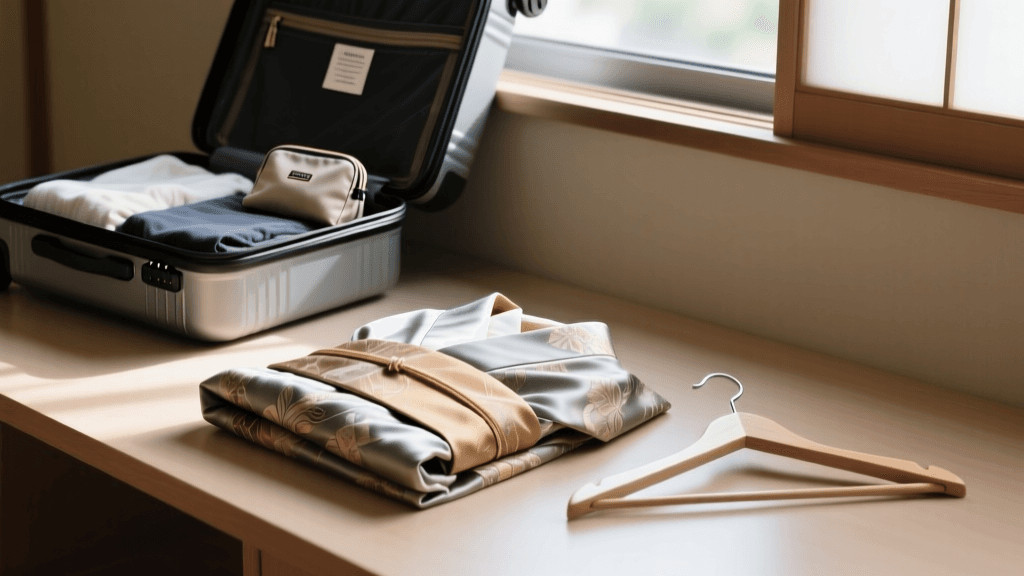
For international air travel in 2026, a flat-lay hard-shell carry-on remains the most reliable choice. Place the tissue-wrapped, folded kimono at the very top of the suitcase interior so it is the first item you see upon opening, preventing you from rummaging and disturbing the folds.
On-the-Go Maintenance: Wrinkles, Humidity, and Spills
Even with perfect packing, transit can introduce minor wrinkles and exposure to varying climates. When dealing with wrinkles, avoid traditional hotel irons, which often spit mineral-heavy water and operate at temperatures too high for silk. Instead, invest in a high-quality 2026 portable micro-steamer. These modern devices heat up in under twenty seconds and emit a fine, dry mist that relaxes silk fibers without saturating them. Always steam the kimono from the inside out, keeping the steamer head at least three inches away from the fabric.
Humidity is another silent enemy. If you are traveling to a tropical or highly humid destination, pack a few silica gel desiccant packets specifically designed for archival textile storage. Place these in the corners of your luggage or garment bag to absorb excess ambient moisture. In the event of a spill while wearing the kimono on the go, do not rub the stain. Blot it immediately with a clean, dry microfiber cloth. Carry a small vial of specialized, pH-neutral silk stain remover, but for anything beyond a minor water splash, seek out a professional cleaner immediately to prevent the dye from bleeding.
Navigating Airports and Security Checks
Airport security in 2026 utilizes advanced CT scanners that generally do not require you to remove textiles from your bag. However, if a security agent needs to inspect your luggage, politely inform them that the bag contains delicate, historic silk garments that must not be unfolded or handled with bare hands. Keep a pair of clean cotton gloves in your personal item and offer them to the agent, or ask to perform the inspection yourself under their supervision. When boarding, prioritize gate-checking or securing overhead bin space early. Never place a kimono in the cargo hold via checked luggage, as the extreme temperature fluctuations and pressure changes in the unpressurized or poorly climate-controlled cargo areas can make silk fibers brittle and shatter delicate embroidery threads.
Unpacking and Acclimatizing at Your Destination
Upon arriving at your hotel or destination, do not immediately rush to unpack and hang the kimono. The sudden shift in temperature and humidity from the aircraft cabin to the hotel room can shock the fibers. Leave the kimono in its luggage for an hour to allow it to gradually acclimatize to the room's ambient temperature. Once acclimatized, carefully unwrap the tissue paper and unfold the garment. If you plan to wear it within a day or two, lay it flat on a clean bed or hang it on a wide, padded wooden kimono hanger (emono-kake) in a well-ventilated area away from direct sunlight. This resting period allows the silk to breathe, any lingering transit odors to dissipate, and the natural drape of the fabric to restore itself, ensuring you look flawless and culturally respectful when it is time to wear your beautiful garment.