Silk Kimono Travel Guide 2026: Packing & Transit Tips
The Resurgence of Personal Kimono Travel in 2026
As global travel continues to evolve in 2026, a growing number of textile enthusiasts and cultural travelers are choosing to bring their own authentic silk kimono to Japan rather than relying solely on rental shops. Whether you are attending a formal tea ceremony in Kyoto, participating in a summer matsuri, or simply wish to experience the profound elegance of wearing a personal garment while staying at a traditional ryokan, transporting delicate silk requires meticulous planning. Silk is highly sensitive to humidity, friction, and improper folding, making standard suitcase packing methods entirely unsuitable.
This comprehensive guide covers the traditional tatou-shi folding method, the best modern packing materials available in 2026, and essential transit logistics—including the latest Shinkansen luggage regulations and on-the-go garment care. By mastering these techniques, you can ensure your silk garments arrive at your destination in pristine, wrinkle-free condition.
The Art of Tatou-Shi: Traditional Folding for Modern Transit
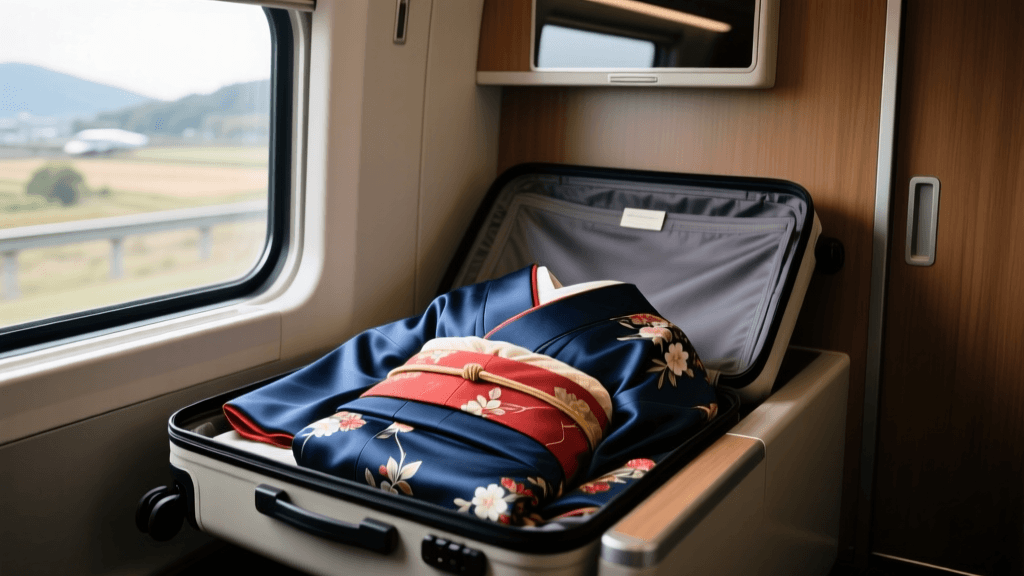
The foundation of safe kimono transport is the tatou-shi (folded paper) method. Unlike Western garments that are rolled or hung, kimono are constructed from straight, rectangular bolts of fabric. Folding them along their natural seams prevents stress on the silk fibers and avoids permanent creasing. When executed correctly, the garment forms a neat, flat rectangle that distributes weight evenly in your luggage.
Step-by-Step Tatou-Shi Folding Guide
- Prepare the Surface: Lay a clean, dry, and smooth surface. A large bed or a dedicated tatami mat is ideal. Ensure your hands are clean and completely dry to avoid transferring oils to the silk.
- Align the Seams: Lay the kimono face down. Fold the left side of the body over to the right, aligning the center back seam perfectly. The sleeves should be flattened out.
- Fold the Sleeves: Fold the right sleeve back onto the body of the kimono. Then, fold the left sleeve over the top. The goal is to keep the sleeve edges aligned with the body's rectangular shape.
- Lengthwise Folds: Fold the bottom hem up to the collar. Depending on the length of the kimono and the size of your storage bag, you may need to fold it in thirds or quarters. Always fold along the natural horizontal weave lines.
- Use Acid-Free Paper: Place sheets of unbleached, acid-free tanoshi (traditional Japanese wrapping paper) between the folds. This prevents the silk layers from rubbing together and absorbs minor ambient moisture.
2026 Gear: Best Packing Solutions for Silk Kimono
While the folding technique remains rooted in tradition, the materials we use to protect the folded garment have advanced. In 2026, travelers have access to specialized breathable bags that offer superior protection against fluctuating cabin pressures and transit humidity. Below is a comparison of the most effective packing methods for silk kimono travel.
| Packing Method | Material | Pros | Cons |
|---|---|---|---|
| Traditional Furoshiki | Silk or Cotton | Authentic, allows silk to breathe, culturally appropriate. | Offers zero impact protection; vulnerable to spills and dust. |
| Tyvek Garment Envelope | High-Density Polyethylene | Water-resistant, extremely lightweight, tear-proof, breathable. | Can generate static if not lined with cotton. |
| Unbleached Cotton Muslin Bag | Organic Muslin | Excellent breathability, prevents static, eco-friendly. | Not water-resistant; requires a secondary outer shell. |
| Vacuum Compression | Plastic/Polyurethane | Saves maximum suitcase space. | Never use for silk. Crushes fibers, causes irreversible creasing. |
For the modern traveler, the optimal setup in 2026 is a two-layer system: wrap the folded kimono in an unbleached cotton muslin cloth, then slide it into a structured, water-resistant Tyvek travel envelope. This combination provides the breathability silk requires while shielding it from accidental liquid spills inside your suitcase.
Navigating Japan’s Transit: Shinkansen & Luggage Rules
Transporting a kimono on Japan's bullet trains requires strict adherence to the JR Group's luggage policies, which have been rigorously enforced since their implementation and remain standard in 2026. If your packed kimono, along with your other luggage, exceeds the standard carry-on dimensions, you must navigate the oversized baggage rules.
According to the Japan Guide's Shinkansen Luggage Rules, any bag with a total dimension (height + width + depth) between 160cm and 250cm is classified as oversized. If you are traveling with a hard-shell suitcase containing your carefully folded kimono, it will likely fall into this category. You must reserve a seat with an 'Oversized Baggage Area' at the time of ticket purchase. Attempting to board with an oversized bag without this specific reservation will result in a hefty penalty fee and you may be forced to store the bag in a separate carriage, away from your personal supervision—which is highly discouraged for delicate silk garments.
For bags under 160cm, you can safely store your kimono in the overhead racks. Always place your kimono bag on top of softer items or in a dedicated rack section to prevent heavier luggage from crushing the silk weave during transit.
The Takkyubin Alternative: Forwarding Your Silk
If the thought of navigating crowded train stations with your precious silk garments induces anxiety, Japan's world-class luggage forwarding service, Takkyubin, is the ultimate solution. Operated primarily by Yamato Transport, this service allows you to ship your kimono directly from your home or hotel to your destination ryokan.
As detailed in the Japan Guide's Takkyubin Luggage Forwarding Guide, shipping a standard 120-size box (which easily accommodates multiple folded kimono and accessories) typically costs around 2,500 to 3,500 JPY domestically in 2026, with next-day delivery to most major cities. When packing for Takkyubin, ensure the kimono is boxed securely with ample cushioning to prevent shifting during truck transit. Always inform the ryokan in advance that a delicate garment delivery is arriving, so the staff can receive it personally and store it in a climate-controlled room rather than leaving it in a general loading dock.
On-the-Go Care: Managing Humidity and Wrinkles
Japan's climate poses a unique challenge for silk preservation. The intense summer humidity can cause silk to feel damp and susceptible to mold, while the dry, heated interiors of winter trains and hotels can generate static electricity, attracting dust and causing the fabric to cling awkwardly when dressing.
Humidity Control
Always pack several silica gel desiccant packets inside your muslin wrapping. In 2026, reusable, color-indicating silica beads are widely available and highly effective. If you are traveling during the rainy season (tsuyu) in June and July, consider placing a small, traditional charcoal dehumidifier pouch inside your suitcase to naturally regulate moisture levels without introducing harsh chemical odors to the silk.
Portable Steaming and Wrinkle Release
Despite your best folding efforts, minor creases may appear along the fold lines. Ironing silk directly is strictly forbidden, as the high heat and friction will scorch the fibers and ruin the finish. Instead, rely on a high-quality portable travel steamer. The latest 2026 models of compact steamers, such as the Panasonic travel series, offer precise, low-heat steam output ideal for delicate textiles.
To remove wrinkles in your hotel or ryokan:
- Hang the kimono on a wide, padded hanger (never use wire or thin plastic hangers, which will distort the shoulder seams).
- Hold the steamer at least 10 centimeters away from the fabric.
- Apply short bursts of steam, allowing the moisture to relax the fibers. Let the garment air dry completely before folding it again or wearing it.
Ryokan Etiquette and Storage
When staying at a traditional Japanese inn, you will often find a tansu (wooden chest of drawers) or a dedicated alcove for garment storage. According to cultural guidelines supported by the Japan National Tourism Organization (JNTO), respecting the storage spaces provided is part of the ryokan experience. If you are not wearing your kimono during your stay, store it flat in the deepest drawer of the tansu, layered with the provided cotton wrapping cloths. Do not leave your silk kimono draped over chairs or exposed to direct sunlight from the shoji screens, as UV rays will rapidly fade the natural dyes used in traditional textiles.
Conclusion
Traveling with a silk kimono in 2026 is a deeply rewarding endeavor that connects you intimately with Asian textile traditions. By honoring the tatou-shi folding method, utilizing modern breathable packing materials, and strategically navigating Japan's transit and forwarding systems, you can protect your investment and enjoy the unparalleled elegance of wearing your own silk garment. Preparation is the ultimate key to ensuring that your kimono remains as vibrant and flawless as the day it was woven, ready to be worn with pride on your cultural journey.